
Economic Warfare and Sanctions
Using economic pressure to impose costs, restrict capabilities, or change an opponent’s behavior
Economic warfare and sanctions use economic tools such as trade restrictions, asset freezes, export controls, financial limits, and embargoes to pressure, weaken, deter, or change the behavior of targeted actors.
Definition
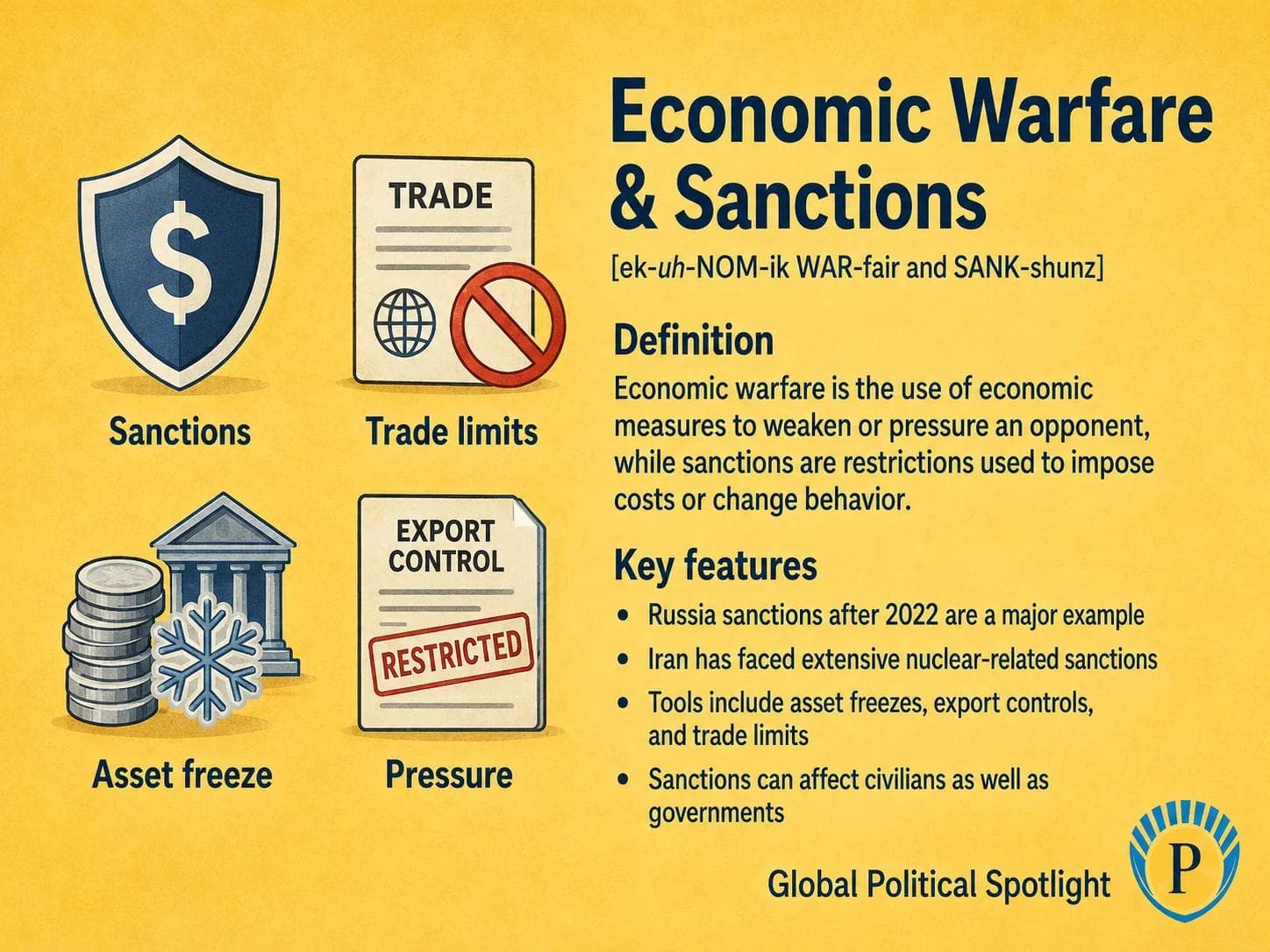
Economic warfare is the use of economic tools to weaken, pressure, or constrain an opponent. Sanctions are one of its most common instruments and can include asset freezes, travel bans, trade restrictions, export controls, financial limits, embargoes, and restrictions on specific companies, sectors, or technologies.
States and international organizations use sanctions to impose costs, deter aggression, disrupt weapons programs, punish violations of international law, restrict access to finance or technology, and signal political condemnation. Sanctions can target governments, individuals, banks, companies, military sectors, energy exports, shipping networks, or dual-use goods.
Economic warfare can be powerful because modern states depend on trade, finance, supply chains, energy markets, insurance, shipping, and technology access. It can also create unintended consequences, including humanitarian pressure, market disruption, sanctions evasion, civilian hardship, and incentives for targeted states to build alternative networks.
Why It Matters
Economic warfare and sanctions matter because they give states a way to exert pressure without immediately using military force. They are central to modern coercive diplomacy, deterrence, punishment, and efforts to restrict an opponent’s military or technological capabilities.
They also matter for markets and firms. Sanctions can affect banks, energy companies, shipping insurers, technology exporters, commodity markets, currency access, and multinational supply chains. Compliance risk can reshape corporate behavior far beyond the directly targeted country.
For civilians, sanctions can have mixed effects. Targeted measures may aim to pressure elites while reducing broad humanitarian harm, but economic restrictions can still affect employment, inflation, access to medicine, public services, and the wider economy.
Economic warfare and sanctions are key GPS concepts for tracking how states use finance, trade, technology, energy, shipping, and legal restrictions as instruments of power. GPS should monitor sanctions design, enforcement, evasion networks, humanitarian exemptions, secondary sanctions risk, export-control regimes, market spillovers, and whether targeted actors adapt through alternative payment systems, domestic substitution, or new trade partners.
Key Facts
- Type
- Economic statecraft and coercive pressure tool
- Core idea
- Using economic restrictions to impose costs, restrict capabilities, deter action, or change behavior
- Common tools
- Asset freezes, trade limits, embargoes, export controls, financial restrictions, travel bans, and sectoral sanctions
- Common targets
- Governments, banks, companies, military industries, energy sectors, political elites, shipping networks, and sanctioned individuals
- Russia example
- Sanctions expanded sharply after Russia’s full-scale invasion of Ukraine in 2022
- Iran example
- Iran has faced major nuclear-related sanctions targeting finance, energy, trade, and proliferation-linked activity
- Strategic purpose
- To punish, deter, compel, isolate, signal condemnation, or limit access to critical resources and technology
- Main limitation
- Sanctions may be evaded, resisted, adapted around, or produce humanitarian and market spillover effects
FAQ
What is economic warfare?
Economic warfare is the use of economic tools to weaken, pressure, or constrain an opponent. It can involve sanctions, embargoes, financial restrictions, export controls, trade limits, and efforts to disrupt access to key markets or resources.
What are sanctions?
Sanctions are restrictive measures imposed by states or international organizations to influence behavior, punish violations, deter action, or restrict access to finance, trade, technology, travel, or assets.
How are sanctions different from tariffs?
Tariffs are taxes on imports and are usually part of trade policy. Sanctions are coercive or restrictive measures used for political, security, legal, or diplomatic purposes, often targeting specific countries, sectors, firms, or individuals.
Do sanctions always work?
No. Sanctions can impose costs and restrict capabilities, but they do not always force policy change. Their effectiveness depends on enforcement, international coordination, target vulnerability, domestic politics, available alternatives, and the clarity of demands.
What are examples of economic sanctions?
Examples include sanctions on Russia after its 2022 full-scale invasion of Ukraine and nuclear-related sanctions on Iran. These measures have included asset freezes, financial restrictions, export controls, energy measures, and limits on specific entities or technologies.
Can sanctions harm civilians?
Yes. Even when sanctions are targeted at governments, elites, or strategic sectors, they can affect civilians through inflation, unemployment, shortages, reduced public revenue, banking disruption, or weaker access to imported goods. Humanitarian exemptions are often used to reduce harm, but they do not eliminate all effects.
Recent Developments
Western governments expanded sanctions after Russia’s full-scale invasion of Ukraine
The United States, European Union, United Kingdom, and partners imposed broad financial, trade, energy, export-control, and individual sanctions on Russia after its full-scale invasion of Ukraine, making sanctions a central instrument of the international response.
European CouncilUN restrictions related to Iran missile activities expired under the JCPOA timetable
Several UN Security Council restrictions linked to Iran’s missile-related activities expired under the timeline of Resolution 2231, while the United States, European Union, and others maintained or adjusted separate national and regional sanctions frameworks.
United Nations Security CouncilSources6 references
- United Nations Security Council
Official UN overview of Security Council sanctions and their role in maintaining international peace and security.
- European Council
Institutional overview of EU sanctions as restrictive measures used in foreign and security policy.
- U.S. Department of the Treasury
Official U.S. source for sanctions programs administered by the Office of Foreign Assets Control.
- European Council
Official EU source on sanctions imposed in response to Russia’s war against Ukraine.
- United Nations Security Council
UN background on Security Council Resolution 2231 and the Iran nuclear-related sanctions framework.
- World Trade Organization
Reference source on rules-based trade principles, useful for understanding how sanctions and trade restrictions interact with global trade governance.
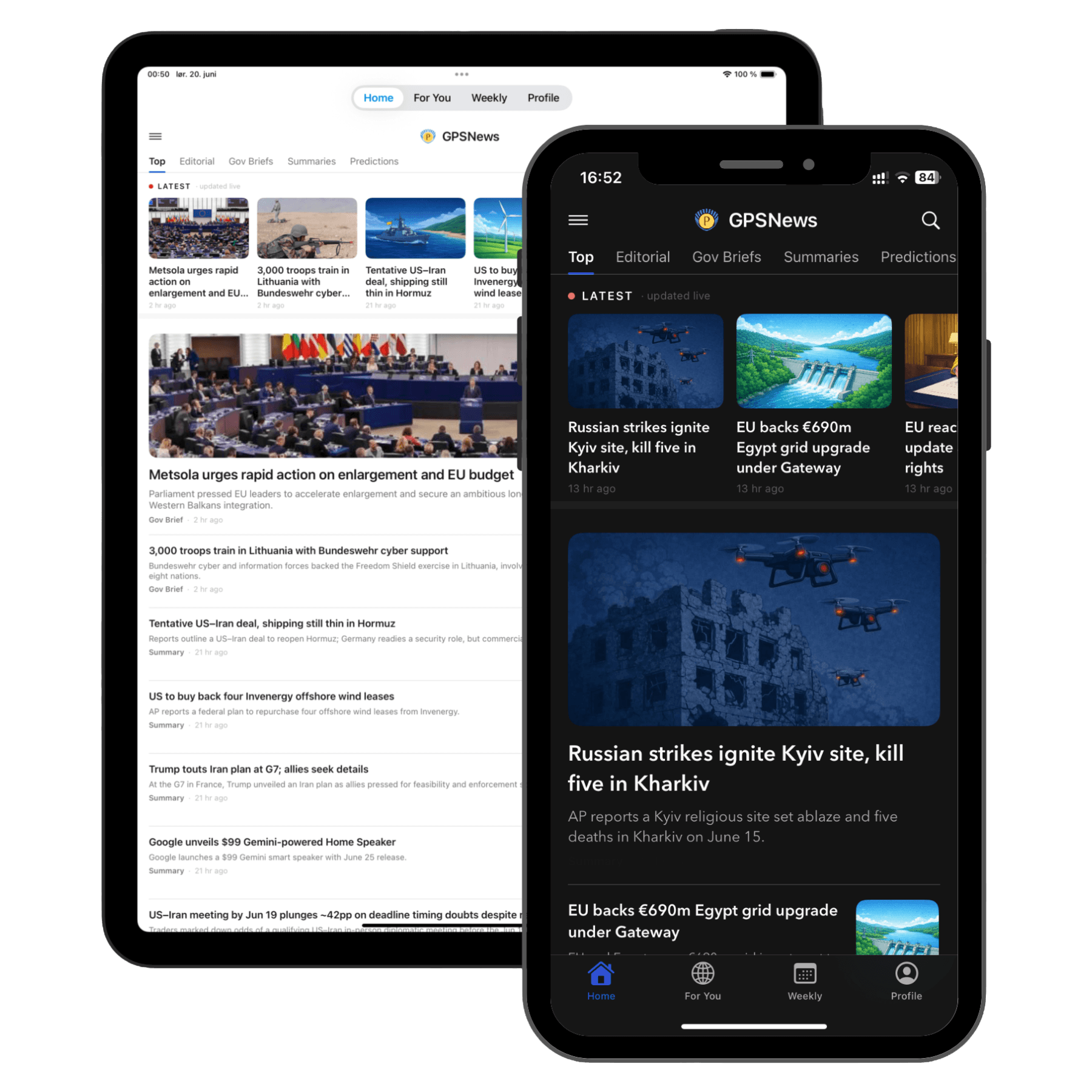
GPSNews App
Read GPSNews on iPhone
Daily geopolitical briefings, government updates, and prediction signals in one focused app.
Newsletter
Stay Ahead Of The Next Signal
Get briefings in your inbox when new analysis and reports are published.