
Cyprus
A divided eastern Mediterranean island shaped by UN peacekeeping, EU membership, and regional energy disputes
Cyprus is a divided eastern Mediterranean island where the Republic of Cyprus controls the south, a Turkish-backed northern administration is recognized only by Turkey, and the UN buffer zone separates the two sides.
Definition
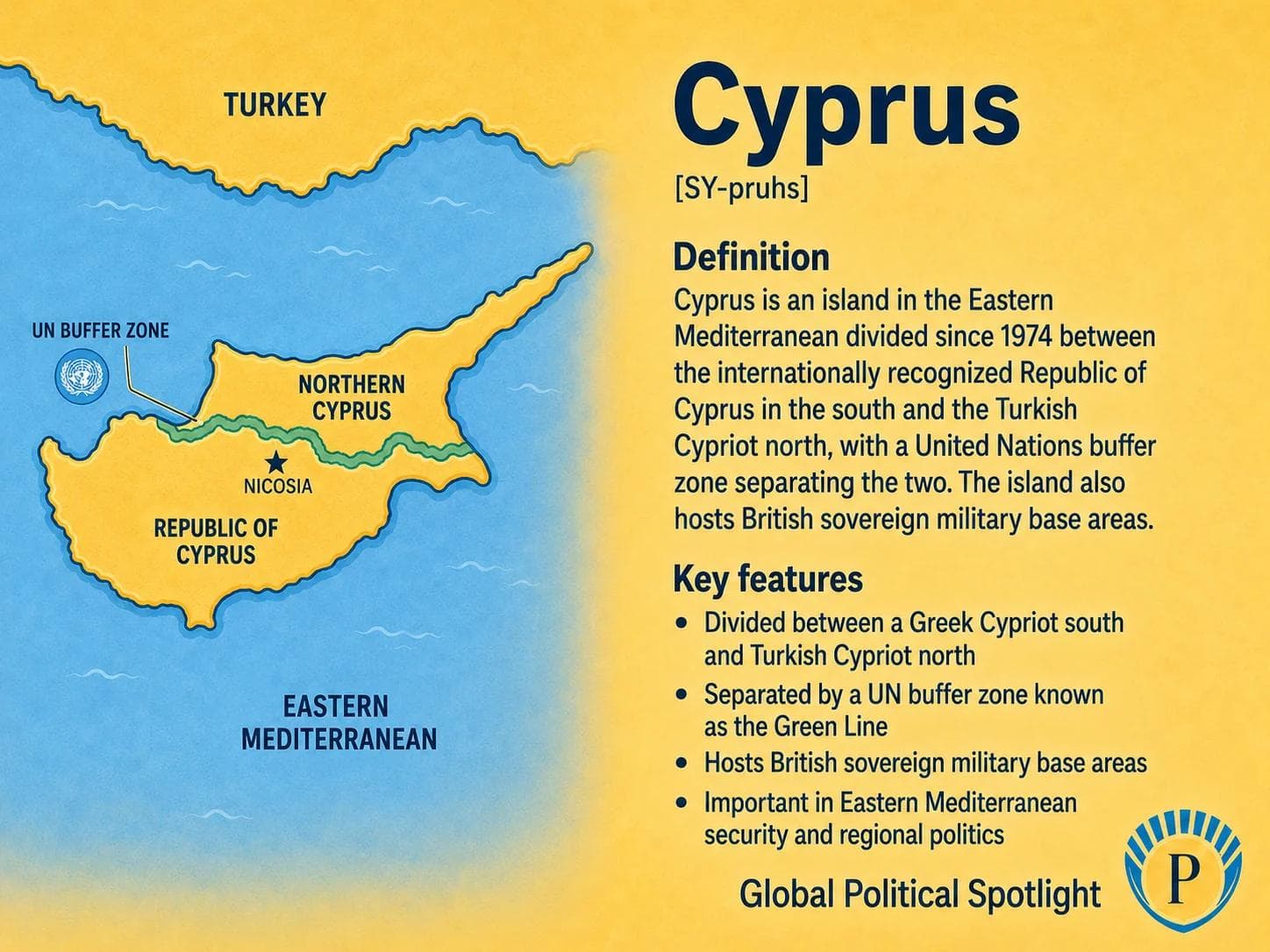
Cyprus is an island in the eastern Mediterranean, south of Turkey and west of Syria and Lebanon. The internationally recognized Republic of Cyprus controls the southern part of the island and is a member of the European Union, while the north is administered by the Turkish Cypriot authorities and recognized as a state only by Turkey.
The island has been divided since 1974, after a Greek-backed coup and Turkey's subsequent military intervention. The Green Line, monitored by the United Nations Peacekeeping Force in Cyprus, separates the two sides and includes a UN buffer zone running across the island and through the capital, Nicosia.
Why It Matters
Cyprus matters because it connects unresolved territorial division, Greek-Turkish rivalry, EU law, NATO-adjacent security dynamics, UN peacekeeping, and eastern Mediterranean energy competition. The island's political status affects diplomacy between Cyprus, Turkey, Greece, the European Union, and the United Nations.
Cyprus also matters because its surrounding waters are linked to maritime boundary disputes and offshore natural gas exploration. Energy diplomacy, naval presence, and competing exclusive economic zone claims make the island a persistent strategic reference point in the eastern Mediterranean.
GPS should track Cyprus as a divided EU member state where UN peacekeeping, reunification diplomacy, Turkey-Greece tensions, maritime gas disputes, and eastern Mediterranean security overlap. Key watchpoints include UN-led settlement efforts, changes along the Green Line and buffer zone, Turkish Cypriot and Greek Cypriot political positions, Turkey-EU tensions, offshore drilling or licensing activity, and regional maritime boundary agreements.
Key Facts
- Type
- Divided island and unresolved territorial-political dispute
- Location
- Eastern Mediterranean, south of Turkey and west of Syria, Lebanon, and Israel
- Internationally recognized state
- Republic of Cyprus, a European Union member state since 1 May 2004
- Northern administration
- The Turkish Republic of Northern Cyprus is recognized only by Turkey
- Dividing line
- The Green Line and UN buffer zone separate the Greek Cypriot and Turkish Cypriot sides
- UN mission
- The United Nations Peacekeeping Force in Cyprus has operated on the island since 1964
- Strategic relevance
- Turkey-Greece tensions, EU-Turkey relations, eastern Mediterranean maritime claims, offshore gas, and regional security
- Diplomatic issue
- Reunification talks have repeatedly focused on a bi-zonal, bi-communal settlement, but no final agreement has been reached
FAQ
What is the Cyprus dispute?
The Cyprus dispute is the unresolved division of the island between the internationally recognized Republic of Cyprus in the south and a Turkish-backed northern administration recognized only by Turkey. The division has persisted since 1974.
What is the Green Line in Cyprus?
The Green Line is the ceasefire line and UN-monitored buffer zone that separates the Greek Cypriot and Turkish Cypriot sides. It runs across the island and through Nicosia, one of the world's divided capitals.
Is Cyprus part of the European Union?
Yes. The Republic of Cyprus joined the European Union in 2004. EU law is suspended in the areas where the Republic of Cyprus does not exercise effective control, but the entire island is treated as EU territory under the accession framework.
Who recognizes Northern Cyprus?
Only Turkey recognizes the Turkish Republic of Northern Cyprus as a state. The United Nations and most governments recognize the Republic of Cyprus as the sovereign state covering the island.
Why does Cyprus matter for energy politics?
Cyprus matters for energy politics because offshore gas discoveries and exploration blocks in the eastern Mediterranean intersect with maritime boundary claims, Turkey-Cyprus tensions, Greece-Turkey rivalry, and EU energy diversification interests.
What are the main obstacles to reunification?
The main obstacles include competing views on political equality, security guarantees, the presence of Turkish troops, property claims, territorial adjustments, governance arrangements, and whether the future settlement should be federal or based on two separate states.
Recent Developments
The UN Security Council renewed the Cyprus peacekeeping mandate
The UN Security Council renewed the mandate of the United Nations Peacekeeping Force in Cyprus, reflecting the continued importance of the buffer zone and international monitoring on the divided island.
United Nations Security CouncilUN-hosted informal talks sought to revive the Cyprus peace process
The United Nations convened an informal meeting in Geneva with Greek Cypriot and Turkish Cypriot leaders and the guarantor powers, keeping reunification diplomacy active despite persistent differences over the preferred settlement model.
United NationsSources6 references
- United Nations Peacekeeping Force in Cyprus
Official UNFICYP site covering the peacekeeping mission, the buffer zone, and UN activity on the island.
- United Nations Cyprus Talks
Official UN background on the Cyprus peace process and settlement talks.
- European Union
EU country profile confirming Cyprus's EU membership and institutional status.
- Republic of Cyprus Ministry of Foreign Affairs
Official Republic of Cyprus overview of the Cyprus question and reunification position.
- United Nations Security Council
UN Security Council press release on renewal of the UNFICYP mandate.
- Encyclopaedia Britannica
Reference overview of Cyprus's geography, history, and political division.

GPSNews App
Read GPSNews on iPhone
Daily geopolitical briefings, government updates, and prediction signals in one focused app.
Newsletter
Stay Ahead Of The Next Signal
Get briefings in your inbox when new analysis and reports are published.