Key Developments
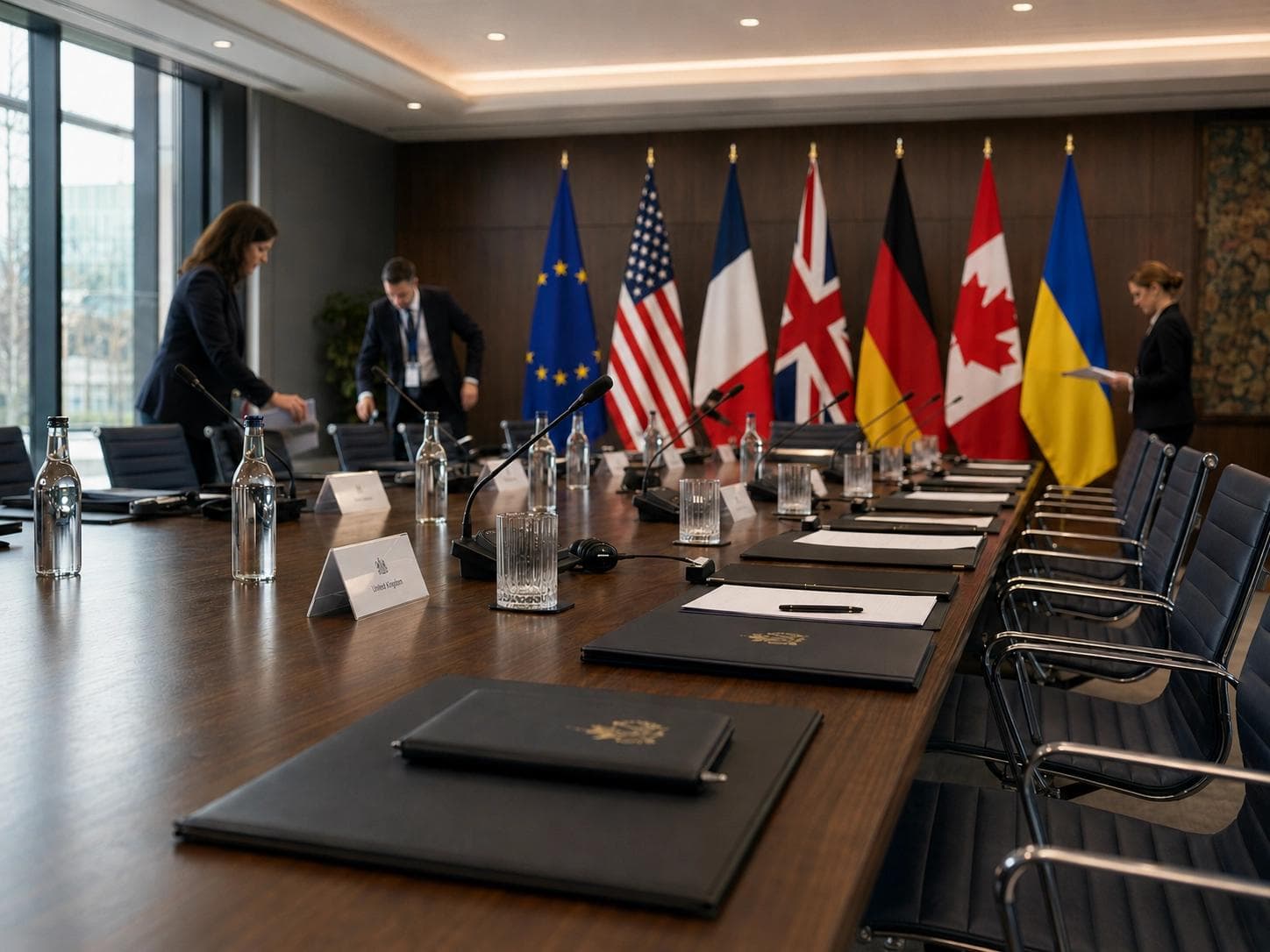
On 26 October 2026, HM Government said defence ministers from the UK, France, Germany, Italy and Poland had called for Europe to take greater responsibility for its security, while reaffirming NATO commitments, support for Ukraine and cooperation with the United States and the EU against continuing Russian threats.
Key Statistics
- 5 E5 countries were represented: the UK, France, Germany, Italy and Poland.
- Historical: 2 complementary defence-financing institutions were proposed by the UK and Canada.
- Historical: €130 million in additional EU border-security funding was allocated for drone and counter-drone measures.
- Historical: 16 EU Member States and 1 Schengen Associated Country were covered by that EU border-security funding.
Main Body
On 26 October 2026, HM Government said E5 defence ministers from the UK, France, Germany, Italy and Poland had issued a joint statement calling for Europe to assume greater responsibility for its own security. The statement reaffirmed the ministers’ commitment to NATO, continued backing for Ukraine, and cooperation with the United States and the European Union in response to Russian threats, according to HM Government.
The E5 statement linked European defence responsibility to collective defence, military readiness and capability development, according to HM Government. It placed the five participating governments in a common policy position on NATO alignment, Ukraine support and European capability-building, giving officials a shared basis for follow-on coordination with allied and EU structures, according to HM Government.
The announcement followed related government activity on European and allied defence capacity. On 25 October 2026, HM Government and Canada’s Department of Finance said the UK and Canada planned a cooperation framework involving two complementary institutions for defence financing and spending efficiency. On 13 October 2026, the European Commission said it was allocating €130 million in additional funding for drone and counter-drone measures at the EU’s external borders.
The E5 statement mattered because it tied diplomatic messaging to practical defence requirements, including readiness, financing and capability cooperation. The combination of the E5 position, the UK-Canada financing framework described by HM Government, and EU border-security funding announced by the European Commission showed European and allied governments placing security policy, industrial capacity and border protection within the same deterrence agenda.