
Jebel Ali Port
A Dubai logistics hub linking Gulf trade with Asia, Europe, Africa, and the Middle East
Jebel Ali Port is a major Dubai seaport and free-zone logistics hub that supports container transshipment, re-export trade, Gulf supply chains, and the UAE's wider commercial strategy.
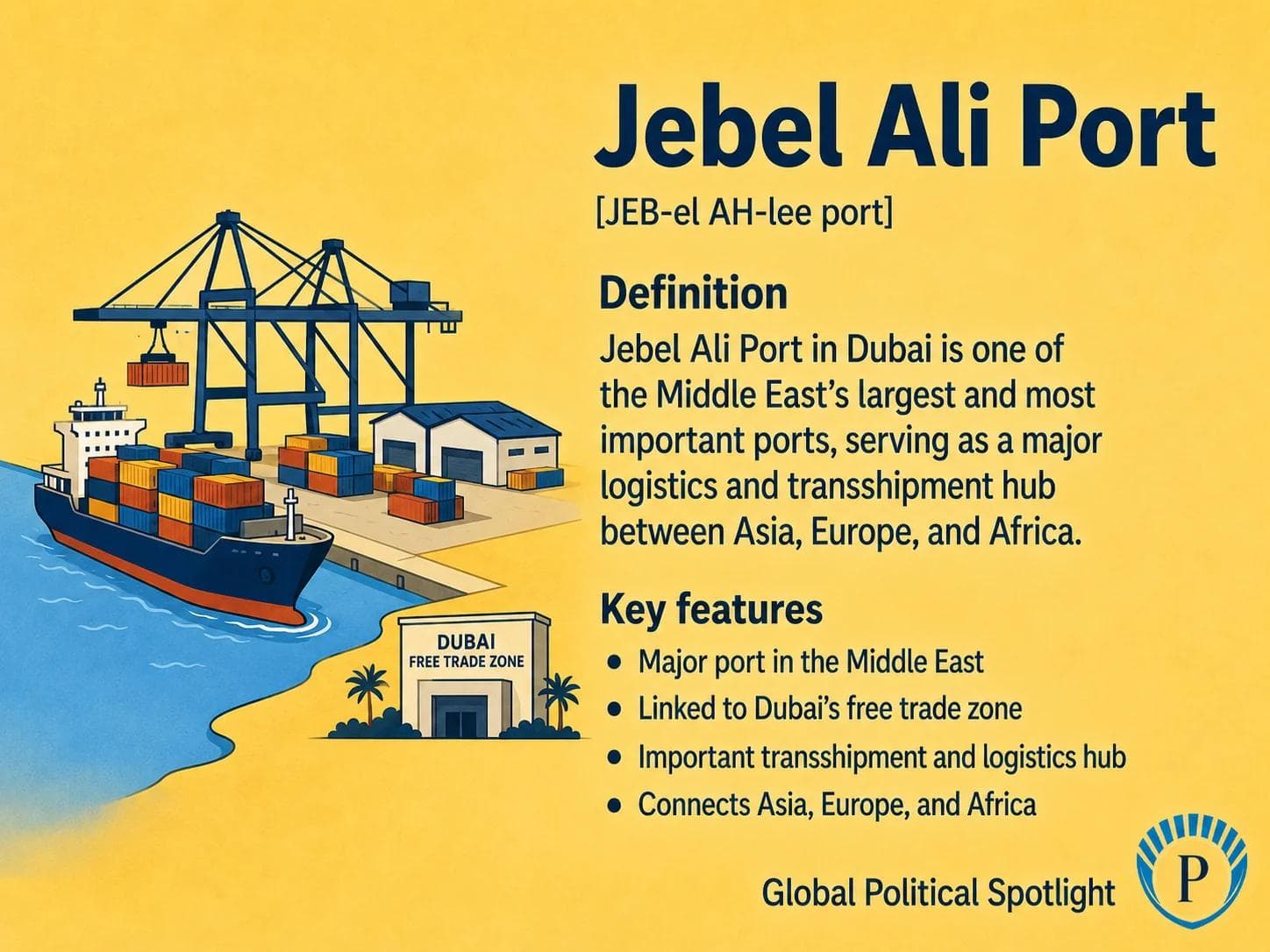
Definition
Jebel Ali Port is a major seaport in Dubai, United Arab Emirates, and one of the most important container and logistics hubs in the Middle East. It sits on the Gulf coast and serves as a transshipment and distribution platform connecting Asia, Europe, Africa, and regional Gulf markets.
The port is closely integrated with the Jebel Ali Free Zone, known as Jafza, which supports warehousing, manufacturing, light assembly, trading, and re-export activity. This port-plus-free-zone model helps Dubai function as a commercial gateway rather than only a domestic import market.
Strategically, Jebel Ali reflects the UAE's broader effort to build influence through logistics, maritime infrastructure, aviation, trade facilitation, and global commercial connectivity. Its relevance is tied to container flows, sanctions compliance, Gulf supply chains, customs controls, and competition among regional trade hubs.
Why It Matters
Jebel Ali Port matters because it is a key gateway for goods moving between global shipping lanes and Middle Eastern, African, and South Asian markets. Its transshipment role allows cargo to be redistributed across smaller regional routes, making it structurally important to Gulf logistics.
The port also matters for the UAE's economic model. By combining deep-water port capacity, free-zone rules, customs services, warehousing, and corporate infrastructure, Dubai has positioned Jebel Ali as a platform for re-export trade, regional headquarters, and supply-chain services.
For geopolitics, Jebel Ali shows how commercial infrastructure can become strategic infrastructure. Port security, sanctions enforcement, container screening, Red Sea disruptions, Gulf tensions, energy-market exposure, and competition for trade routes can all affect the port's importance.
GPS should track Jebel Ali Port as a strategic UAE logistics and re-export hub linking Gulf commerce to Asia, Europe, Africa, and the wider Middle East. Key watchpoints include container throughput, transshipment patterns, free-zone regulation, sanctions and customs enforcement, Red Sea and Gulf shipping disruptions, port security, DP World strategy, and Dubai's role as a regional commercial platform.
Key Facts
- Type
- Strategic seaport, container hub, and free-zone logistics platform
- Location
- Dubai, United Arab Emirates, on the Gulf coast
- Operator
- DP World operates Jebel Ali Port
- Linked free zone
- Integrated with Jebel Ali Free Zone, known as Jafza
- Core role
- Container handling, transshipment, warehousing, distribution, and re-export trade
- Regional function
- Connects Gulf markets with Asia, Europe, Africa, South Asia, and the wider Middle East
- Strategic relevance
- Supports the UAE's commercial strategy by linking maritime logistics, free-zone business activity, customs services, and regional supply chains
- Key vulnerabilities
- Exposure to shipping disruptions, regional tensions, sanctions compliance risks, customs enforcement pressure, port security threats, cyber risks, and global trade slowdowns
FAQ
What is Jebel Ali Port?
Jebel Ali Port is a major seaport in Dubai, United Arab Emirates. It is a major container, transshipment, and logistics hub serving Gulf, Middle Eastern, African, Asian, and European trade routes.
Why is Jebel Ali Port important?
It is important because it connects global shipping routes with regional distribution networks. Its role in container handling, transshipment, re-export trade, and free-zone logistics makes it central to Dubai's commercial strategy and Gulf supply chains.
What is the Jebel Ali Free Zone?
The Jebel Ali Free Zone, or Jafza, is a business and logistics zone linked to the port. It supports companies involved in trading, warehousing, manufacturing, distribution, and re-export activity.
How does Jebel Ali support re-export trade?
Goods can arrive at the port, be stored or processed in the free zone, and then be redistributed to other markets. This makes Dubai a commercial gateway for companies serving the Gulf, Middle East, Africa, South Asia, and beyond.
How does Jebel Ali affect geopolitics?
Jebel Ali affects geopolitics because ports shape trade routes, supply-chain resilience, customs enforcement, sanctions compliance, and economic influence. The port helps the UAE convert geography and infrastructure into commercial and diplomatic leverage.
What risks affect Jebel Ali Port?
Key risks include regional conflict, Red Sea and Gulf shipping disruptions, cyber threats, smuggling and customs enforcement challenges, sanctions exposure, global trade slowdowns, and competition from other regional logistics hubs.
Recent Developments
Red Sea disruption reinforced the strategic role of Gulf logistics hubs
Ongoing disruption to Red Sea shipping routes highlighted the importance of resilient logistics networks across the Gulf and wider Middle East. Ports such as Jebel Ali remain relevant because they support rerouting, transshipment, regional distribution, and supply-chain flexibility.
UNCTADDubai continued positioning Jebel Ali as a port-and-free-zone trade platform
Public materials from DP World and Jafza continued to present Jebel Ali as an integrated logistics, port, and free-zone ecosystem supporting trade, re-export activity, warehousing, and regional market access.
DP WorldSources6 references
- DP World - Jebel Ali Port
Official operator overview of Jebel Ali Port, its terminal role, and logistics functions.
- Jafza - Jebel Ali Free Zone
Official free-zone source explaining Jafza's business, logistics, and trade role.
- Dubai Customs
Official customs authority relevant to Dubai's trade facilitation, enforcement, and port-related customs processes.
- UAE Ministry of Economy - Trade
Official UAE government context on trade policy and the country's commercial orientation.
- UNCTAD - Review of Maritime Transport
Institutional reference on global maritime transport, shipping disruption, and container trade trends.
- World Bank - Logistics Performance Index
Reference source for logistics performance, trade facilitation, and infrastructure comparisons.

GPSNews App
Read GPSNews on iPhone
Daily geopolitical briefings, government updates, and prediction signals in one focused app.
Newsletter
Stay Ahead Of The Next Signal
Get briefings in your inbox when new analysis and reports are published.