
Strait of Hormuz
A critical maritime chokepoint linking the Persian Gulf to global energy markets
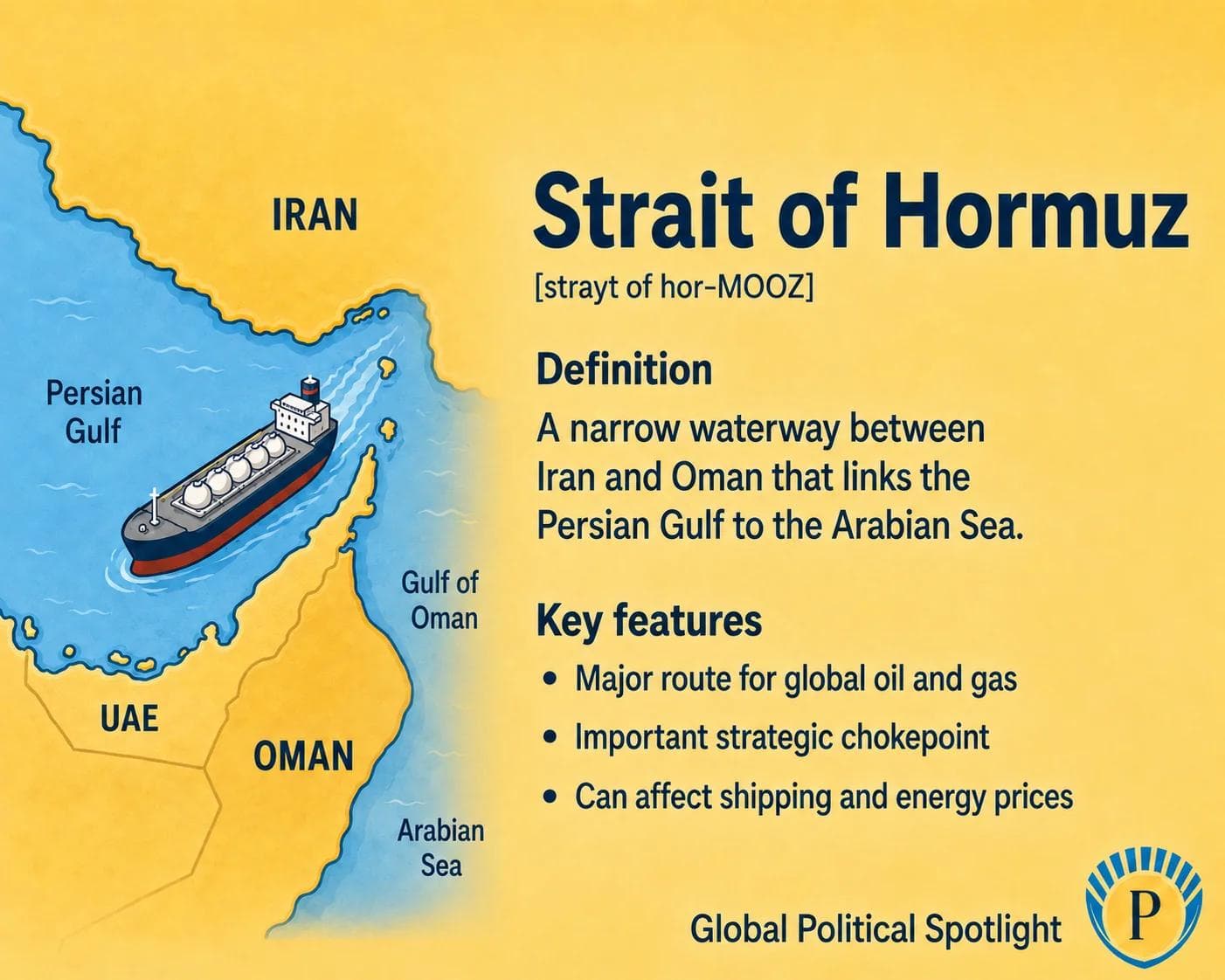
The Strait of Hormuz is a narrow waterway between Iran and Oman that connects the Persian Gulf with the Gulf of Oman and Arabian Sea, making it one of the world’s most important energy transit chokepoints.
Definition
The Strait of Hormuz is a narrow maritime passage between Iran to the north and Oman’s Musandam Peninsula to the south. It connects the Persian Gulf with the Gulf of Oman and the Arabian Sea, making it the main sea outlet for several major Gulf energy exporters.
Because the strait carries a large share of globally traded oil and liquefied natural gas, it is often described as one of the world’s most important energy chokepoints. Even limited disruption can affect shipping insurance, tanker routing, energy prices, and diplomatic crisis management.
Why It Matters
The Strait of Hormuz matters because it concentrates energy flows, naval presence, and regional security tensions in a very small geographic space. Gulf producers such as Saudi Arabia, Iraq, Kuwait, Qatar, the United Arab Emirates, and Iran rely on the wider Gulf maritime system to reach global markets.
For policymakers and markets, the strait is a pressure point where regional conflict can quickly become a global economic issue. Threats to shipping can raise oil prices, increase maritime insurance costs, draw in outside navies, and shape negotiations involving Iran, Gulf states, the United States, and major Asian energy importers.
The Strait of Hormuz is a persistent strategic chokepoint where energy security, Iran-Gulf tensions, naval deterrence, sanctions pressure, and global commodity markets intersect. It is especially relevant for assessing crisis escalation in the Persian Gulf and the market impact of Middle East security risks.
Key Facts
- Type
- Maritime chokepoint
- Location
- Between Iran and Oman, linking the Persian Gulf to the Gulf of Oman
- Strategic role
- Main sea route for many Gulf oil and liquefied natural gas exports
- Energy relevance
- Roughly one-fifth of global petroleum liquids consumption has moved through the strait in recent EIA estimates
- Nearby actors
- Iran, Oman, United Arab Emirates, Saudi Arabia, Qatar, Iraq, Kuwait, and Bahrain
- Security concern
- Shipping disruptions can affect tanker traffic, naval deployments, insurance costs, and oil prices
- Bypass limits
- Some pipelines can reduce reliance on the strait, but alternative capacity is limited compared with total Gulf export volumes
FAQ
What is the Strait of Hormuz?
The Strait of Hormuz is a narrow waterway between Iran and Oman that connects the Persian Gulf with the Gulf of Oman and Arabian Sea. It is one of the world’s most important maritime chokepoints because large volumes of oil and gas exports pass through it.
Why is the Strait of Hormuz important?
It is important because many Gulf energy exports rely on the strait to reach global markets. Disruption can affect oil prices, liquefied natural gas flows, tanker insurance, shipping routes, and diplomatic crisis management.
Who controls the Strait of Hormuz?
The strait lies between Iran and Oman, with territorial waters and international navigation rules both relevant. In practice, its security is shaped by Iran, Oman, Gulf states, international maritime law, and naval forces from outside powers such as the United States.
Can the Strait of Hormuz be closed?
A full closure would be difficult, risky, and internationally escalatory, but even threats, attacks, seizures, mines, or military incidents can disrupt traffic and raise market risk. The issue is often less about permanent closure and more about temporary disruption and uncertainty.
How does the Strait of Hormuz affect oil prices?
Because the strait carries a large share of seaborne oil trade, perceived risks to safe passage can increase oil prices by raising expectations of supply disruption, higher shipping costs, or delays in exports from Gulf producers.
Which countries depend on the Strait of Hormuz?
Major Gulf exporters including Saudi Arabia, Iraq, Kuwait, Qatar, the United Arab Emirates, Iran, and Bahrain are connected to the wider Gulf export system. Major importers in Asia and other regions also depend indirectly on energy flows through the strait.
Recent Developments
Aramco warned continued Hormuz disruption could remove large weekly oil volumes from the market
Reuters reported that Saudi Aramco CEO Amin Nasser said the oil market could lose around 100 million barrels every week if disruptions in the Strait of Hormuz continue at the current rate and the route remains closed. The comments linked the chokepoint directly to supply losses, demand rationing, and the timing of any oil market recovery.
ReutersA second Qatari LNG tanker transited Hormuz toward Pakistan amid regional conflict
Reuters reported that a second Qatari liquefied natural gas tanker was moving through the Strait of Hormuz toward Pakistan, following an earlier Qatari LNG shipment that passed through an Iranian-approved northern route. The report underscored how the strait remains central to LNG flows and crisis diplomacy during regional tensions.
ReutersOil prices jumped after reported attacks affecting Gulf energy infrastructure and Hormuz shipping
Reuters reported that oil prices rose sharply after Iran was reported to have attacked a UAE oil port and vessels in the Strait of Hormuz area. The market reaction showed how security incidents near the chokepoint can rapidly feed into global oil price volatility.
ReutersSources6 references
- Reuters
Recent news report on Aramco’s warning about weekly oil-market losses if Strait of Hormuz disruptions continue.
- Reuters
Recent news report on Qatari LNG tanker movements through the Strait of Hormuz during regional conflict.
- Reuters
Recent news report connecting Gulf security incidents, Hormuz shipping risk, and oil price volatility.
- U.S. Energy Information Administration
Official U.S. energy data and analysis on global oil transit chokepoints, including the Strait of Hormuz.
- International Energy Agency
IEA oil security overview explaining the strait’s importance for seaborne oil trade and limited bypass options.
- International Maritime Organization
International maritime safety and security information related to the Middle East Gulf and Strait of Hormuz.

GPSNews App
Read GPSNews on iPhone
Daily geopolitical briefings, government updates, and prediction signals in one focused app.
Newsletter
Stay Ahead Of The Next Signal
Get briefings in your inbox when new analysis and reports are published.