
African Development Bank
Africa's regional development finance institution for infrastructure, energy access, climate resilience, and economic transformation
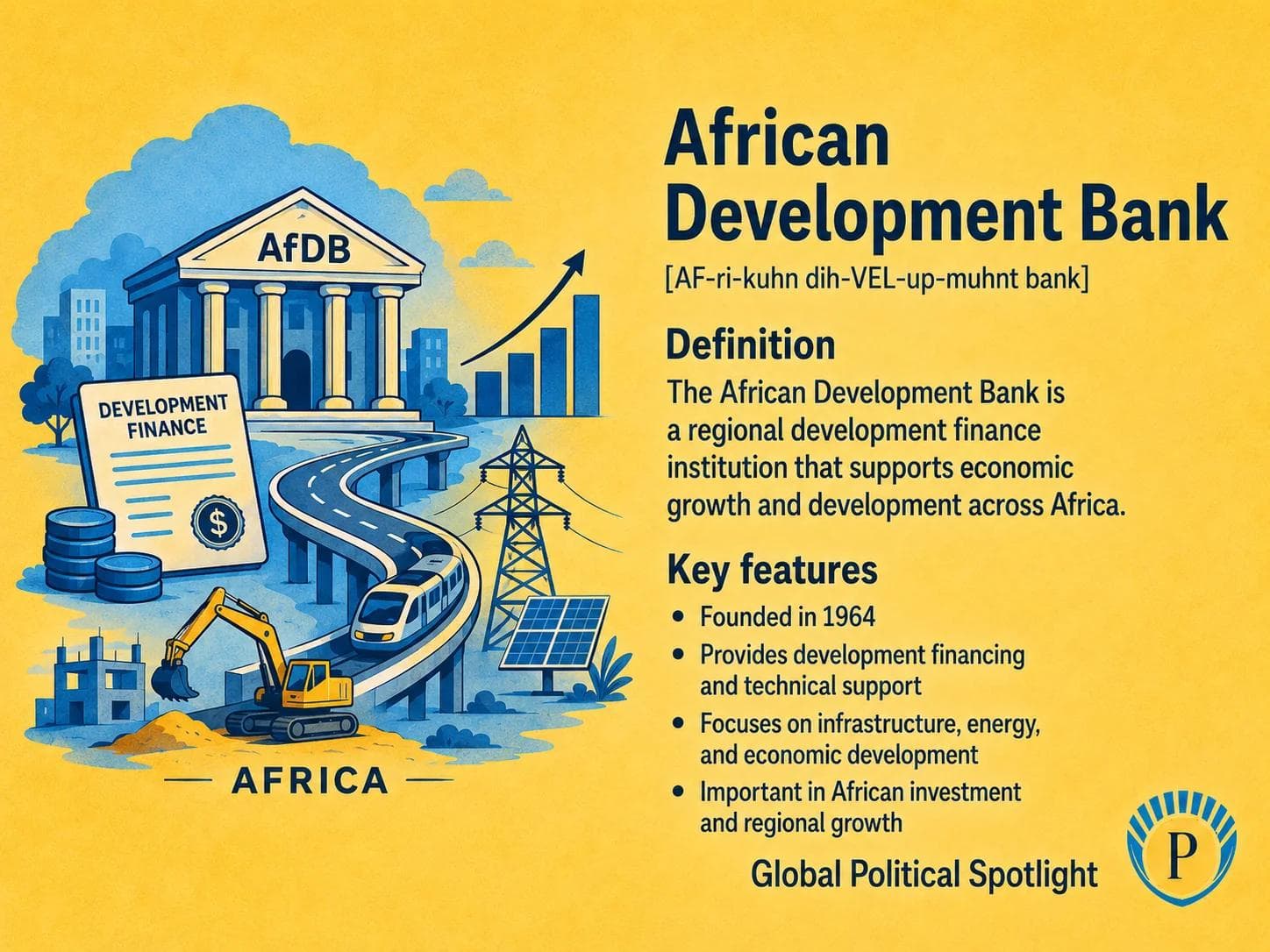
The African Development Bank is a multilateral development bank that finances public and private-sector projects across Africa, including infrastructure, energy access, climate adaptation, regional integration, and economic development.
Definition
The African Development Bank, often abbreviated AfDB, is a multilateral development bank created to promote sustainable economic growth and social progress in African countries. It finances governments, public institutions, and private-sector projects through loans, grants, guarantees, equity investments, technical assistance, and policy support.
The Bank is part of the African Development Bank Group, which also includes the African Development Fund, its concessional financing window for lower-income African countries, and the Nigeria Trust Fund. Its ownership includes African regional member countries and non-regional member countries from outside the continent.
Its work is closely tied to Africa's long-term development agenda: closing infrastructure gaps, expanding electricity access, financing transport and water systems, supporting climate adaptation, improving food security, mobilizing private capital, and strengthening regional economic integration.
Why It Matters
The African Development Bank matters because infrastructure, energy, and financing constraints shape the economic and political trajectory of African states. Roads, ports, power grids, water systems, digital networks, and climate-resilient infrastructure influence trade costs, industrialization, state capacity, and private investment.
Its concessional lending and grant windows are important for countries that face high borrowing costs or limited access to private capital markets. By pooling shareholder capital and donor contributions, the Bank can support projects that may be strategically important but difficult to finance commercially.
Geopolitically, the AfDB sits at the intersection of African ownership, external development finance, debt sustainability, climate finance, and competition over infrastructure influence. Its project pipeline and capital base affect how African states fund economic transformation without relying only on bilateral creditors or commercial debt.
GPS should track the African Development Bank as a key institution in Africa's development-finance architecture. Important watchpoints include infrastructure financing, energy-access programs, climate-adaptation funding, concessional-lending replenishments, private-sector mobilization, debt-sustainability conditions, regional integration projects, and how African and non-regional shareholders shape the Bank's priorities.
Key Facts
- Type
- Multilateral development bank
- Founded
- Agreement establishing the Bank was signed in 1963; operations began in 1966
- Headquarters
- Abidjan, Côte d'Ivoire
- Membership
- 82 member countries as of the Bank's 2024 institutional reporting, including 54 African regional members and 28 non-regional members
- Group structure
- African Development Bank, African Development Fund, and Nigeria Trust Fund
- Concessional window
- The African Development Fund provides grants, concessional loans, guarantees, and other support to eligible lower-income African countries
- Core priorities
- Energy access, food security, industrialization, regional integration, and quality of life through the Bank's High 5 priorities
- Strategic role
- Mobilizes development finance for infrastructure, climate resilience, private-sector projects, and Africa's long-term economic transformation
FAQ
What is the African Development Bank?
The African Development Bank is a multilateral development bank that finances development projects across Africa. It supports infrastructure, energy access, transport, agriculture, private-sector investment, climate adaptation, governance, and regional economic integration.
Who owns the African Development Bank?
The Bank is owned by regional African member countries and non-regional member countries from outside Africa. This structure gives African states a central role while also bringing in capital and support from external shareholders.
How is the African Development Bank different from the World Bank?
Both are multilateral development banks, but the African Development Bank has a regional African mandate and shareholder structure. The World Bank is global, while the AfDB focuses specifically on Africa's development priorities, regional integration, and economic transformation.
What is the African Development Fund?
The African Development Fund is the concessional financing arm of the African Development Bank Group. It provides grants, concessional loans, guarantees, and other support to eligible lower-income African countries that may not be able to borrow on ordinary market-based terms.
Why does the African Development Bank matter for energy access?
Energy access is central to the Bank's development strategy because electricity constraints affect industrialization, healthcare, education, digital services, and private investment. AfDB financing supports power generation, grids, renewables, and broader energy-sector reforms.
What are the limits of the African Development Bank?
The Bank cannot close Africa's infrastructure and financing gaps alone. Its impact depends on shareholder capital, donor replenishments, borrower capacity, project governance, debt sustainability, political stability, private-sector participation, and coordination with national governments and other financiers.
Recent Developments
The Bank approved a new Ten-Year Strategy for 2024 to 2033
The African Development Bank Group approved a new Ten-Year Strategy focused on accelerating inclusive, green, and resilient growth in Africa while continuing to operationalize the Bank's High 5 priorities. The strategy reinforces the Bank's long-term role in infrastructure, energy, climate, private-sector development, and regional integration.
African Development BankSidi Ould Tah was elected President of the African Development Bank Group
The Bank's Board of Governors elected Sidi Ould Tah as President of the African Development Bank Group. The leadership transition matters for the institution's long-term approach to capital mobilization, infrastructure finance, partnerships, and development priorities across Africa.
African Development BankSources6 references
- African Development Bank
Official overview of the African Development Bank, its membership, mandate, and institutional role.
- African Development Bank
Official information on African Development Bank regional and non-regional member countries.
- African Development Bank
Official overview of the African Development Fund, the Bank Group's concessional financing window.
- African Development Bank
Official description of the Bank's operational priorities, including the High 5 areas.
- African Development Bank
Official sector page on the Bank's energy and power work, including access to modern and affordable energy.
- African Development Bank
Official Ten-Year Strategy for 2024 to 2033, setting the Bank Group's long-term strategic direction.
GPSNews App
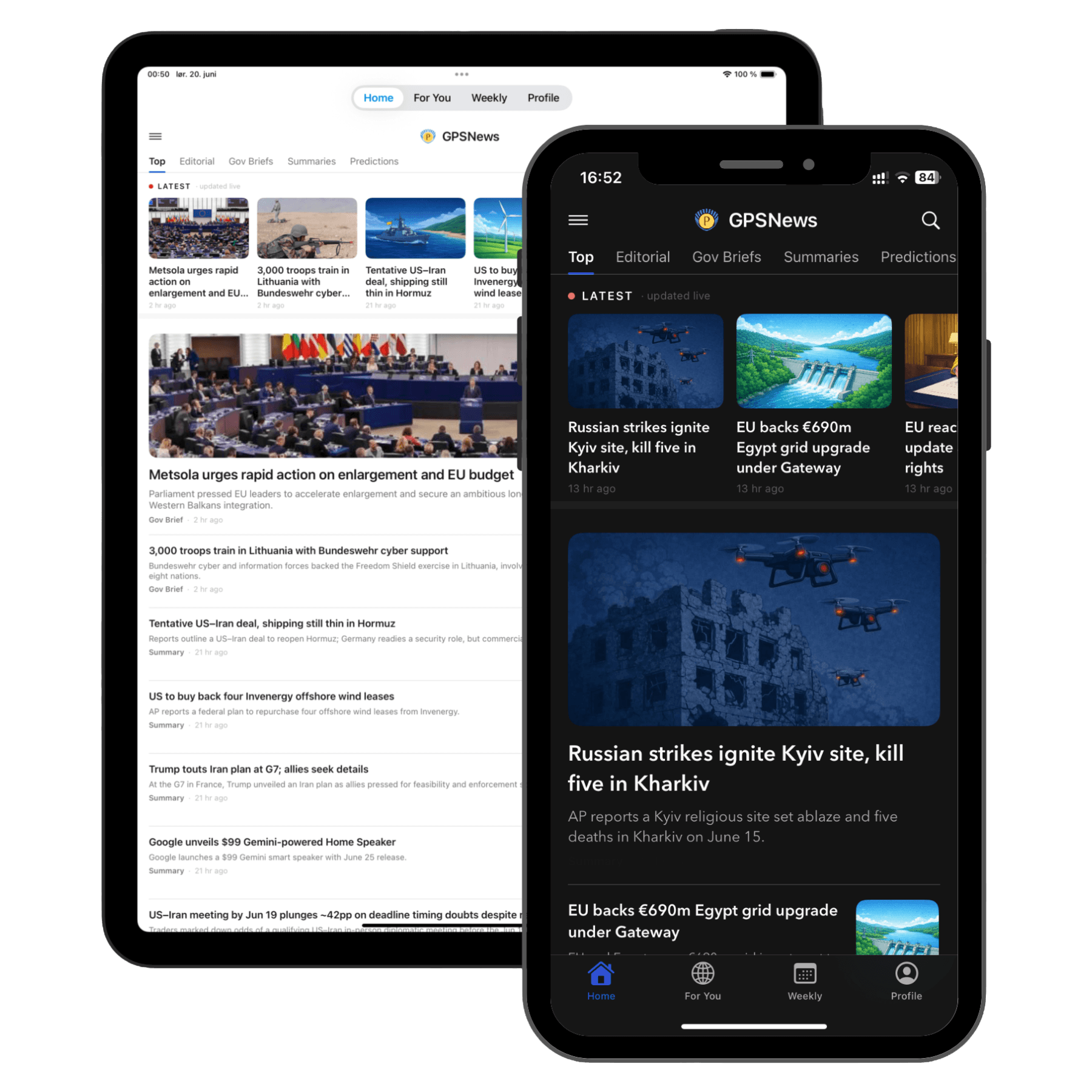
Read GPSNews on iPhone
Daily geopolitical briefings, government updates, and prediction signals in one focused app.
Newsletter
Stay Ahead Of The Next Signal
Get briefings in your inbox when new analysis and reports are published.