
Fat Man & Little Boy
The two atomic bombs used against Hiroshima and Nagasaki at the start of the nuclear age
Fat Man and Little Boy were the two atomic bombs used by the United States against Japan in August 1945, destroying Hiroshima and Nagasaki and marking the beginning of the nuclear weapons era.
Definition
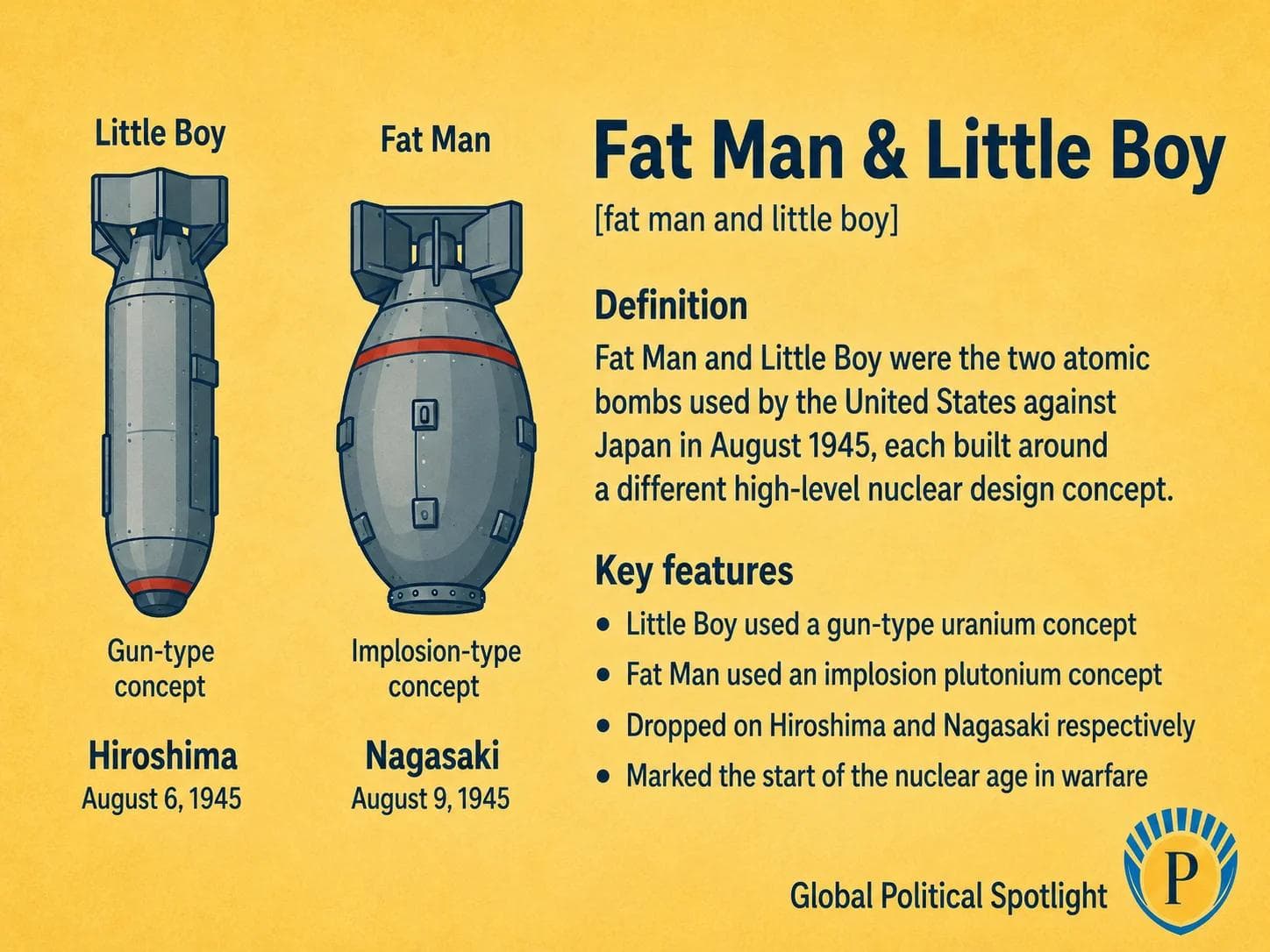
Little Boy and Fat Man were the two atomic bombs used by the United States against Japan during the final phase of World War II. Little Boy was dropped on Hiroshima on August 6, 1945, and Fat Man was dropped on Nagasaki on August 9, 1945.
The two weapons used different broad design concepts. Little Boy used a uranium gun-type design, while Fat Man used a plutonium implosion design. Their use caused mass civilian casualties, destroyed urban areas, and transformed global security politics.
The bombings remain among the most consequential and contested events in modern history. They are central to debates about wartime decision-making, nuclear deterrence, humanitarian consequences, arms control, and the ethical limits of military technology.
Why It Matters
Fat Man and Little Boy matter because they marked the first and only wartime use of nuclear weapons. Their destructive effects reshaped military strategy, international law debates, alliance planning, and public understanding of existential risk.
Their legacy continues through nuclear deterrence doctrines, non-proliferation treaties, arms-control negotiations, survivor testimony, memorial diplomacy, and debates over whether nuclear weapons prevent major war or create unacceptable humanitarian danger.
GPS should treat Fat Man and Little Boy as foundational reference points for the nuclear age. Key watch areas include nuclear deterrence, non-proliferation, arms control, nuclear memory in U.S.-Japan relations, humanitarian impacts of nuclear weapons, and how the historical experience of Hiroshima and Nagasaki shapes contemporary debates about nuclear risk.
Key Facts
- Type
- Atomic bombs used in wartime
- User
- United States
- Targets
- Hiroshima on August 6, 1945, and Nagasaki on August 9, 1945
- Little Boy
- Uranium gun-type atomic bomb used against Hiroshima
- Fat Man
- Plutonium implosion-type atomic bomb used against Nagasaki
- Historical context
- Used during the final phase of World War II before Japan's surrender
- Strategic significance
- Marked the beginning of the nuclear weapons era and changed global military strategy
- Humanitarian legacy
- Associated with mass civilian casualties, long-term health effects, survivor testimony, and nuclear disarmament movements
FAQ
What were Fat Man and Little Boy?
Fat Man and Little Boy were the two atomic bombs used by the United States against Japan in August 1945. Little Boy was dropped on Hiroshima, and Fat Man was dropped on Nagasaki.
What was the difference between Little Boy and Fat Man?
Little Boy used a uranium gun-type design, while Fat Man used a plutonium implosion design. The two bombs therefore represented different early nuclear weapon design concepts.
When were Hiroshima and Nagasaki bombed?
Hiroshima was bombed on August 6, 1945, and Nagasaki was bombed on August 9, 1945. Japan announced its surrender shortly afterward, and the formal surrender took place on September 2, 1945.
Why are Fat Man and Little Boy geopolitically important?
They are geopolitically important because they marked the first use of nuclear weapons in war and began the nuclear age. Their legacy shaped deterrence theory, arms control, non-proliferation, alliance politics, and global disarmament movements.
Were Fat Man and Little Boy the same type of weapon?
No. Both were atomic bombs, but they used different fissile materials and design principles. Little Boy used uranium in a gun-type design, while Fat Man used plutonium in an implosion design.
What is the legacy of Hiroshima and Nagasaki?
The legacy includes the start of the nuclear age, survivor testimony, memorial diplomacy, debate over wartime necessity and ethics, and continuing global efforts to reduce nuclear risk through deterrence, arms control, non-proliferation, and disarmament.
Recent Developments
G7 leaders visited the Hiroshima Peace Memorial Museum
Leaders attending the 2023 G7 summit in Hiroshima visited the Hiroshima Peace Memorial Museum, reinforcing the continuing diplomatic significance of Hiroshima and Nagasaki in nuclear risk, memory, and disarmament debates.
G7 Hiroshima SummitStates parties held the first meeting under the Treaty on the Prohibition of Nuclear Weapons
The first meeting of states parties to the Treaty on the Prohibition of Nuclear Weapons highlighted the humanitarian consequences of nuclear weapons, a debate shaped historically by the bombings of Hiroshima and Nagasaki.
United Nations Office for Disarmament AffairsSources6 references
- Atomic Heritage Foundation - Little Boy and Fat Man
Reference source on the two atomic bombs, their designs, and their role in World War II history.
- National Museum of Nuclear Science & History
Institutional source for nuclear history, Manhattan Project context, and public education on nuclear weapons.
- U.S. Department of Energy - Manhattan Project History
Official U.S. government historical material on the Manhattan Project and development of early atomic weapons.
- Hiroshima Peace Memorial Museum
Museum source documenting the bombing of Hiroshima, survivor testimony, and nuclear memory.
- Nagasaki Atomic Bomb Museum
Museum source documenting the bombing of Nagasaki, humanitarian consequences, and peace education.
- United Nations Office for Disarmament Affairs - Nuclear Weapons
Institutional source for contemporary nuclear disarmament, non-proliferation, and arms-control frameworks.

GPSNews App
Read GPSNews on iPhone
Daily geopolitical briefings, government updates, and prediction signals in one focused app.
Newsletter
Stay Ahead Of The Next Signal
Get briefings in your inbox when new analysis and reports are published.