
W76 & W88 Warheads
U.S. nuclear warhead designs associated with submarine-launched ballistic missile forces
The W76 and W88 are U.S. nuclear warhead designs associated with Trident submarine-launched ballistic missiles, supporting the sea-based leg of the U.S. nuclear triad and strategic deterrence.
Definition
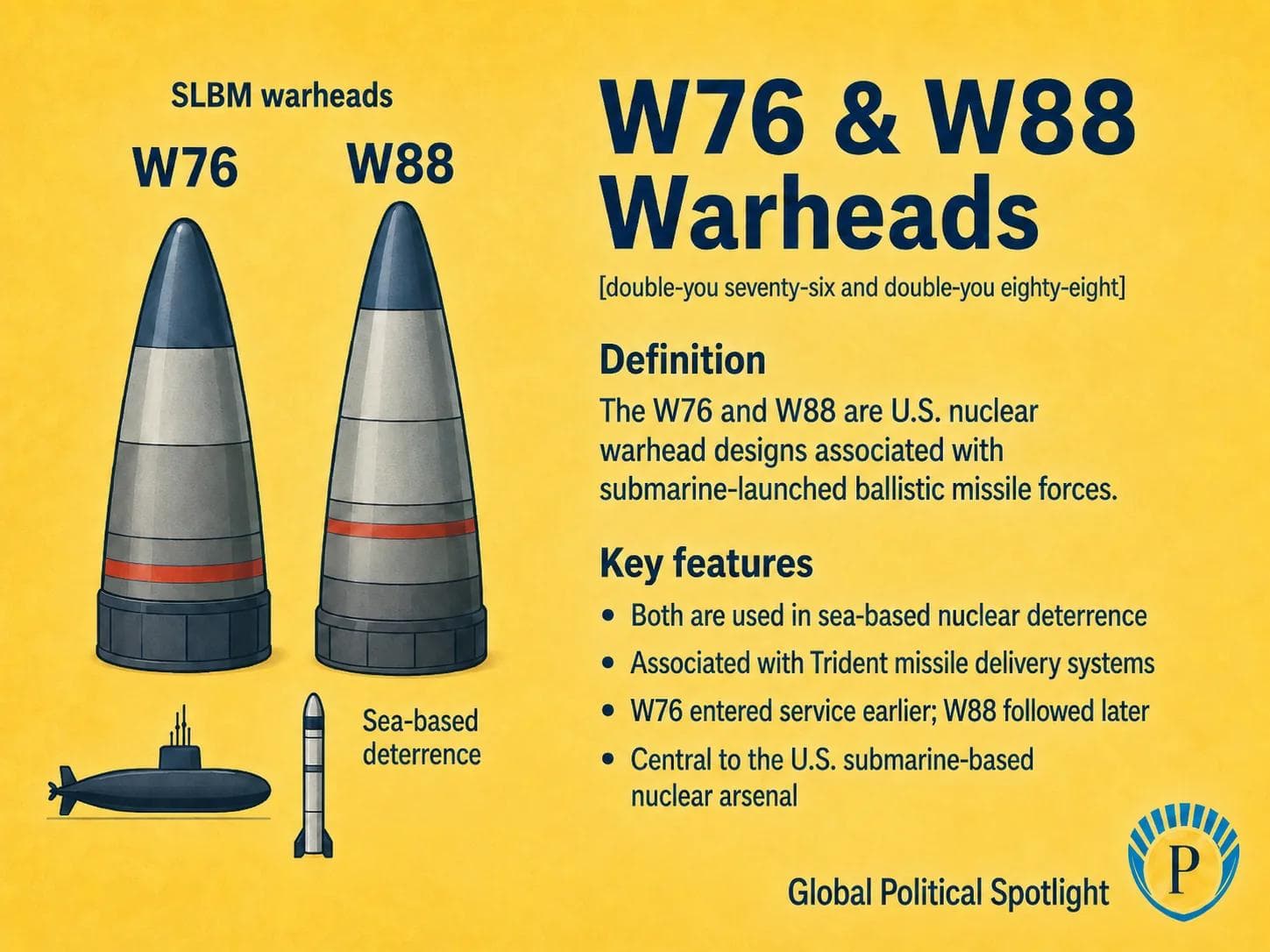
The W76 and W88 are U.S. nuclear warhead designs associated with submarine-launched ballistic missile forces. They are carried on Trident ballistic missiles deployed from U.S. ballistic missile submarines and form a central part of the sea-based leg of the U.S. nuclear triad.
The warheads are not delivery systems by themselves. Their strategic role depends on the wider system that includes Trident missiles, ballistic missile submarines, nuclear command and control, maintenance infrastructure, and U.S. political authorization procedures.
Why It Matters
The W76 and W88 matter because they sit inside one of the most survivable parts of the U.S. nuclear force: submarines that can patrol while hidden at sea. This survivability supports second-strike deterrence, meaning an adversary must assume the United States could respond even after a major attack.
They also matter for nuclear modernization and arms-control debates. Warhead life-extension programs, submarine replacement, missile modernization, and questions about deployed warhead numbers all affect strategic stability and the credibility of U.S. extended deterrence commitments.
GPS should watch the W76 and W88 as durable indicators of U.S. sea-based nuclear deterrence, warhead modernization, and strategic force posture. Key issues include Trident missile sustainment, Columbia-class submarine deployment, arms-control limits, low-yield warhead debates, stockpile stewardship, and how adversaries interpret U.S. second-strike capability.
Key Facts
- Type
- Nuclear warhead designs
- Primary state actor
- United States
- Associated delivery system
- Trident submarine-launched ballistic missiles
- Force posture role
- Supports the sea-based leg of the U.S. nuclear triad
- Strategic function
- Contributes to survivable second-strike deterrence from ballistic missile submarines
- Modernization context
- Subject to stockpile stewardship, life-extension, and sustainment programs rather than new explosive nuclear testing
- Operational ecosystem
- Depends on submarines, Trident missiles, command-and-control systems, crews, maintenance, and political authorization
- Arms-control relevance
- Connected to debates over deployed strategic warheads, delivery systems, and future nuclear force limits
FAQ
What are the W76 and W88 warheads?
The W76 and W88 are U.S. nuclear warhead designs associated with Trident submarine-launched ballistic missiles. They are part of the sea-based component of the U.S. nuclear deterrent.
Are the W76 and W88 missiles?
No. The W76 and W88 are warheads, not missiles. They are carried by delivery systems such as Trident submarine-launched ballistic missiles, which are launched from ballistic missile submarines.
Why do W76 and W88 warheads matter?
They matter because they support a survivable sea-based nuclear deterrent. Submarines are difficult to detect at sea, which helps preserve the ability to respond after an attack and strengthens second-strike deterrence.
How do these warheads relate to the U.S. nuclear triad?
The U.S. nuclear triad consists of land-based intercontinental ballistic missiles, strategic bombers, and submarine-launched ballistic missiles. W76 and W88 warheads are associated with the submarine-launched missile leg of that triad.
What is the difference between a warhead and a delivery system?
A warhead is the explosive nuclear payload. A delivery system is the platform that carries it to a target, such as a missile, aircraft, or submarine-launched ballistic missile.
What are the limits of W76 and W88 warheads?
Their deterrent role depends on the entire nuclear enterprise, including submarines, missiles, secure command-and-control systems, maintenance, crew readiness, and political authorization. They are not independent weapons outside that system.
Recent Developments
U.S. nuclear modernization planning continued to prioritize sea-based deterrence
U.S. defense and nuclear security planning continued to identify the submarine-launched ballistic missile force as a central pillar of strategic deterrence, linking warhead sustainment to Trident missiles and future Columbia-class ballistic missile submarines.
U.S. Department of DefenseNNSA budget materials continued stockpile modernization work
U.S. National Nuclear Security Administration budget materials continued to frame warhead life-extension and stockpile stewardship activities as part of sustaining a safe, secure, and effective nuclear deterrent without explosive nuclear testing.
U.S. National Nuclear Security AdministrationSources6 references
- U.S. National Nuclear Security Administration
Official background on maintaining the U.S. nuclear stockpile and stockpile stewardship.
- U.S. Department of Defense: 2022 Nuclear Posture Review
Official U.S. policy document describing nuclear deterrence, modernization, and force posture.
- U.S. Navy Strategic Systems Programs
Official U.S. Navy command responsible for sea-based strategic weapons systems.
- U.S. Navy Fact File: Fleet Ballistic Missile Submarines
Official reference on U.S. ballistic missile submarines and their strategic deterrence role.
- Congressional Research Service
Reference source for U.S. strategic nuclear forces, nuclear modernization, and arms-control context.
- NATO: Nuclear Deterrence
Institutional background on nuclear deterrence and alliance nuclear policy.

GPSNews App
Read GPSNews on iPhone
Daily geopolitical briefings, government updates, and prediction signals in one focused app.
Newsletter
Stay Ahead Of The Next Signal
Get briefings in your inbox when new analysis and reports are published.