
Wakhan Corridor
A narrow Afghan mountain frontier linking Central and South Asia
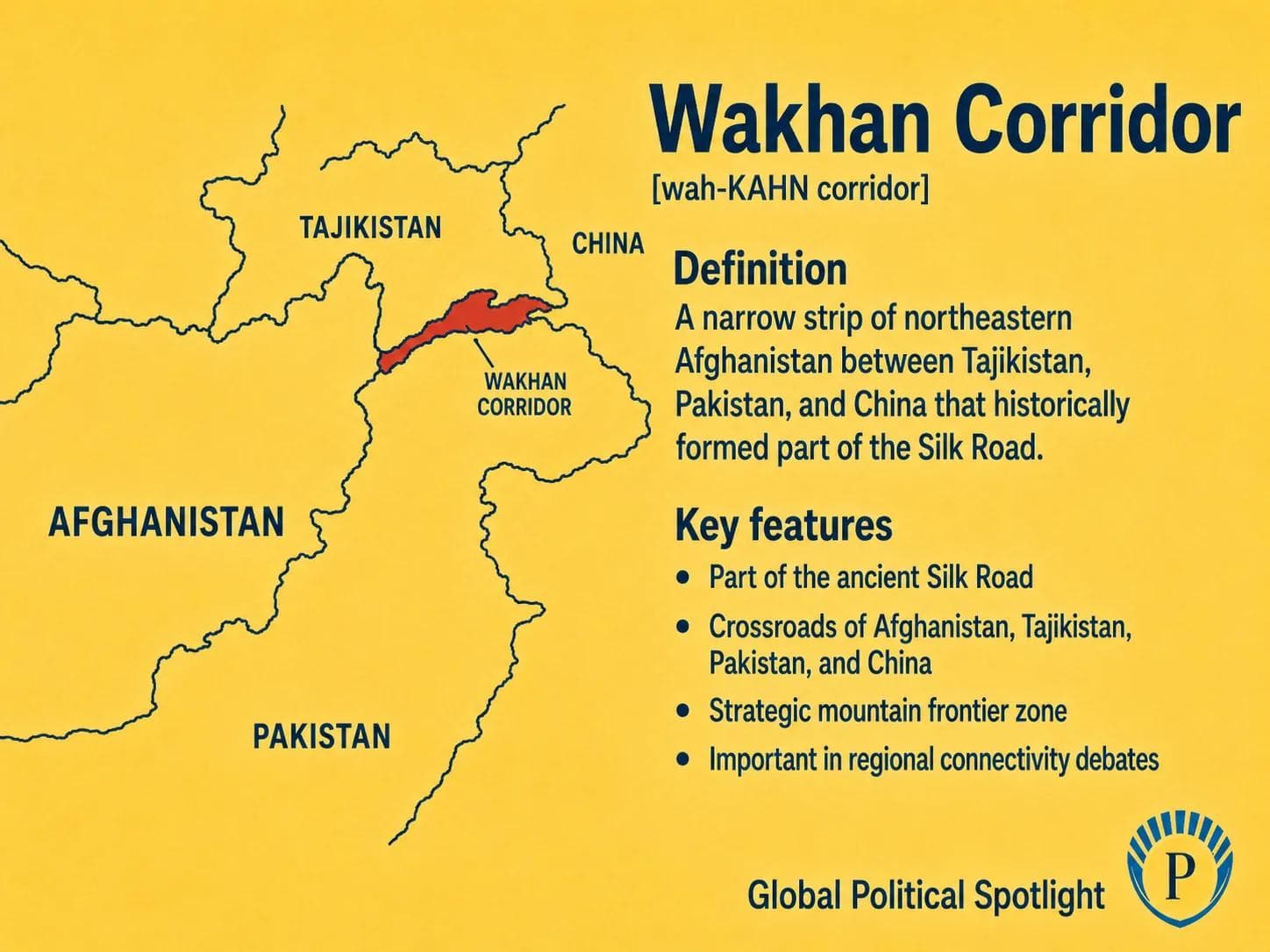
The Wakhan Corridor is a narrow strip of northeastern Afghanistan bordering Tajikistan, Pakistan, and China, historically tied to Silk Road routes and modern debates over regional connectivity.
Definition
The Wakhan Corridor is a narrow strip of territory in northeastern Afghanistan. It stretches between Tajikistan to the north and Pakistan to the south, reaching Afghanistan's short border with China in the east.
The corridor lies in high mountain terrain around the Pamir and Hindu Kush regions. Historically connected to Silk Road movement, it has long functioned as a remote frontier zone between empires, states, trade routes, and security systems.
Why It Matters
The Wakhan Corridor matters because it places Afghanistan at a geographic junction touching Central Asia, South Asia, and China. Its narrow shape and mountain terrain make it strategically symbolic even where practical transport infrastructure remains limited.
The corridor is important in debates over regional connectivity, border security, infrastructure, and influence. Any future route through Wakhan would raise questions about Afghan stability, Chinese security interests, Pakistan's position, and Central Asian access.
GPS should watch the Wakhan Corridor as a strategic frontier where Afghanistan's geography intersects with China, Pakistan, Tajikistan, Central Asian connectivity, and border security. Its importance is less about current traffic volume and more about long-term infrastructure potential, symbolic geography, and regional security calculations.
Key Facts
- Type
- Narrow mountain corridor and strategic frontier
- Location
- Northeastern Afghanistan
- Borders
- Tajikistan, Pakistan, and China
- Geographic setting
- Pamir and Hindu Kush mountain regions
- Historic role
- Associated with Silk Road-era movement and frontier trade routes
- Strategic role
- Links Afghanistan geographically to China and sits between Central and South Asian security systems
- Primary actors
- Afghanistan, China, Pakistan, Tajikistan, and regional border communities
- Core constraint
- Extreme terrain, limited infrastructure, insecurity, climate conditions, and difficult cross-border logistics
FAQ
What is the Wakhan Corridor?
The Wakhan Corridor is a narrow strip of northeastern Afghanistan that reaches toward China and borders Tajikistan and Pakistan. It is a remote mountain frontier with historical and strategic significance.
Why is the Wakhan Corridor important?
It is important because it places Afghanistan at a geographic crossroads between Central Asia, South Asia, and China, making it relevant to border security, regional connectivity, and long-term infrastructure debates.
Which countries border the Wakhan Corridor?
The Wakhan Corridor is part of Afghanistan and borders Tajikistan to the north, Pakistan to the south, and China at its eastern end.
Was the Wakhan Corridor part of the Silk Road?
The broader Wakhan and Pamir region was historically linked to Silk Road movement, mountain trade routes, and crossings between Central Asia, China, and South Asia.
Does the Wakhan Corridor connect Afghanistan to China?
Yes. Afghanistan has a short border with China at the eastern end of the Wakhan Corridor, although the terrain is extremely difficult and practical transport links are limited.
What are the main limits of the Wakhan Corridor?
Its main limits are geography and infrastructure. High mountains, harsh weather, remoteness, security concerns, and limited transport capacity make large-scale connectivity difficult.
Sources6 references
- Encyclopaedia Britannica - Wakhan Corridor
Reference background on the geography and historical significance of the Wakhan Corridor.
- CIA World Factbook - Afghanistan
Reference context on Afghanistan's geography, borders, and regional position.
- CIA World Factbook - Tajikistan
Reference context on Tajikistan's geography and its border region with Afghanistan.
- CIA World Factbook - Pakistan
Reference context on Pakistan's geography and regional position south of the Wakhan Corridor.
- World Bank - Afghanistan
Country context for Afghanistan's development, infrastructure constraints, and regional connectivity challenges.
- UNESCO - Silk Roads Programme
Institutional background on the historical Silk Roads and cross-regional exchange across Asia.

GPSNews App
Read GPSNews on iPhone
Daily geopolitical briefings, government updates, and prediction signals in one focused app.
Newsletter
Stay Ahead Of The Next Signal
Get briefings in your inbox when new analysis and reports are published.