
Switchblade 300 & 600
U.S. loitering munitions combining portable launch, surveillance, and precision strike
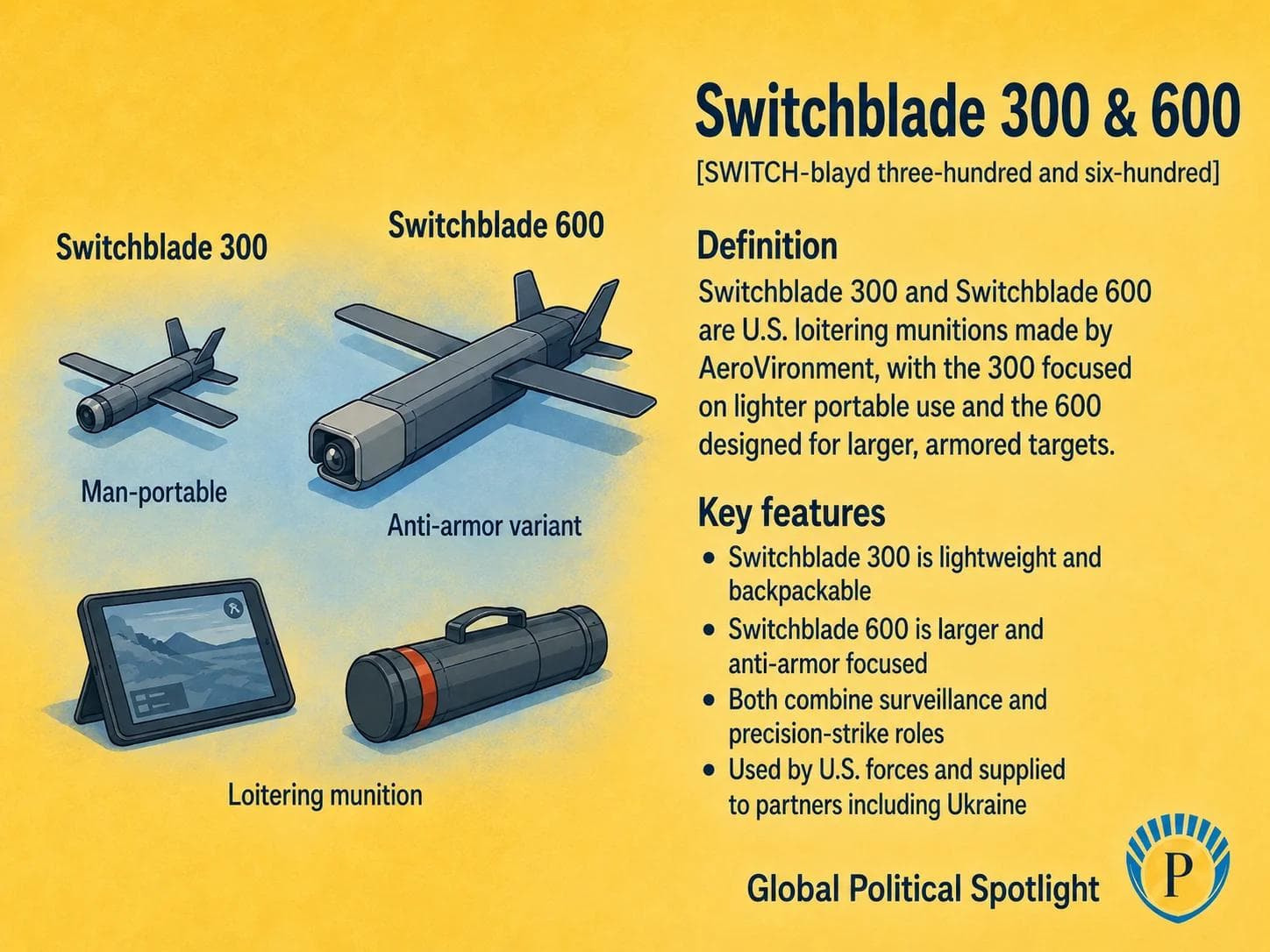
Switchblade 300 and 600 are U.S. loitering munitions made by AeroVironment, with the 300 focused on lighter portable use and the 600 designed for larger targets including armored vehicles.
Definition
Switchblade 300 and Switchblade 600 are U.S. loitering munitions made by AeroVironment. They are designed to be launched from compact systems, fly toward a target area, provide observation or target confirmation, and then conduct a one-way precision strike.
The Switchblade 300 is generally associated with lighter, more portable tactical use against personnel or lightly protected targets, while the larger Switchblade 600 is associated with longer reach and heavier targets, including armored vehicles. Both illustrate the wider shift toward small, precise, expendable drone weapons.
Why It Matters
Switchblade systems matter because they bring precision strike closer to small units. A soldier or small team can potentially launch a munition, observe a target area, and strike without calling in a crewed aircraft, artillery mission, or larger missile.
They also matter geopolitically because their supply to Ukraine made loitering munitions a visible part of security assistance and modern battlefield adaptation. Their role highlights the growing importance of portable precision weapons, counter-drone defenses, electronic warfare, and defense-industrial production capacity.
GPS should watch Switchblade 300 and 600 as reference points for small-unit precision strike, U.S. security assistance, and the diffusion of loitering munitions into conventional warfare. Long-term indicators include production scale, export approvals, Ukraine battlefield lessons, anti-armor effectiveness, counter-drone adaptation, and how militaries integrate portable loitering munitions into infantry, reconnaissance, and special operations doctrine.
Key Facts
- Type
- Loitering munitions
- Manufacturer
- AeroVironment
- Country of origin
- United States
- Switchblade 300 role
- Lighter portable loitering munition for tactical targets and small-unit use
- Switchblade 600 role
- Larger loitering munition associated with heavier targets, including armored vehicles
- Launch concept
- Designed for tube launch from portable or compact launch systems
- Operational logic
- Combines surveillance, target confirmation, loitering, and one-way precision strike
- Conflict relevance
- Associated with U.S. military assistance to Ukraine and wider lessons from the Russia-Ukraine war
FAQ
What are Switchblade 300 and Switchblade 600?
Switchblade 300 and 600 are U.S. loitering munitions made by AeroVironment. They are designed to launch, fly to a target area, loiter, provide observation or target confirmation, and then conduct a one-way precision strike.
What is the difference between Switchblade 300 and Switchblade 600?
The Switchblade 300 is the lighter and more portable system, generally associated with small-unit tactical use. The Switchblade 600 is larger and designed for heavier targets, including armored vehicles.
Are Switchblade systems drones or missiles?
They combine features of both. They fly like small uncrewed aircraft and can loiter before attack, but they function as expendable munitions because they are destroyed during the strike.
Why do Switchblade loitering munitions matter?
They matter because they give smaller units access to precision strike without requiring crewed aircraft or large missile systems. They also show how surveillance and strike can be combined in a compact weapon.
How are Switchblade systems linked to Ukraine?
The United States supplied Switchblade-type loitering munitions to Ukraine as part of security assistance after Russia's full-scale invasion, making them part of wider debates about drone warfare, portable precision weapons, and Western military aid.
What are the limits of Switchblade loitering munitions?
They can be affected by electronic warfare, jamming, weather, limited endurance, target movement, air defenses, operator training, and the quality of reconnaissance data. Their value depends on how well they are integrated into broader battlefield networks.
Recent Developments
United States announced Switchblade systems as part of Ukraine security assistance
The U.S. Department of Defense announced security assistance to Ukraine that included tactical unmanned aerial systems, widely reported to include Switchblade loitering munitions, making the system part of broader Ukraine-related drone warfare debates.
U.S. Department of DefenseNATO continued to highlight drone and counter-drone lessons from Ukraine
NATO public analysis continued to emphasize uncrewed systems, electronic warfare, and counter-drone adaptation as important lessons from the war in Ukraine, where portable loitering munitions and one-way attack drones gained prominence.
NATOSources6 references
- AeroVironment
Manufacturer reference for the Switchblade family of loitering munitions.
- U.S. Department of Defense
Official U.S. security assistance fact sheet relevant to Ukraine-related supply of tactical unmanned systems.
- U.S. Congressional Research Service
Reference background on loitering munitions and policy considerations.
- NATO
Institutional background on NATO adaptation and lessons from modern conflict, including uncrewed systems.
- SIPRI
Institutional research on emerging military technologies, uncrewed systems, and arms-control implications.
- RAND Corporation
Research background on unmanned aerial vehicles and their military and policy implications.

GPSNews App
Read GPSNews on iPhone
Daily geopolitical briefings, government updates, and prediction signals in one focused app.
Newsletter
Stay Ahead Of The Next Signal
Get briefings in your inbox when new analysis and reports are published.