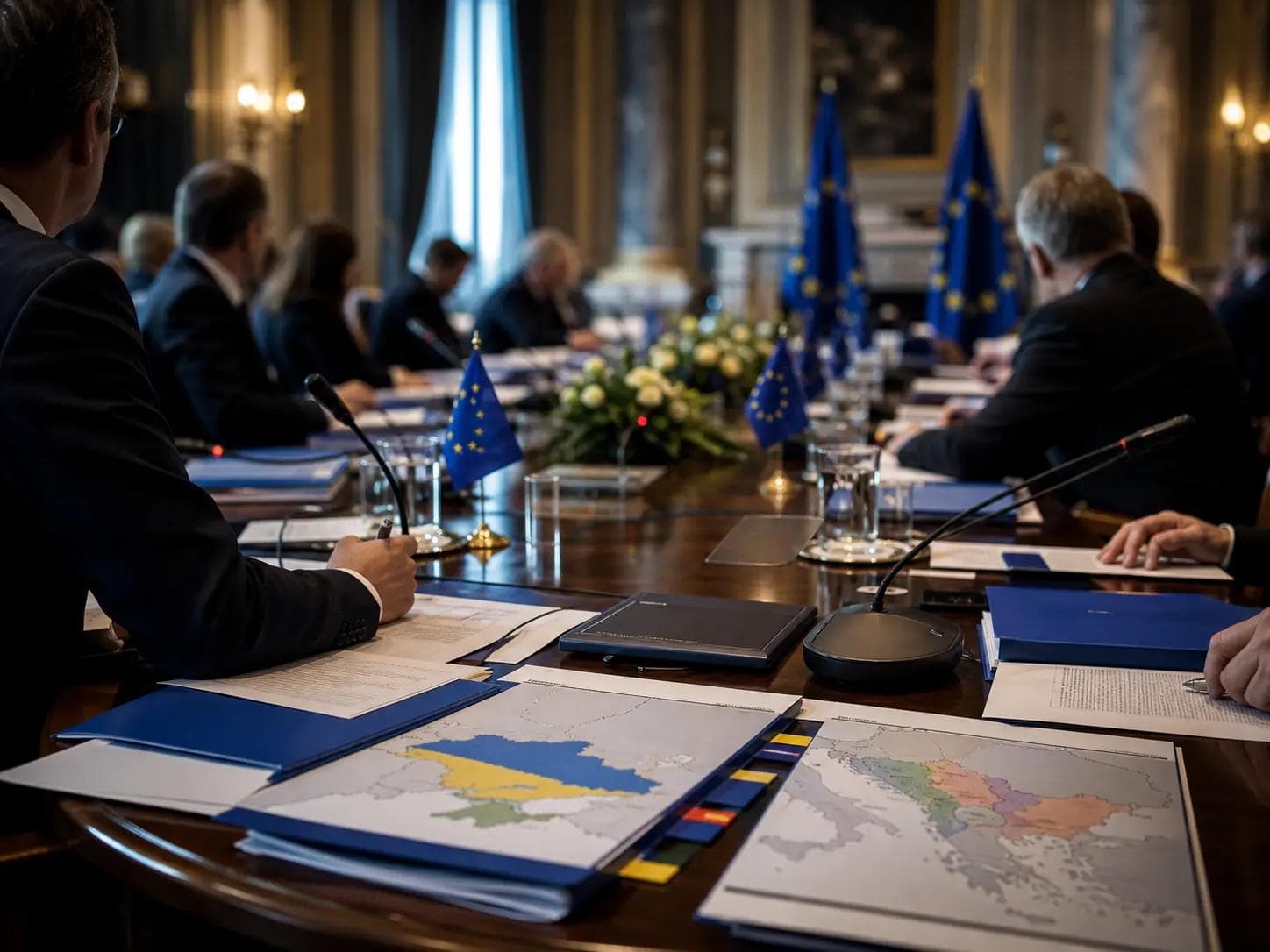
Key Developments
On 15 October 2026, the Ministry for Europe and Foreign Affairs said the EU had adopted 1,600 new Russia sanctions and released €5 billion for Ukraine, while HM Government told the OSCE that sustained pressure on Moscow was needed after recent attacks on Ukrainian civilians and energy infrastructure.
Key Statistics
- 1,600 new sanctions were adopted against Russian officials linked to the military-industrial sector
- €5 billion was recently disbursed to support Ukraine
- €90 billion was the size of the wider EU loan package cited by France
- €250 billion in savings from reduced Russian energy purchases was cited by France
- 150 civilians were killed in Ukraine in the week referenced by the UK at the OSCE
- 33 civilians were killed by bombing, according to the UK statement
- 22 civilians were killed in a residential building, according to the UK statement
Main Body
On 15 October 2026, the Ministry for Europe and Foreign Affairs said the EU had adopted 1,600 new sanctions against Russian officials tied to the military-industrial complex and had released €5 billion for Ukraine. On the same day, HM Government told the OSCE that Russia’s attacks on civilian and energy infrastructure showed the need for continued support for Kyiv and greater economic pressure on Moscow.
The French ministry said the €5 billion payment formed part of a wider €90 billion loan package for Ukraine and linked the measures to EU resilience against Russia. HM Government said Ukraine had shown willingness to pursue ceasefires, while Russia had continued military attacks, and it said the UK planned to strengthen sanctions to support Ukraine’s defence and push Moscow toward serious negotiations.
The announcements followed related European and UK actions. On 13 October 2026, the Ministry for Europe and Foreign Affairs said new measures had raised total Russia-related designations from 3,000 to 4,600 since the start of the war. On 9 October 2026, HM Government told the UN Security Council it had announced 38 new sanctions against those supplying Russia’s military.
The coordinated emphasis on financing, sanctions and ceasefire diplomacy mattered because the Ministry for Europe and Foreign Affairs framed EU support as a tool for sustaining Ukraine, while HM Government framed pressure on Russia as necessary for a just and lasting peace. The statements kept Ukraine at the centre of European security diplomacy and tied economic measures directly to battlefield and civilian protection concerns.