
Magura V5
A Ukrainian unmanned surface vessel used in Black Sea operations against Russian naval assets
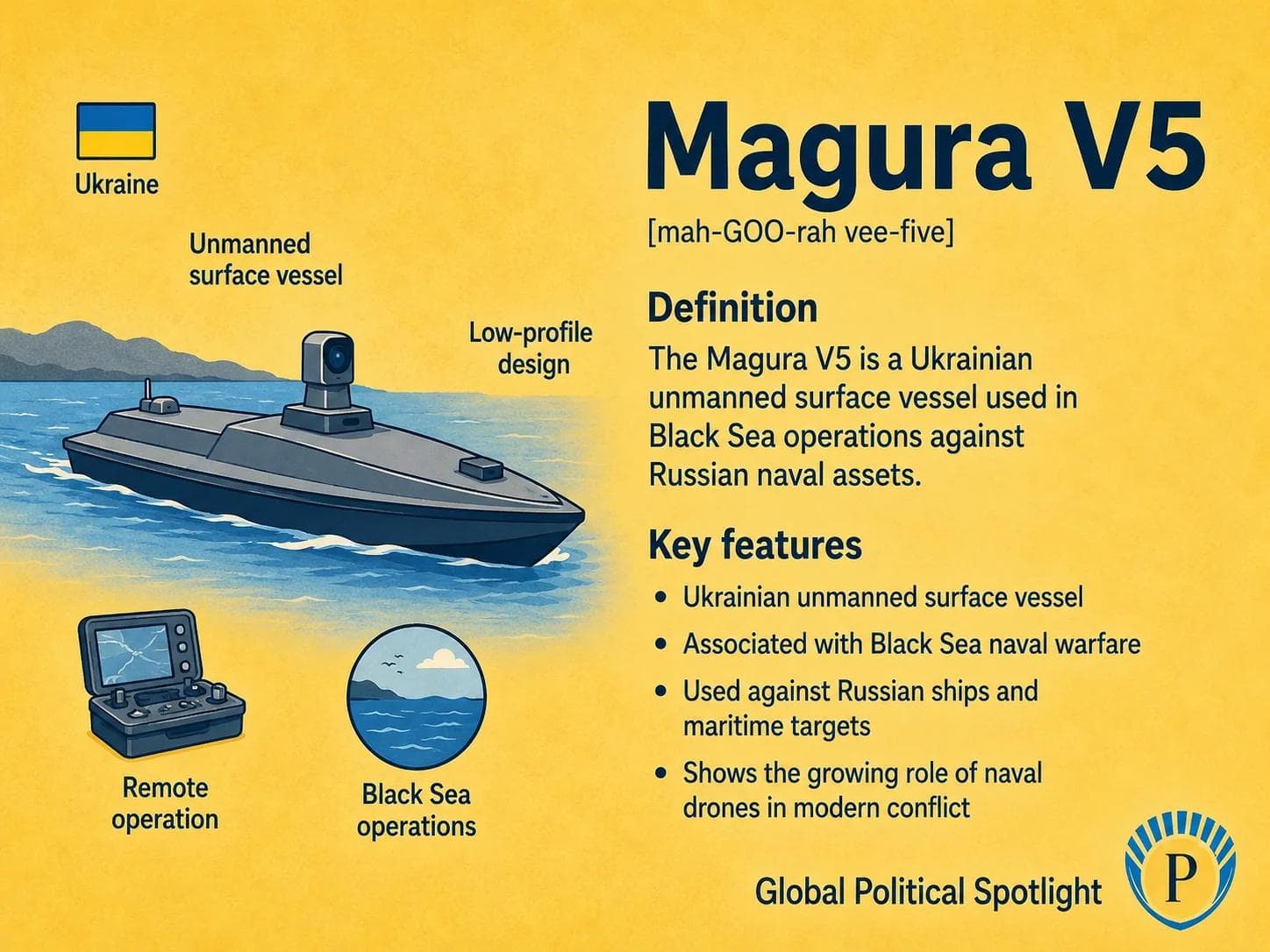
The Magura V5 is a Ukrainian unmanned surface vessel used in Black Sea operations, associated with low-profile remote operation, maritime strike missions, and the growing role of naval drones.
Definition
The Magura V5 is a Ukrainian unmanned surface vessel, or naval drone, designed for remote operation at sea. It is associated with low-profile movement, explosive maritime strike missions, reconnaissance-support roles, and Ukraine's wider effort to contest Russian naval activity in the Black Sea.
Unlike crewed warships, unmanned surface vessels can be used in higher-risk missions without placing sailors directly aboard the attacking craft. In the Russia-Ukraine war, systems such as the Magura V5 have helped demonstrate how small, relatively low-cost naval drones can threaten larger maritime assets, ports, and coastal infrastructure.
Why It Matters
Magura V5 matters because it shows how unmanned maritime systems can alter naval power dynamics. A state with limited conventional naval forces can still impose costs on a larger navy by using remote-controlled surface vessels, intelligence support, and coordinated maritime attacks.
It also matters for future naval warfare because it forces navies to adapt port security, ship defenses, coastal surveillance, electronic warfare, and rules for operating in confined seas. The Black Sea has become an important case study in how naval drones can influence sea denial and maritime deterrence.
GPS should watch the Magura V5 as a reference point for Ukraine's asymmetric maritime strategy, Black Sea sea-denial operations, and the broader rise of unmanned naval warfare. Long-term indicators include Russian countermeasures, Ukrainian production capacity, export interest, integration with aerial surveillance, port-defense adaptation, and whether naval drones become standard tools for smaller states facing stronger fleets.
Key Facts
- Type
- Unmanned surface vessel or naval drone
- Country of origin
- Ukraine
- Operating environment
- Black Sea maritime and coastal operations
- Design profile
- Low-profile remotely operated surface craft intended to reduce visibility at sea
- Core role
- Used for attacks on maritime targets and sea-denial operations against Russian naval assets
- Strategic logic
- Allows Ukraine to challenge larger naval forces through asymmetric unmanned systems
- Operational ecosystem
- Depends on remote control, communications, intelligence support, targeting, and maritime situational awareness
- Wider relevance
- Part of the growing role of naval drones in modern maritime warfare
FAQ
What is the Magura V5?
The Magura V5 is a Ukrainian unmanned surface vessel, often described as a naval drone. It is remotely operated and associated with Black Sea missions against Russian maritime targets.
Why does the Magura V5 matter?
It matters because it shows how unmanned surface vessels can give a smaller navy or coastal force a way to threaten larger ships, ports, and maritime infrastructure without relying on traditional warships.
How is the Magura V5 used in the Black Sea?
It is associated with Ukrainian operations targeting Russian naval assets and maritime infrastructure. Its role fits into a broader sea-denial strategy that combines drones, missiles, surveillance, and coastal defense.
Is the Magura V5 a boat or a drone?
It is both in practical terms: a small unmanned boat operated remotely as a naval drone. The formal category is usually unmanned surface vessel, or USV.
What are the limits of unmanned surface vessels like Magura V5?
They can be affected by electronic warfare, communications disruption, sea state, weather, visual detection, small-arms fire, ship defenses, navigation limits, and the quality of targeting intelligence.
How do naval drones change maritime warfare?
Naval drones can make port defense, ship protection, and coastal surveillance more complex. They allow lower-cost attacks on high-value maritime targets and may become important tools for sea denial in confined waters.
Recent Developments
Ukraine publicly presented the Magura V5 naval drone
Ukrainian officials and defense-industry representatives publicly presented the Magura V5 as an unmanned surface vessel connected to Ukraine's expanding naval-drone capabilities in the Black Sea.
Ukrainian Ministry of DefenceNATO continued to highlight uncrewed systems lessons from Ukraine
NATO public analysis continued to emphasize uncrewed systems, adaptation, and counter-drone lessons from the war in Ukraine, reinforcing the broader relevance of systems such as naval drones in modern conflict.
NATOSources6 references
- Ukrainian Ministry of Defence
Official Ukrainian defense source relevant to Ukraine's military systems and Black Sea operations.
- Defence Intelligence of Ukraine
Official Ukrainian military intelligence source frequently associated with public reporting on maritime drone operations.
- NATO
Institutional background on alliance adaptation and lessons from modern conflict, including uncrewed systems.
- International Institute for Strategic Studies
Institutional research source for military balance, Black Sea security, and naval warfare analysis.
- SIPRI
Institutional research on emerging military technologies, uncrewed systems, and arms-control implications.
- RAND Corporation
Research background on unmanned systems and their implications for military operations and security policy.

GPSNews App
Read GPSNews on iPhone
Daily geopolitical briefings, government updates, and prediction signals in one focused app.
Newsletter
Stay Ahead Of The Next Signal
Get briefings in your inbox when new analysis and reports are published.