
Krasukha-4
A Russian mobile electronic warfare system associated with radar disruption and surveillance denial
Krasukha-4 is a Russian ground-based electronic warfare system associated with disrupting radar and airborne surveillance systems, supporting battlefield protection, counter-reconnaissance, and electronic attack missions.
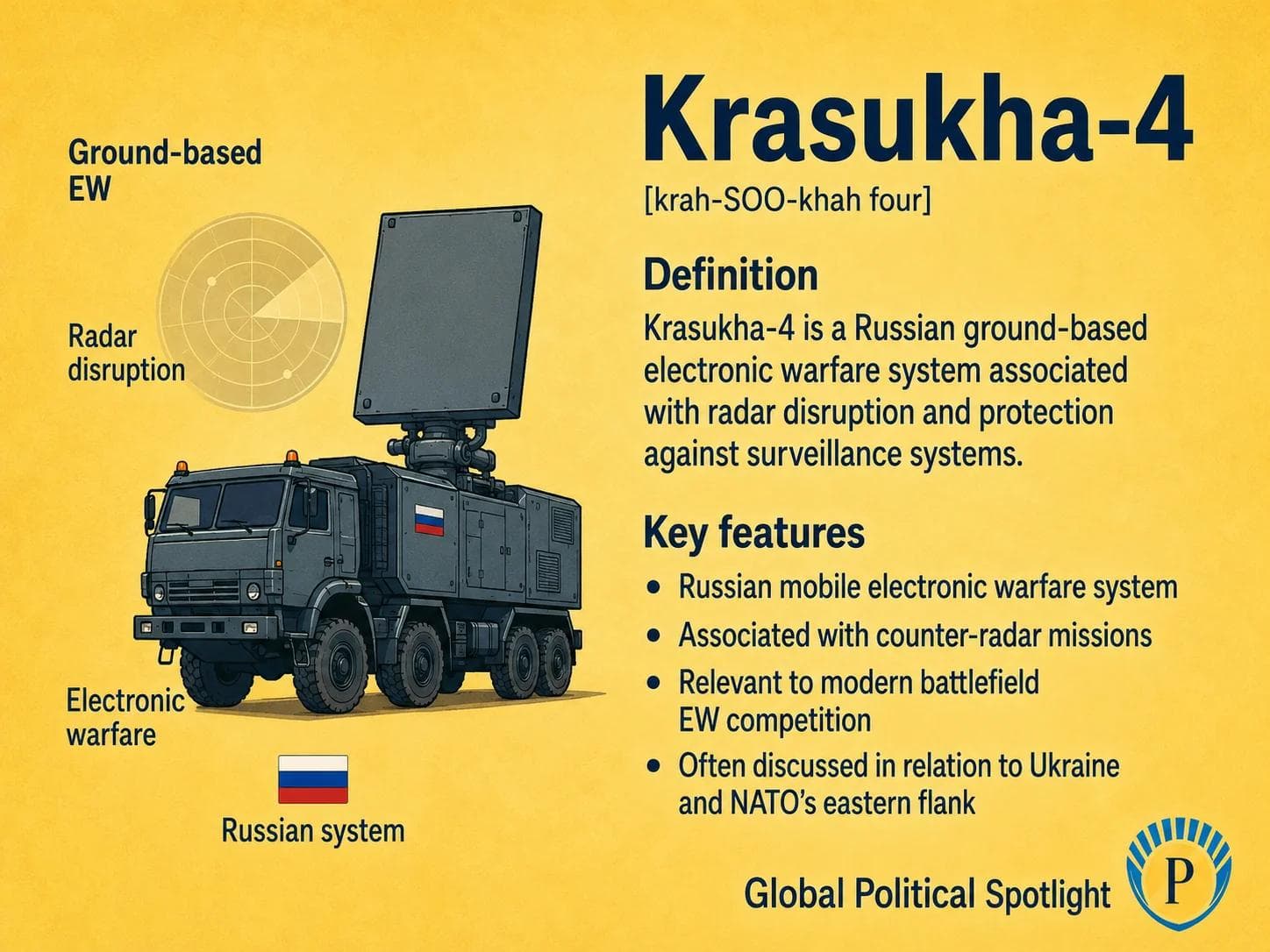
Definition
Krasukha-4 is a Russian mobile electronic warfare system generally associated with disrupting radar, airborne surveillance, and reconnaissance systems. It is mounted on a truck platform, allowing it to move with military formations or protect important operational areas.
Open-source defense references describe Krasukha-4 as part of Russia's broader electronic warfare architecture, which seeks to interfere with an opponent's ability to detect, track, communicate, and target effectively. Exact performance claims should be treated carefully because electronic warfare capabilities are often classified, exaggerated, or difficult to verify.
Why It Matters
Krasukha-4 matters because modern militaries rely heavily on radar, drones, satellites, aircraft, and networked sensors. Electronic warfare systems can reduce situational awareness, complicate targeting, and create uncertainty even without physically destroying a platform.
The system is geopolitically relevant because Russian electronic warfare has been closely watched in the context of Ukraine and NATO's eastern flank. Its role illustrates how electronic attack, counter-reconnaissance, and air-defense support have become central to contemporary land warfare.
GPS should monitor Krasukha-4 as part of Russia's wider electronic warfare ecosystem rather than as a stand-alone wonder weapon. Key watch areas include Russian counter-drone and counter-radar tactics, captured or damaged systems in Ukraine, NATO adaptation on the eastern flank, and the balance between electronic attack, air defense, and battlefield intelligence.
Key Facts
- Type
- Mobile ground-based electronic warfare system
- Country
- Russia
- Primary role
- Radar disruption, surveillance denial, and electronic attack support
- Platform
- Truck-mounted system designed for mobility and field deployment
- Operational context
- Associated with protection of high-value assets, air-defense networks, and battlefield formations
- Relevant domains
- Land warfare, air surveillance, radar operations, drones, and electronic spectrum control
- Strategic relevance
- Illustrates Russia's emphasis on electronic warfare as a way to contest NATO and Ukrainian sensing, targeting, and reconnaissance advantages
- Assessment limit
- Precise range, effectiveness, and target sets are difficult to verify from open sources
FAQ
What is Krasukha-4?
Krasukha-4 is a Russian mobile electronic warfare system associated with disrupting radar and airborne surveillance systems. It is generally described as a truck-mounted platform used for electronic attack and protection of military formations or important assets.
What does Krasukha-4 do?
Krasukha-4 is associated with jamming or disrupting radar and surveillance systems. In practical terms, such systems aim to make it harder for an opponent to detect, track, communicate, or target effectively.
Why does Krasukha-4 matter in Ukraine?
The war in Ukraine has highlighted the importance of drones, radar, signals intelligence, and battlefield surveillance. Russian electronic warfare systems such as Krasukha-4 are relevant because they are part of the contest over who can see, target, and protect forces on the battlefield.
Is Krasukha-4 a radar or a jammer?
Krasukha-4 is usually described as an electronic warfare or jamming system, not a conventional surveillance radar. Its role is associated with interfering with hostile radar and sensing systems rather than simply detecting targets.
Can Krasukha-4 stop drones or aircraft?
Electronic warfare can affect drones, aircraft sensors, radar links, and surveillance systems, but effectiveness depends on distance, frequency, target type, terrain, operator skill, and countermeasures. Open-source claims about exact performance should be treated cautiously.
Why is electronic warfare important for NATO?
NATO militaries depend on secure communications, radar, drones, satellites, and networked targeting. Russian electronic warfare systems demonstrate why resilience, spectrum management, and anti-jamming capabilities are central to eastern-flank defense planning.
Recent Developments
Ukrainian forces reportedly captured elements of a Krasukha-4 system
During the early phase of Russia's full-scale invasion of Ukraine, Ukrainian sources and open-source analysts reported the capture of components associated with Krasukha-4. The episode gave outside observers rare insight into a Russian electronic warfare system normally discussed through limited public information.
The War ZoneNATO continued to emphasize electronic warfare lessons from Ukraine
NATO and allied defense discussions have continued to treat electronic warfare, drone detection, jamming resilience, and counter-reconnaissance as major lessons from the war in Ukraine, reinforcing the strategic relevance of systems such as Krasukha-4 within broader spectrum warfare.
NATOSources6 references
- NATO - Electronic Warfare and Emerging Security Challenges
Institutional reference point for NATO's public discussion of modern defense adaptation, resilience, and electronic warfare lessons.
- Congressional Research Service - Russia's Electronic Warfare Capabilities
U.S. institutional research source for understanding Russian electronic warfare capabilities and their relevance to NATO security.
- Royal United Services Institute
Defense research source with analysis of Russian military adaptation, electronic warfare, drones, and lessons from Ukraine.
- The War Zone - Krasukha-4 Captured in Ukraine
Open-source defense reporting on the reported capture of Krasukha-4 components during Russia's war in Ukraine.
- International Institute for Strategic Studies
Reference source for broader military balance, Russian capabilities, and regional security context.
- Center for Strategic and International Studies
Think tank source for analysis of modern warfare, Russia, Ukraine, NATO, and military technology trends.

GPSNews App
Read GPSNews on iPhone
Daily geopolitical briefings, government updates, and prediction signals in one focused app.
Newsletter
Stay Ahead Of The Next Signal
Get briefings in your inbox when new analysis and reports are published.