What Are Tariffs and Do They Work?
Tariffs are one of the most widely used economic tools in geopolitics. Governments impose them during trade disputes, sanctions regimes, or industrial policy shifts. But what do tariffs actually do — and do they achieve their intended goals?
From a GPS analytical perspective, the answer requires understanding both economic theory and political incentives.
What Are Tariffs?
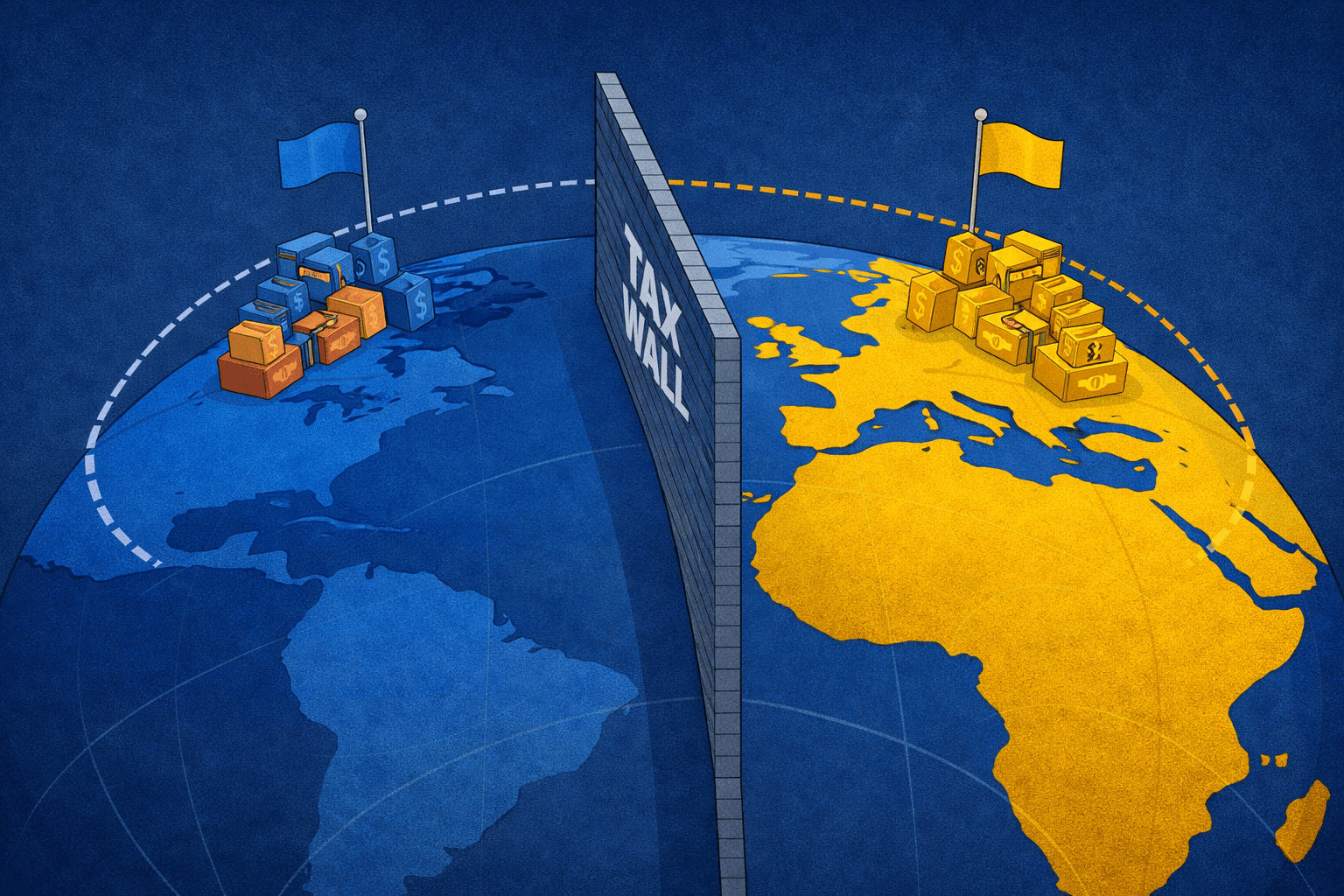
A tariff is a tax on imported goods or services, typically applied as a percentage of the product’s value when it enters a country. The main immediate effect is straightforward: tariffs raise the domestic price of foreign products, which reduces imports and changes market incentives (Oxford Economics).
Higher prices reduce imports, encourage domestic production, and generate government revenue — but they also create economic trade-offs.
The Economic Theory: Who Wins and Who Loses?
Economists usually analyze tariffs through four stakeholders: domestic producers, domestic consumers, governments, and foreign producers.
1. Domestic Producers — Benefit
When tariffs raise import prices, domestic firms face less foreign competition. As a result, they can increase output and often sell at higher prices, creating gains for producers (Pearson Economics).
This visible benefit is one of the main political reasons tariffs are implemented.
2. Domestic Consumers — Lose
Consumers typically bear the largest cost.
Because tariffs raise prices on both imported goods and competing domestic products, consumers pay more and purchase less. Economic theory shows that consumer losses generally exceed producer gains (eCampusOntario International Trade Text).
This is why tariffs are often described as a hidden tax on consumers.
3. Government — Gains Revenue
Tariffs generate revenue for governments as long as imports continue to occur. For example, tariff collections can contribute billions to national revenues depending on trade volumes and policy changes (Yale Budget Lab).
However, government gains do not fully offset overall economic losses.
4. Foreign Producers — Lose
Exporters in other countries face reduced demand when tariffs are imposed, harming their revenues and potentially their domestic economies.
This effect explains why tariffs can also be used as geopolitical leverage.
The Hidden Cost: Economic Inefficiency
Tariffs create what economists call deadweight loss — economic value that disappears entirely because mutually beneficial trades no longer occur.
When prices rise artificially, some transactions that would have benefited both buyers and sellers never happen. This reduces total economic welfare (Pearson Economics).
Research in international trade theory consistently shows that tariffs distort production and consumption decisions, creating inefficiencies even when certain industries benefit (University of Zurich Economics Paper).
From a purely economic standpoint, this is why most economists support free trade principles.
Why Countries Use Tariffs Anyway
Despite inefficiencies, tariffs remain politically attractive. There are three major reasons governments impose them.
1. National Security and Strategic Industries
Countries may protect industries considered vital to national security, such as semiconductors, defense technology, or energy.
Recent U.S.–China technology trade measures reflect this logic. Strategic protection is widely recognized as a core motivation for tariffs (Brookings Institution).
2. Economic Pressure or Geopolitical Leverage
Tariffs and trade restrictions can be used to pressure other countries politically, similar to sanctions. Their effectiveness depends heavily on the target country’s economic structure and resilience (Kiel Institute for the World Economy).
Examples include trade measures linked to geopolitical conflicts such as Russia–Ukraine tensions.
3. Protecting Domestic Industry or Trade Balances
Governments often use tariffs to support domestic employment, protect industries from foreign competition, or reduce trade deficits.
However, economists note that tariffs alone may not significantly change trade balances because deficits are driven by broader macroeconomic factors like savings and investment patterns (World Trade Organization).
Do Tariffs Work?
The answer depends on the objective.
Tariffs can:
✅ protect specific industries
✅ generate government revenue
✅ impose costs on foreign competitors
But they also:
❌ raise consumer prices
❌ create inefficiency
❌ risk retaliation from other countries
❌ reduce overall economic welfare in many cases
In practice, tariffs are less about economic efficiency and more about strategic trade-offs between political goals and economic costs.
The GPS Perspective
From a geopolitical analysis standpoint, tariffs should not be viewed purely as economic policy. They are tools of statecraft.
They influence:
- industrial competitiveness
- geopolitical leverage
- alliance dynamics
- global supply chains
- domestic political support
Understanding tariffs therefore requires both economic theory and political context — a core principle of geopolitical analysis.
Conclusion
Tariffs redistribute benefits across stakeholders:
- producers gain
- consumers lose
- governments collect revenue
- foreign exporters suffer
- economies experience inefficiencies
Whether they “work” depends on the goal — protection, leverage, or strategy — rather than purely economic outcomes.
For readers trying to understand global politics, tariffs are best understood as instruments where economics and geopolitics intersect.