Beyond Headlines: Can News Be Analyzed as a Semantic Factor Model?
Most news systems still sort the world in familiar ways: by topic, by source, by geography, or by whatever happened most recently. Politics goes in one column, business in another, technology somewhere else. Readers then do the rest themselves, scanning headlines and trying to work out what actually matters.
But that system only captures the surface of the news. It tells us what a story is about, not what kind of signal it contains.
Two articles can both sit in the politics section and still be fundamentally different. One may be little more than rhetoric dressed as urgency. Another may mark a genuine institutional shift. One may generate attention because it is dramatic. Another may deserve attention because it is consequential. A category label does not tell you the difference.
That raises an interesting possibility: what if news were not understood only through sections and subjects, but also through deeper dimensions that describe the character of a story?
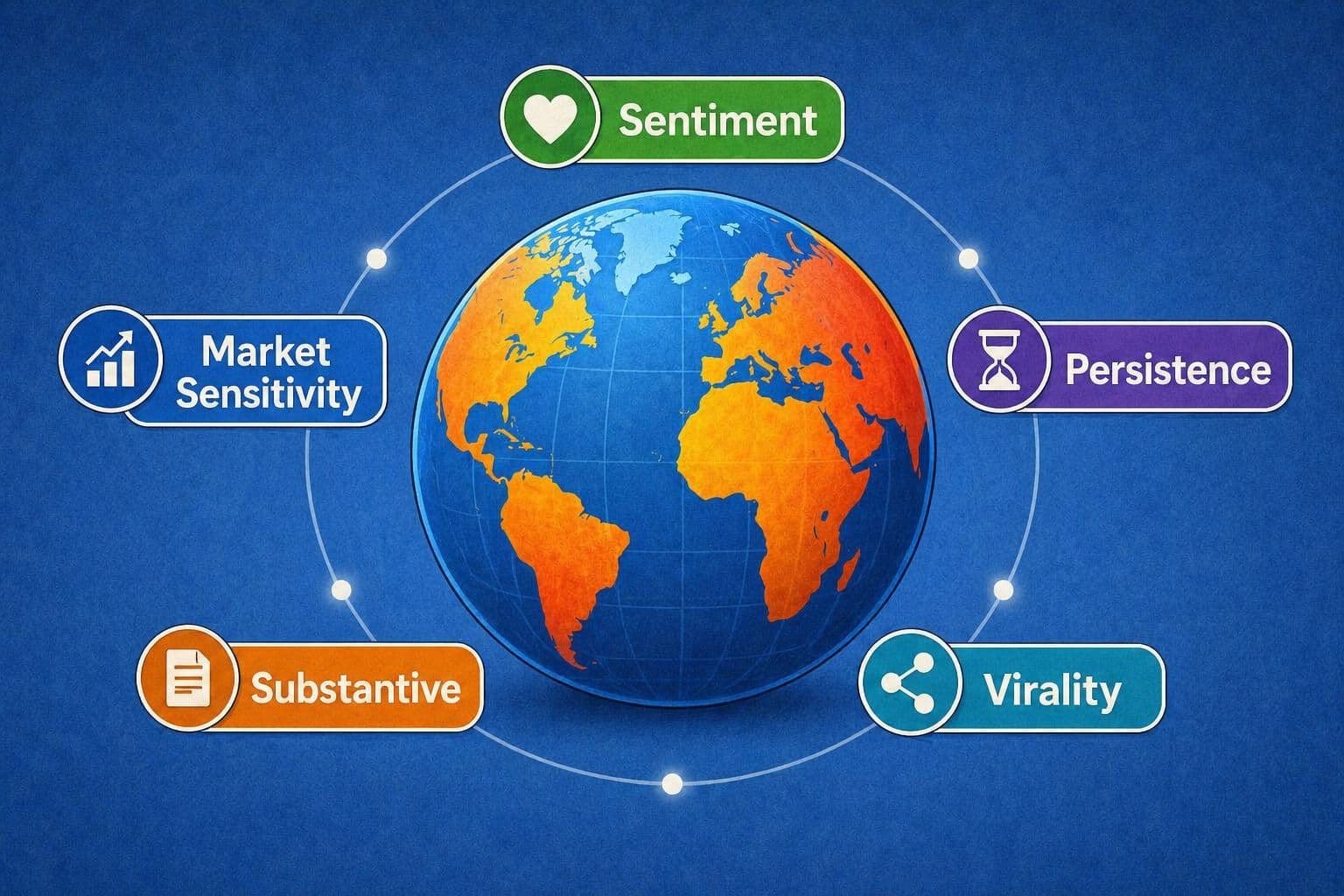
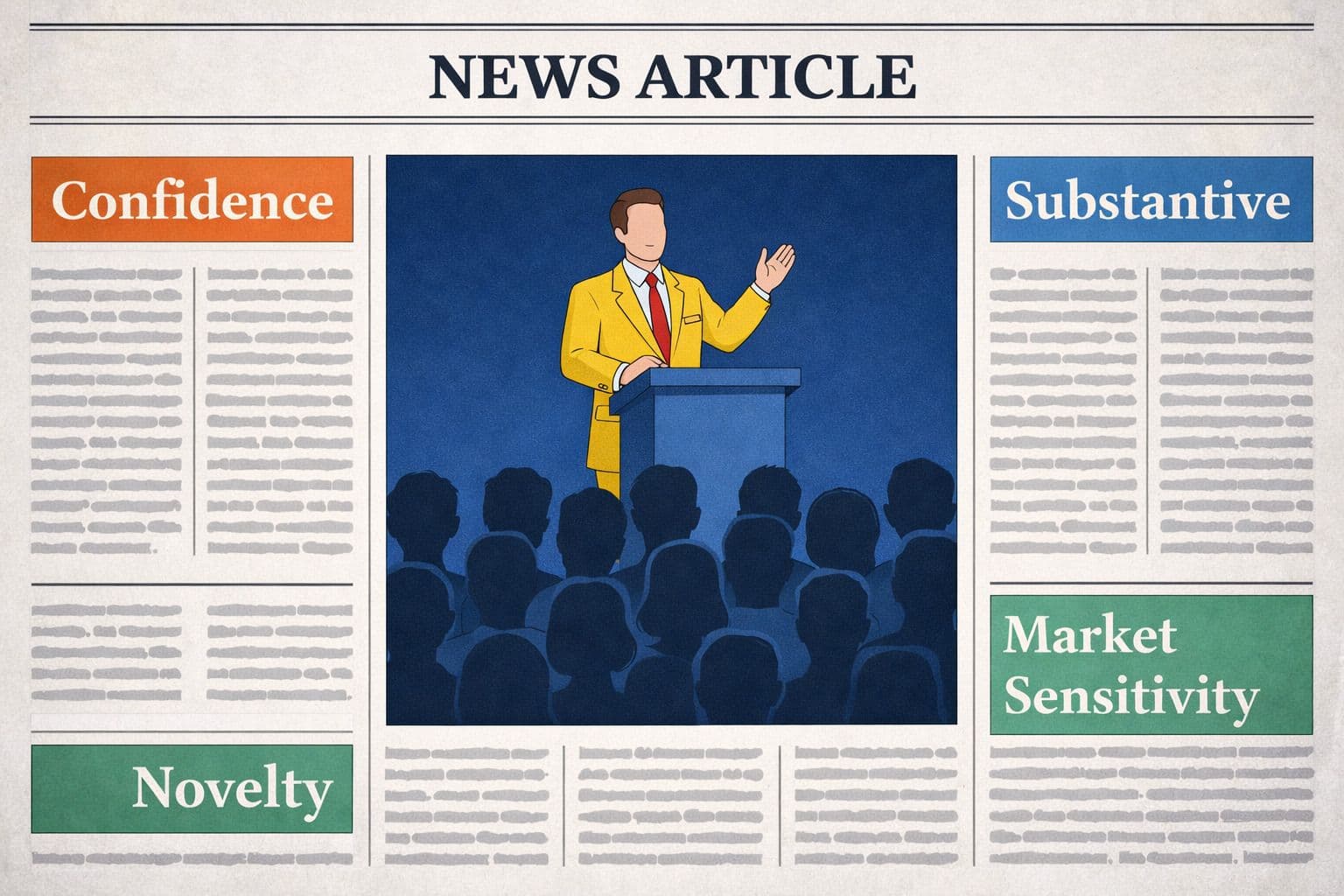
In finance, people often think in terms of exposure. Assets are not only grouped by name or sector, but by the forces they are sensitive to. Something similar may be possible in news analysis. A story might carry exposure to novelty, substantive importance, policy impact, escalation, uncertainty, concreteness, or durability. In that view, an article is not just “about defence” or “about trade.” It is also a mix of underlying qualities that shape how it should be interpreted.
This matters because topic labels are often too blunt. They tell you the field, but not the function. A government statement about “monitoring the situation” is not the same as a signed sanctions package. A viral clip from a protest is not the same as a legislative change that quietly alters the rules. A report on tensions in a shipping lane is not just a foreign affairs story; it may also be a market story, an energy story, and a risk story.
A more useful system might ask different questions. Not just: what is this article about? But also: how new is it? How concrete is it? Does it suggest real action, or only commentary? Is it likely to matter next week, or only this afternoon? Does it reflect noise, or a shift in underlying conditions?
This would not replace reporting. It would not replace context. And it certainly would not replace editorial judgment. But it could improve the language we use to compare stories that are otherwise hard to compare.
Take a simple example. A minister says the government is “considering all options.” That may attract attention, but it is often vague, low on commitment, and easy to overread. By contrast, a formal procurement decision, a treaty signature, or a new export restriction tends to be more concrete and more likely to shape reality. Yet both may appear side by side in a standard feed, flattened into the same visual importance.
That flattening is one of the hidden weaknesses of modern news consumption. Headlines, timestamps, and engagement numbers are useful, but they do not tell us enough about the structure of a story. They reward speed and reaction, not always significance.
Of course, any attempt to break news into “factors” carries risks. Real events are messy. Articles are shaped by context, framing, incentives, and timing. Not everything that matters can be reduced to a score. And any model that looks too tidy may end up imposing order where there is none.
Still, the idea is worth exploring. If readers are overwhelmed not only by quantity but by ambiguity, then better classification may matter as much as better reporting. The deeper question is not only what happened, but what kind of informational event we are looking at.
News may never fit neatly into a clean model. But thinking in this way could sharpen a useful distinction: between stories that are loud and stories that are meaningful, between movement and change, between attention and substance. That alone makes the discussion worth having.