Key Developments
On 10 November 2026, Global Affairs Canada said Canada reimposed sanctions on 11 Iranian entities tied to Iran's nuclear activity and ballistic missile program, while France's Ministry for Europe and Foreign Affairs said allied ministers discussed de-escalation, mediation and navigation in the Strait of Hormuz.
Key Statistics
- 11 Iranian entities were reimposed under Canada's sanctions regime, according to Global Affairs Canada.
- 5 foreign ministers from Qatar, Saudi Arabia, Germany, the United Kingdom and Italy were named in France's Middle East working meeting, according to the Ministry for Europe and Foreign Affairs.
- Historical comparison: 8 digital asset service providers were designated by the United States in a related Iran sanctions action, according to the Department of State.
- Historical comparison: more than 700 supermarkets in France were affected in an Iran-attributed cyber campaign, according to the Ministry for Europe and Foreign Affairs.
Main Body
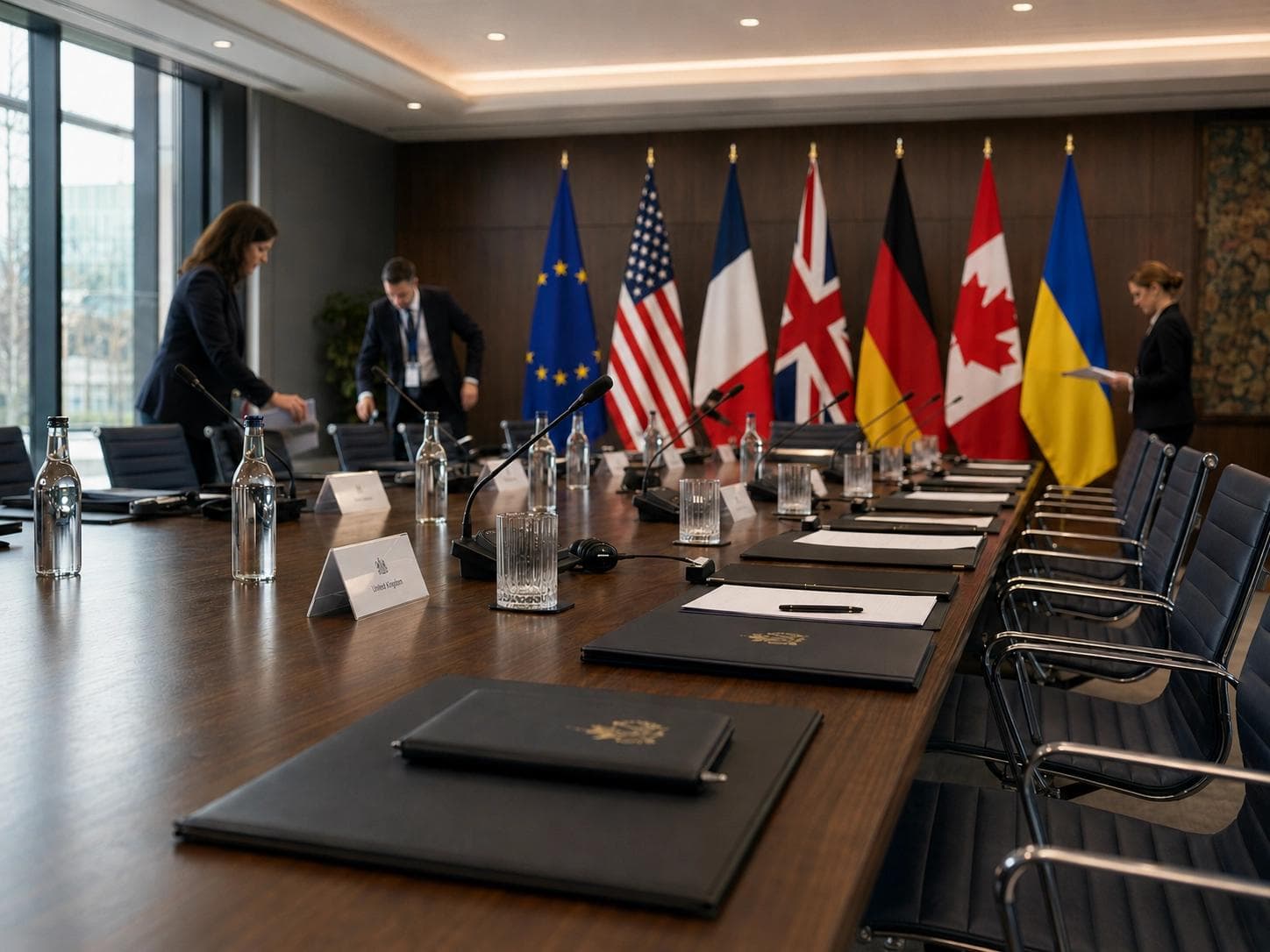
On 10 November 2026, Global Affairs Canada announced that Canada had reimposed sanctions on 11 Iranian entities over their involvement in Iran's nuclear activities and ballistic missile program. On the same day, France's Ministry for Europe and Foreign Affairs said Foreign Minister Jean-Noël Barrot held Middle East talks with counterparts from Qatar, Saudi Arabia, Germany, the United Kingdom and Italy.
Global Affairs Canada said the entities had previously been delisted in 2016 and were now covered again under Canada's Iran sanctions framework. The French ministry said the ministers addressed the Iranian crisis, its security and economic effects, the need to avoid military escalation, Qatar's mediation role, Iran's nuclear file and freedom of navigation in the Strait of Hormuz.
The Canadian step fit a wider allied sanctions sequence, as GPS previously reported. On 6 November 2026, the U.S. Department of State said Washington had sanctioned eight digital asset service providers it accused of helping Iran evade sanctions and finance terrorism. On 9 November 2026, France's Ministry for Europe and Foreign Affairs attributed cyberattacks against French interests to Iran's SHAHID KAVEH unit.
The announcements mattered in practical security and diplomatic terms because they combined financial pressure, cyber attribution and crisis diplomacy. Canada targeted entities linked to nuclear and missile activity, the United States targeted alleged sanctions-evasion channels, and France used ministerial talks to emphasize de-escalation and maritime access in the Strait of Hormuz, according to the cited government statements.