Key Developments
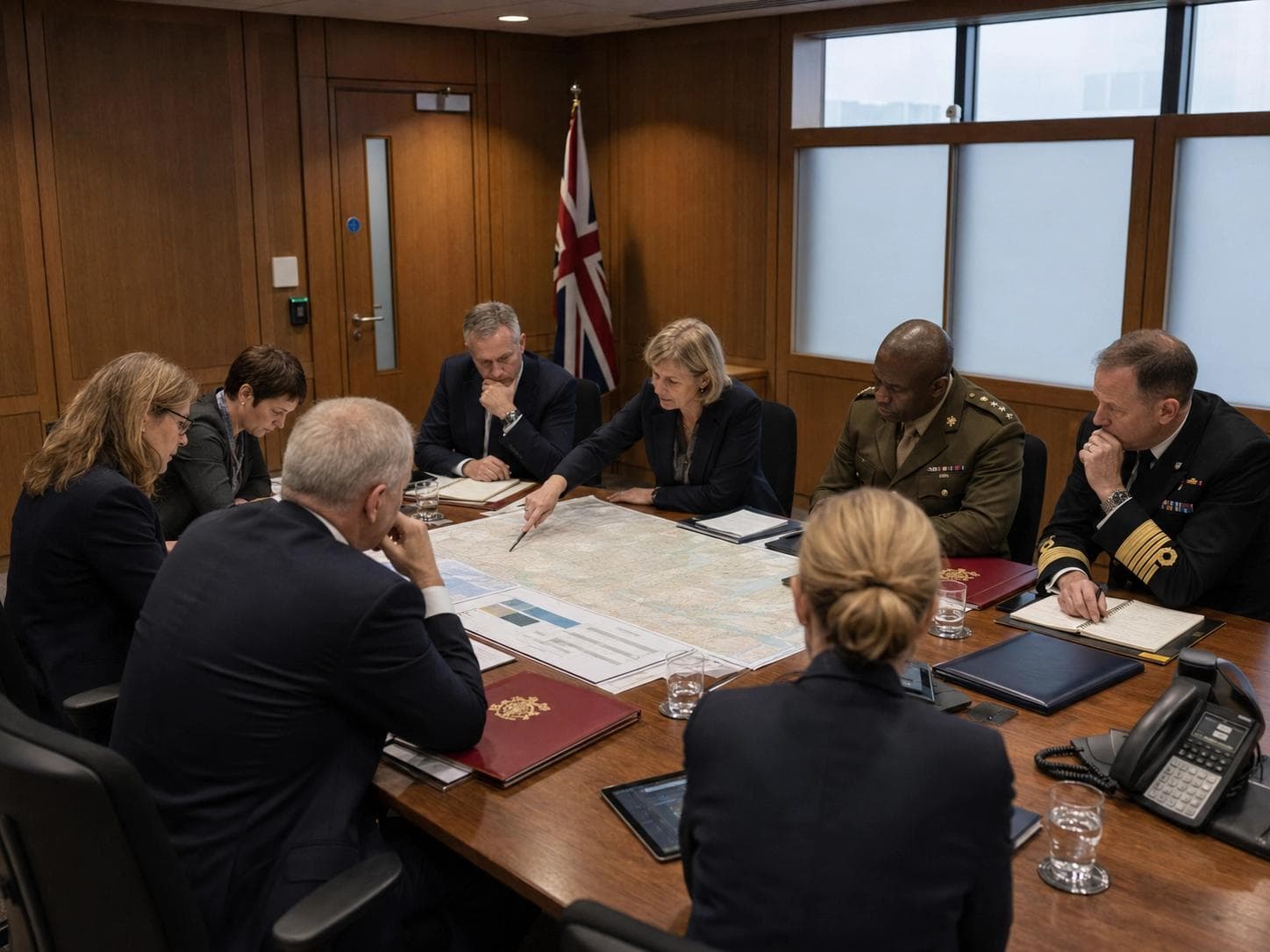
On 13 August 2026, Australia's Department of Defence said Australia and the United Kingdom had signed a joint statement to deepen cooperation on Active Electronically Scanned Array radar supplied by CEA Technologies. The Department of Defence said the arrangement was intended to strengthen defence industry links, support AUKUS commitments, and contribute to Indo-Pacific security.
Key Statistics
- Historical: 10,000 jobs were expected from UK-Australia radar and industry cooperation, according to HM Government.
- Historical: 3,000 UK jobs tied to the radar cooperation were cited by HM Government.
- Historical: 7,000 supply-chain jobs were associated with the cooperation by HM Government.
- Historical: 10-year Defence Innovation, Science and Technology Strategy was launched by Australia's Minister for Defence.
- Historical: 6 key capability priorities were identified in that Australian defence technology strategy, according to the Minister for Defence.
Main Body
On 13 August 2026, Australia's Department of Defence said Australia and the United Kingdom had signed a joint statement to expand defence industry cooperation on Active Electronically Scanned Array radar capability supplied by CEA Technologies. The Department of Defence linked the step to both AUKUS cooperation and security in the Indo-Pacific.
The Department of Defence said the joint statement focused on strengthening radar capability and defence industry collaboration between the two countries. The Department of Defence identified CEA Technologies as the supplier associated with the AESA radar capability.
The agreement followed a related 12 August 2026 statement in which HM Government said the UK and Australia were advancing radar technology cooperation during Defence Minister Luke Pollard's visit to Indo-Pacific partners. HM Government said that work was intended to develop advanced radar systems, strengthen supply chains, create jobs, and build on AUKUS. On 4 August 2026, Australia's Minister for Defence also launched a 10-year defence innovation strategy covering technologies including autonomous systems, long-range fires, hypersonics, and artificial intelligence.
The development mattered because the Department of Defence presented radar cooperation as part of practical capability building between Australia and the United Kingdom. The HM Government emphasis on supply chains and jobs showed the industrial dimension of the arrangement, while the Department of Defence framing connected it to regional deterrence and allied defence coordination.