Why Most Telegram Channels Fail (and What High-Quality Ones Do Differently)
Telegram has grown into one of the world’s largest communication platforms, with more than one billion monthly active users globally (Reuters; Business Insider).
At that scale, the barrier to entry is effectively zero. Anyone can create a channel and begin publishing instantly.
And yet, most Telegram channels fail.
They do not build meaningful audiences, they do not sustain engagement, and they rarely contribute anything of lasting value. A small minority, however, emerge as highly influential—acting as real-time information feeds, shaping narratives, and, in some cases, feeding into traditional media coverage.
The difference between the two is not access or timing. It is quality.
For a structured, high-signal example, follow:
https://t.me/gps_global_news
Noise Is the Default State
Telegram operates without the discovery mechanisms that define most modern platforms. There is no algorithm curating content, no recommendation feed amplifying posts, and no built-in system that rewards visibility on its own.
As a result, distribution is not given, it must be earned.
In practice, this creates an environment where the majority of content exists without impact. The platform is saturated with channels, but much of what they produce is repetitive, unstructured, or low-value. Large-scale research confirms this dynamic. One dataset analyzing Telegram ecosystems identified tens of thousands of channels and over 100 million messages, revealing how information spreads rapidly but unevenly across networks (arXiv).
The consequence is clear: Telegram is not constrained by content volume. It is constrained by signal.
Why Most Channels Fail
The failure patterns are consistent, even if they appear in different forms.
A common issue is artificial growth. Some channels inflate their subscriber counts through inactive users or automated accounts, creating the appearance of scale without genuine engagement. Over time, this undermines credibility and makes it difficult to retain a real audience.
More fundamentally, many channels lack clear positioning. Telegram rewards specificity, yet a large number of channels operate without a defined focus. They mix topics, react to trends without context, and fail to establish a recognizable identity. In an environment where users actively choose what to follow, this lack of clarity becomes a structural disadvantage.
Another problem is the absence of feedback and iteration. Unlike platforms with mature analytics ecosystems, Telegram requires operators to interpret performance themselves. Many do not. They continue publishing without adapting, leading to stagnation rather than growth.
At a broader level, the platform’s low moderation contributes to an ecosystem where low-quality content is widespread. Research has shown that Telegram hosts large-scale misinformation communities, including datasets with millions of misleading posts across networks (arXiv). Other studies have identified extensive cybercriminal activity involving tens of millions of users operating within Telegram channels (arXiv).
In such an environment, most content does not fail because it is unseen. It fails because it is indistinguishable.
What High-Quality Channels Do Differently
A small subset of Telegram channels operate under a fundamentally different logic.
They do not compete on volume. They compete on clarity.
High-quality channels tend to focus narrowly on a specific domain. Instead of attempting to cover everything, they define a clear scope and consistently deliver within it. This creates recognition and, over time, trust.
They also treat Telegram less as a feed and more as a system. Content is structured, formats are refined, and outputs are adjusted based on audience response. Growth, in this context, is cumulative rather than viral. It emerges from repeated delivery of value rather than sudden exposure.
Trust plays a central role. In a platform environment where misinformation and manipulation are well documented, credibility becomes a differentiator. Research on Telegram’s role in political discourse highlights how the platform can act as a hub for fringe narratives and coordinated messaging, particularly during election cycles (arXiv). Against that backdrop, channels that provide context, reference data, and avoid sensationalism stand out.
Finally, the most effective channels behave less like social media accounts and more like media entities. They filter information rather than amplify it. They prioritize interpretation over repetition.
The GPS Method: From Raw Information to Structured Insight
Telegram’s core strength is speed. Its weakness is the lack of structure.
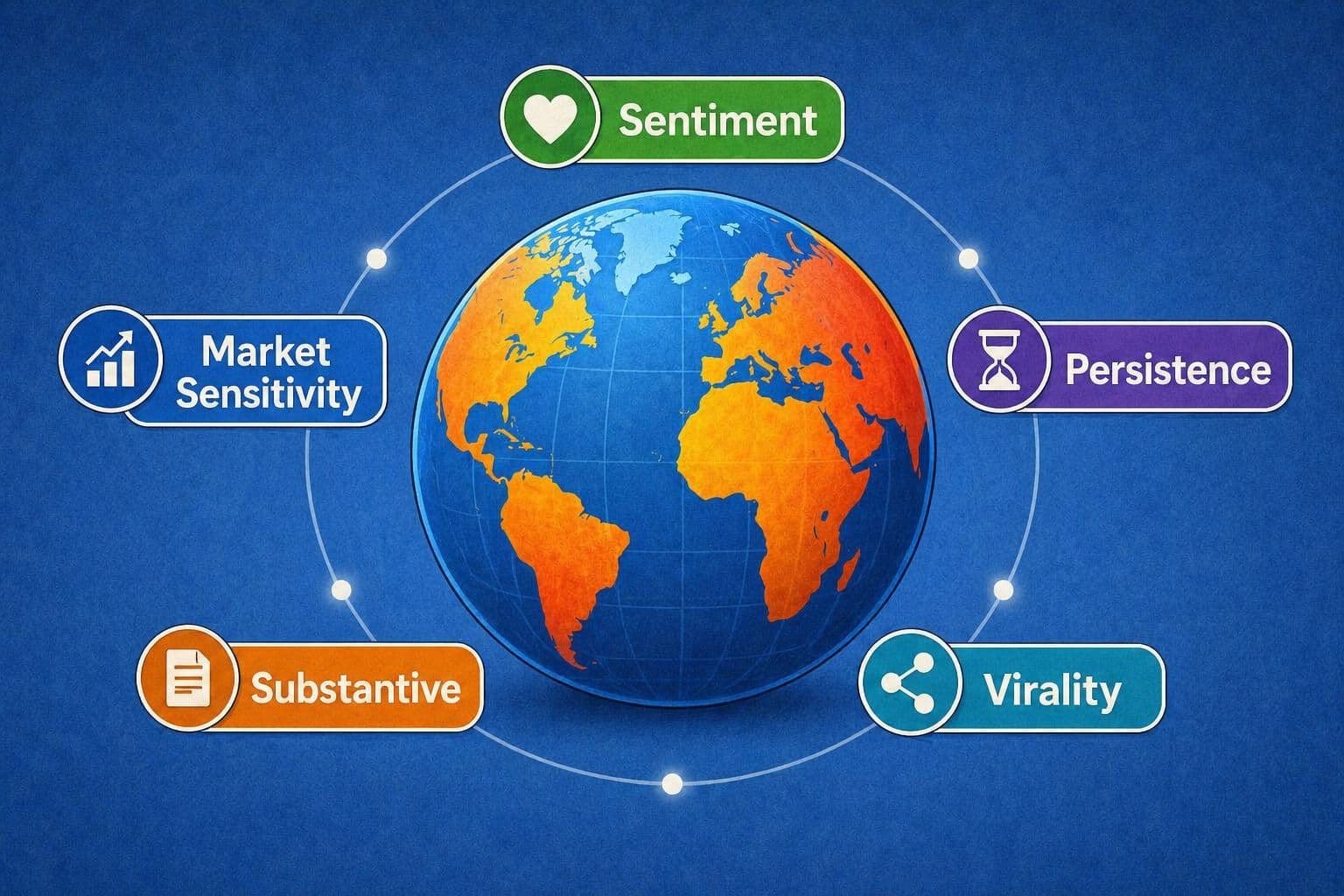
GPS is built around the idea that information should not simply be distributed—it should be processed first.
The approach is straightforward. Identify what actually matters, support it with data, and explain its implications clearly. The goal is not to produce more content, but to reduce noise.
In practical terms, this means turning fragmented updates into structured insights that can be quickly understood and evaluated.
A Platform Defined by Its Users
Telegram is not inherently a low-quality platform. It is an unfiltered one.
That distinction matters.
The same infrastructure that allows misinformation to spread also allows high-quality analysis to reach audiences without interference. The difference lies in how channels use that infrastructure.
Most fail because they replicate what already exists. A small number succeed because they impose structure where none is provided.
Final Thoughts
Telegram does not reward visibility in the way other platforms do. It rewards relevance.
Channels that fail tend to misunderstand this. They treat the platform as a distribution tool rather than an information system. In doing so, they contribute to the noise that defines most of the ecosystem.
Channels that succeed take the opposite approach. They reduce noise, clarify information, and build trust over time.
In a platform built on speed, clarity becomes the real competitive advantage.
Become a GPS Publisher
If you run a serious Telegram channel and want to:
- contribute structured, high-quality insights
- reach a more analytical audience
- be part of a curated network
Apply to become a GPS publisher (here)[https://www.global-political-spotlight.com/contact]
We are building a network defined by signal, not volume.