The GPS Method: Read Global News the GPS Way
At Global Political Spotlight (GPS), we encourage readers to approach international news with a structured, analytical mindset. Understanding geopolitics is not about finding a perfectly neutral outlet — it is about building habits that reduce blind spots and improve interpretation.
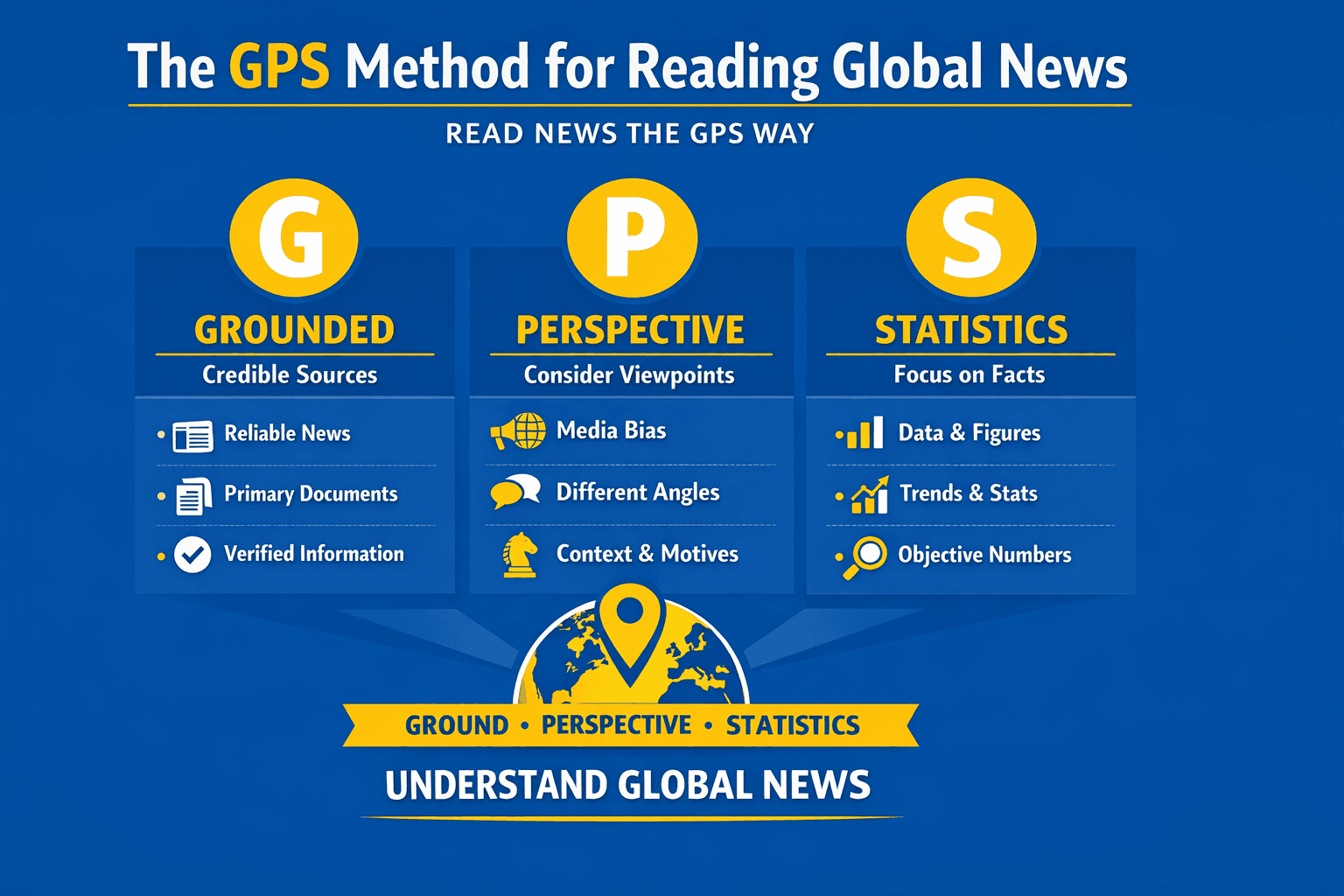
The GPS Method provides a simple framework for doing exactly that. It focuses on three principles: staying grounded in credible information, considering multiple perspectives, and verifying claims with statistics and data.
Below is a visual overview of the framework.
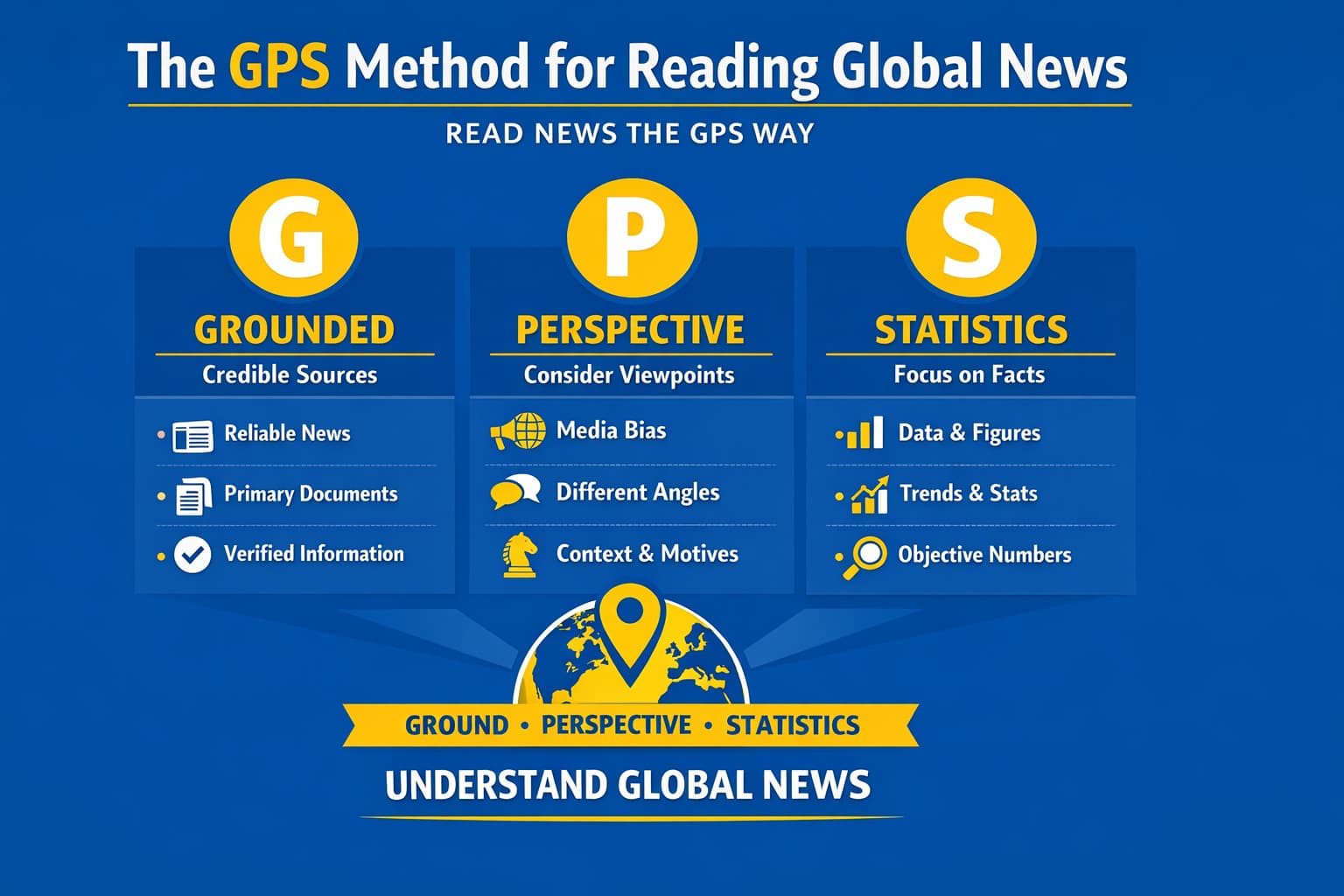 The GPS Method Infographic
If you are new to this approach, you may want to first read our foundational guide: 👉 How to Read Global News Without Bias
Image source: Global Political Spotlight (GPS)
The GPS Framework Explained
G — Grounded
Stay grounded in credible, verifiable sources.
This includes:
- reputable news organizations
- primary documents such as speeches or official reports
- independent confirmation from multiple outlets
Being grounded does not mean trusting one source blindly. It means anchoring your understanding in information that can be checked and validated.
Academic research shows that outlets can differ in language and emphasis even when covering the same facts, which is why grounding yourself in multiple reliable sources is essential. (PLOS ONE study)
P — Perspective
Every article reflects a perspective.
Readers should consider:
- the editorial viewpoint of the outlet
- national or political context
- incentives and interests of actors involved
- how other sources frame the same event
Understanding perspective does not mean rejecting information. It means recognizing how interpretation varies across narratives.
Tools like Ground News can help readers compare how different outlets cover the same story and identify potential blind spots in coverage. (Ground News methodology)
S — Statistics
Facts are strongest when supported by data and evidence.
Whenever possible, look for:
- quantitative indicators
- historical comparisons
- economic data
- independent institutional statistics
Statistics help separate emotional framing from measurable reality. Evidence-based analysis is one of the most reliable ways to reduce bias in interpretation.
Why the GPS Method Works
The strength of the GPS framework comes from combining:
- Grounded facts
- Multiple perspectives
- Data-backed evidence
Together, these principles help readers interpret global events more accurately and build a deeper understanding of geopolitics over time.
For readers trying to follow conflicts, elections, or international crises, the GPS Method provides a repeatable approach that reduces reliance on any single narrative.
FAQ
Can news ever be completely unbiased?
No outlet is perfectly unbiased. Editorial choices, cultural context, and institutional priorities all influence reporting. The goal is not to eliminate bias entirely, but to reduce dependence on any one perspective.
Why should I read multiple sources?
Comparing sources helps identify framing differences, missing context, and editorial emphasis. Research shows measurable differences in language and coverage across outlets, even when reporting on the same event. (PLOS ONE study)
What is the fastest way to compare perspectives?
News aggregation tools like Ground News allow readers to quickly see how the same story is covered across outlets with different editorial leanings.
Is data always unbiased?
Data can still be interpreted selectively, but statistics from reputable institutions provide a stronger foundation than opinion alone. Always consider methodology and source credibility.
Conclusion
The GPS Method is not about skepticism for its own sake. It is about building a clearer, more balanced understanding of global events.
If you are interested in geopolitics, the most useful question is not:
“Which source is unbiased?”
It is:
“What does each source help me see — and what might it be leaving out?”
That mindset is at the core of how GPS approaches global analysis.