How Geopolitical Events Affect Financial Markets
Executive Summary
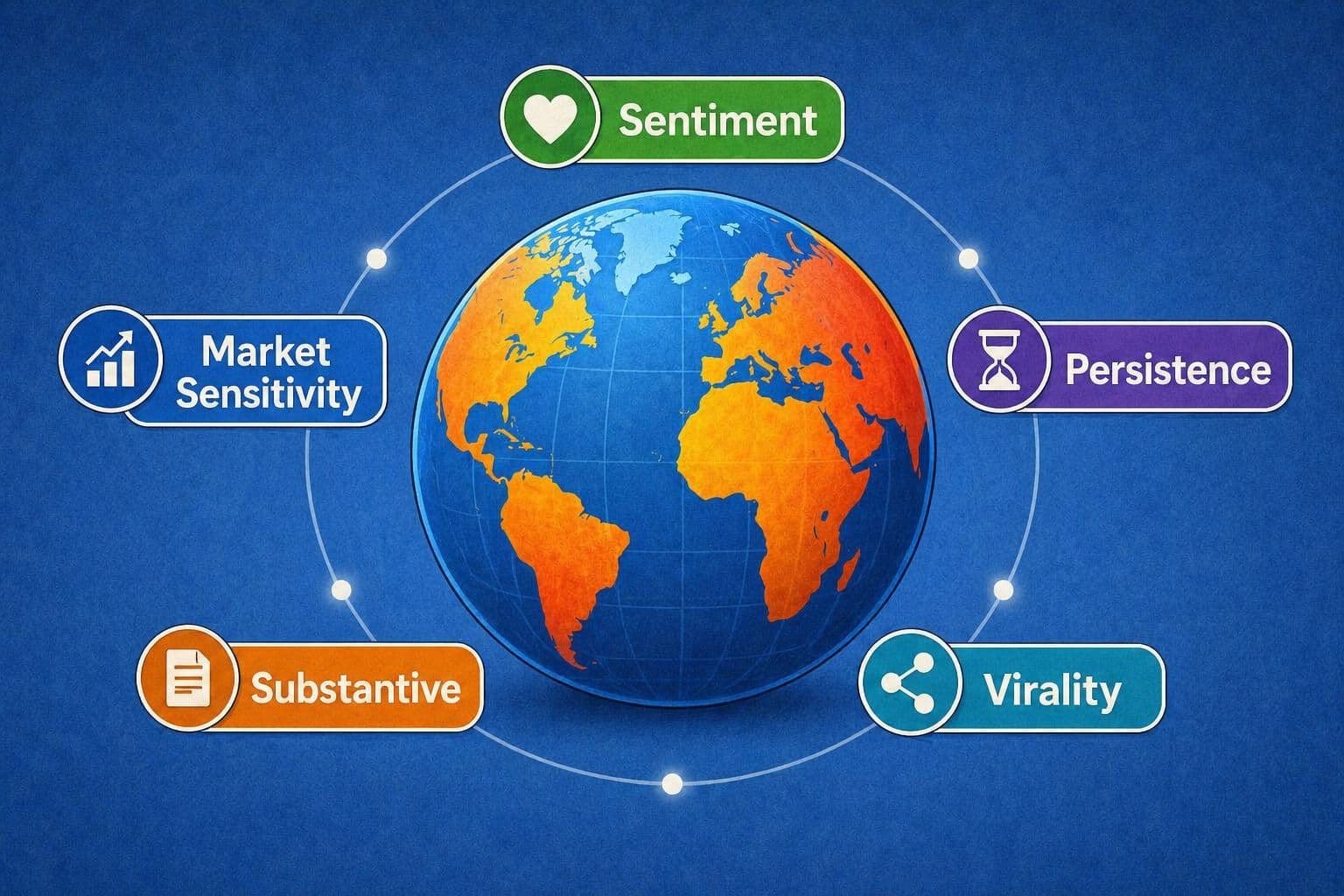
Geopolitics is often treated as “headline risk,” but markets routinely reprice it—sometimes violently—because geopolitical events alter expectations around inflation, growth, trade flows, and policy.
The clearest pattern in empirical research is that geopolitical shocks tend to be risk-off in the short term. Equity markets weaken, risk premiums rise, and investors demand greater compensation for uncertainty.
The International Monetary Fund finds that during major geopolitical risk events, global stock prices decline meaningfully, with the average monthly drop around 1 percentage point across countries, and larger in emerging markets. Sovereign risk premiums also increase, often by tens of basis points
(IMF, 2025: https://www.imf.org/en/blogs/articles/2025/04/14/how-rising-geopolitical-risks-weigh-on-asset-prices)
At the same time, long-term outcomes are more nuanced. Research from J.P. Morgan shows that while markets often fall in the first few months after geopolitical shocks, returns over 6–12 months are often similar to normal periods, with exceptions such as major energy crises
(J.P. Morgan, 2024: https://privatebank.jpmorgan.com/eur/en/insights/markets-and-investing/how-do-geopolitical-shocks-impact-markets)
For investors, the key is not predicting events—but understanding how they transmit into markets.
What Is Geopolitics?
Geopolitics is commonly defined as the study of how geography, power, and political relationships shape international relations.
According to Encyclopaedia Britannica, geopolitics refers to the analysis of geographic influences on power relationships between states
(https://www.britannica.com/topic/geopolitics)
In practical terms, “geopolitical meaning” refers to anything related to:
- international power dynamics
- strategic competition between countries
- control of resources, territory, or influence
For financial markets, a more relevant concept is geopolitical risk.
A widely used definition comes from Caldara and Iacoviello (Federal Reserve), who describe it as the risk associated with wars, terrorism, and tensions that disrupt the normal course of international relations
(https://www.federalreserve.gov/econres/ifdp/files/ifdp1222.pdf)
This concept has been quantified through the Geopolitical Risk (GPR) Index, which tracks news coverage of geopolitical tensions and is widely used in research and investing
(https://www.policyuncertainty.com/gpr.html)
How Geopolitics Influences Financial Markets
When investors ask how geopolitics can influence markets, the answer is not a single mechanism—it is a system of interactions.
Geopolitical events affect markets through three dominant pathways: uncertainty, real economic disruption, and policy response.
The IMF highlights that geopolitical tensions can disrupt trade and investment flows, increase uncertainty, reduce lending, and trigger sharp asset price movements
(IMF, 2025)[https://www.imf.org/en/blogs/articles/2025/04/14/how-rising-geopolitical-risks-weigh-on-asset-prices]
These effects cascade into financial markets.
flowchart LR
A[Geopolitical event] --> B[Uncertainty rises]
A --> C[Supply disruption]
A --> D[Policy response]
B --> E[Risk premia increase]
C --> F[Inflation and growth shift]
D --> F
E --> G[Asset prices reprice]
F --> G
G --> H[Financial conditions tighten]
Uncertainty alone can cause markets to fall, even before fundamentals change. At the same time, disruptions to energy, trade routes, or supply chains can feed directly into inflation and corporate earnings.
Policy responses—such as sanctions or interest rate changes—often amplify these effects.
Short-Term Shock vs Long-Term Impact
A key insight from geopolitics research is the distinction between temporary shocks and structural shifts.
Short-term shocks tend to produce rapid market declines, followed by recovery. Historical evidence shows that many geopolitical events lead to initial underperformance but limited long-term damage in diversified equity markets (J.P. Morgan, 2024)
However, when geopolitical events alter structural factors—such as energy supply or global trade systems—the effects can persist.
The 1973 oil crisis is a classic example. Oil prices quadrupled following geopolitical tensions in the Middle East, creating sustained inflation and economic disruption (U.S. State Department)[https://history.state.gov/milestones/1969-1976/oil-embargo]
Similarly, the 2022 Russia–Ukraine war triggered a global energy shock, contributing to inflation and slower growth worldwide (IEA, 2022)[https://www.iea.org/reports/world-energy-outlook-2022/the-global-energy-crisis]
What Happens Across Different Asset Classes
Geopolitical risk does not affect all assets equally.
Equities typically decline during periods of heightened uncertainty, particularly in emerging markets. The IMF finds that emerging market stocks can fall by around 5 percentage points during major conflict episodes (IMF, 2025)
Sovereign risk increases as investors demand higher compensation for uncertainty. Currency markets adjust rapidly, reflecting capital flows and trade disruptions.
Commodities, especially energy, often play a central role. Supply shocks can lead to sustained price increases, which feed into inflation and monetary policy decisions.
The result is not just market volatility, but redistribution. Some sectors, such as energy or defense, may benefit, while others suffer.
Geopolitics for Investors
For investors, geopolitics is not just background noise. It is a core input into decision-making.
Geopolitical risk investing involves understanding how political events affect:
- Earnings
- Inflation
- Interest rates
- Capital flows
Research shows that incorporating geopolitical risk improves the ability to explain and anticipate market behavior, particularly during periods of instability (Federal Reserve, 2018)
The most effective approach is not prediction, but preparation.
Investors who perform well under geopolitical uncertainty tend to:
- understand transmission mechanisms
- avoid concentrated exposure to fragile systems
- maintain sufficient liquidity
The IMF emphasizes the importance of stress testing and risk management in dealing with geopolitical uncertainty (IMF, 2025)
Case Studies
Understanding geopolitics becomes easier when viewed through real events.
timeline
  1973 : Oil embargo triggers global inflation shock
  2001 : 9/11 causes market shutdown and risk-off behavior
  2022 : Ukraine war drives energy crisis and inflation surge
The September 11 attacks provide a clear example of short-term disruption. U.S. equity markets closed for four days, then dropped sharply upon reopening, before recovering within weeks (BIS, 2001)[https://www.bis.org/publ/r_qt0112a.pdf]
In contrast, energy-driven geopolitical shocks tend to have longer-lasting effects because they influence core economic variables.
Final Thoughts
Geopolitics matters because it changes expectations about the future—and markets price expectations.
The strongest conclusion from geopolitics research is not that every crisis leads to long-term losses, but that geopolitical risk consistently:
- increases uncertainty
- raises risk premiums
- shifts capital across markets and sectors
(AER, 2022)[https://www.aeaweb.org/articles?id=10.1257/aer.20191823]
For investors, the real edge is not predicting the next crisis. It is understanding how geopolitical events translate into economic outcomes—and positioning accordingly.
Follow structured geopolitical market insights: https://t.me/gps_global_news