Key Developments
On 12 May 2026, the UK Defence Secretary announced that the UK would contribute mine-hunting drones, Typhoon jets and the warship HMS Dragon to a multinational mission to secure the Strait of Hormuz, backed by £115 million and 1,000 personnel, according to HM Government. This followed a 11 May 2026 update that the UK and France would co-host a ministerial meeting and pre-position HMS Dragon, per HM Government.
Key Statistics
- £115,000,000 in new UK funding for the mission package
- 1,000 UK personnel planned for deployment and support
- 1 Royal Navy warship, HMS Dragon, assigned to the mission
- Historical context: 44 nations engaged in ministerial planning for the mission
Main Body
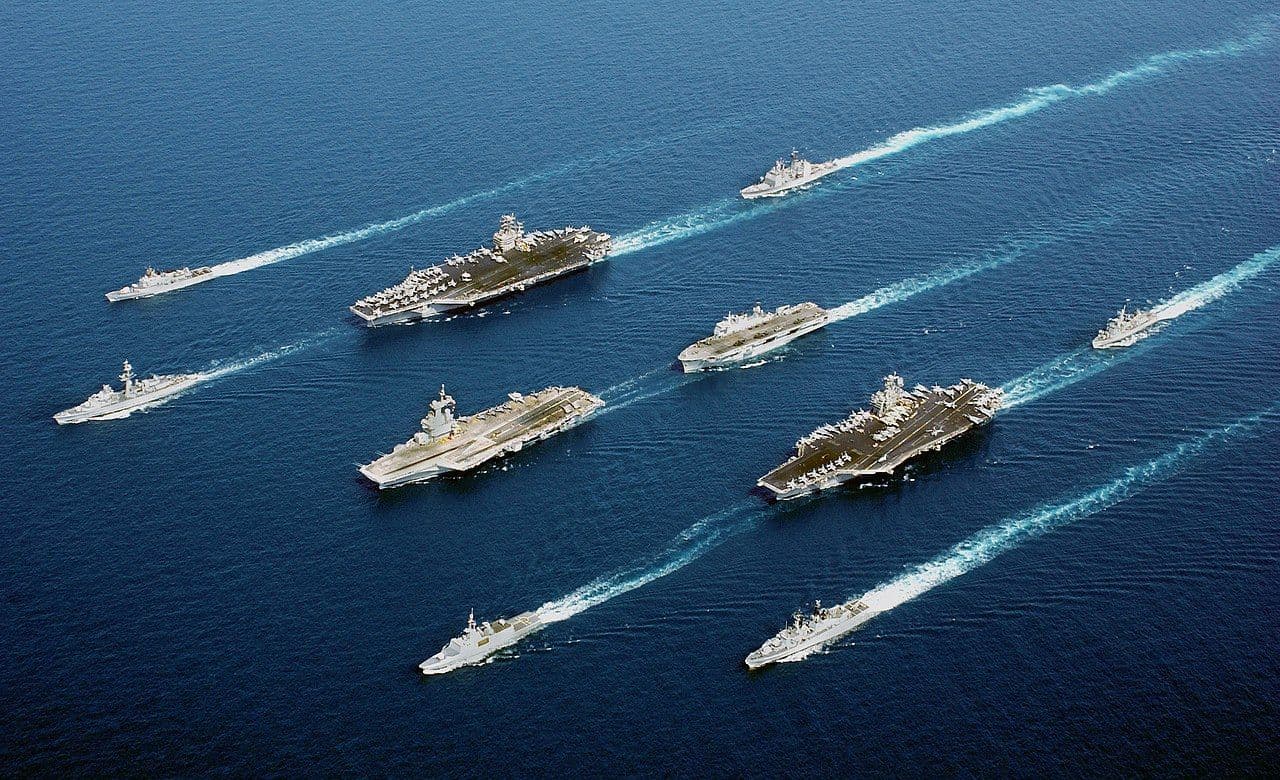
On 12 May 2026, the UK Defence Secretary set out the United Kingdom’s contribution to a multinational mission to secure the Strait of Hormuz, confirming the deployment of advanced mine-hunting drones, Royal Air Force Typhoon jets and the Royal Navy destroyer HMS Dragon. The package was supported by £115 million in new funding and would involve around 1,000 UK personnel, according to HM Government. The government said the mission would become operational when conditions allow and is intended to protect commercial shipping on a critical trade route.
Operationally, the UK contribution combined air, surface and unmanned maritime capabilities. The announcement stated that mine-hunting drones, Typhoon jets and HMS Dragon would support efforts to enhance security for merchant traffic in and around the Strait, according to HM Government. The package was framed as part of a wider multinational effort to deter threats and reassure commercial operators.
The move built on steps set out on 11 May 2026, when the UK and France said they would co-host the first meeting of Defence Ministers to advance the mission and that HMS Dragon would pre-position in the region, as HM Government confirmed. That update noted that 44 nations were engaged in preparations for the ministerial meeting, underscoring the breadth of support for the initiative.
The government positioned the mission as a practical measure to uphold freedom of navigation and restore confidence amid ongoing disruptions to international shipping routes, according to HM Government and HM Government. The Strait of Hormuz is a vital corridor for global trade, so sustained multinational naval and air presence aimed to reduce risk to merchant traffic and support economic stability by deterring interference with commercial shipping.