Key Developments
On 24 April 2026, the Government of France announced a package to speed up construction, revive rentals and renovate neighborhoods to expand housing supply, according to the Government of France. The United Kingdom and the United Arab Emirates set out joint positions on regional security and economic cooperation in a 25 April 2026 statement, according to HM Government. Germany showcased cyber readiness in NATO’s Locked Shields and advanced drone procurement while the Netherlands set annual housing targets backed by state funding, according to the Bundeswehr and Rijksoverheid.
Key Statistics
- EUR 1.9 million budgeted in a Mayotte water access agreement
- 4,000 participants involved in NATO’s Locked Shields exercise
- 3 loitering munition contracts signed by the Bundeswehr
- 98% of groundwater samples near firefighting-foam sites over PFAS thresholds
- EUR 287 million allocated to help Dutch municipalities deliver housing
- 100,000 new homes targeted annually in the Netherlands
- 2.6% of GDP in UK defence spending signalled by ministers
Main Body
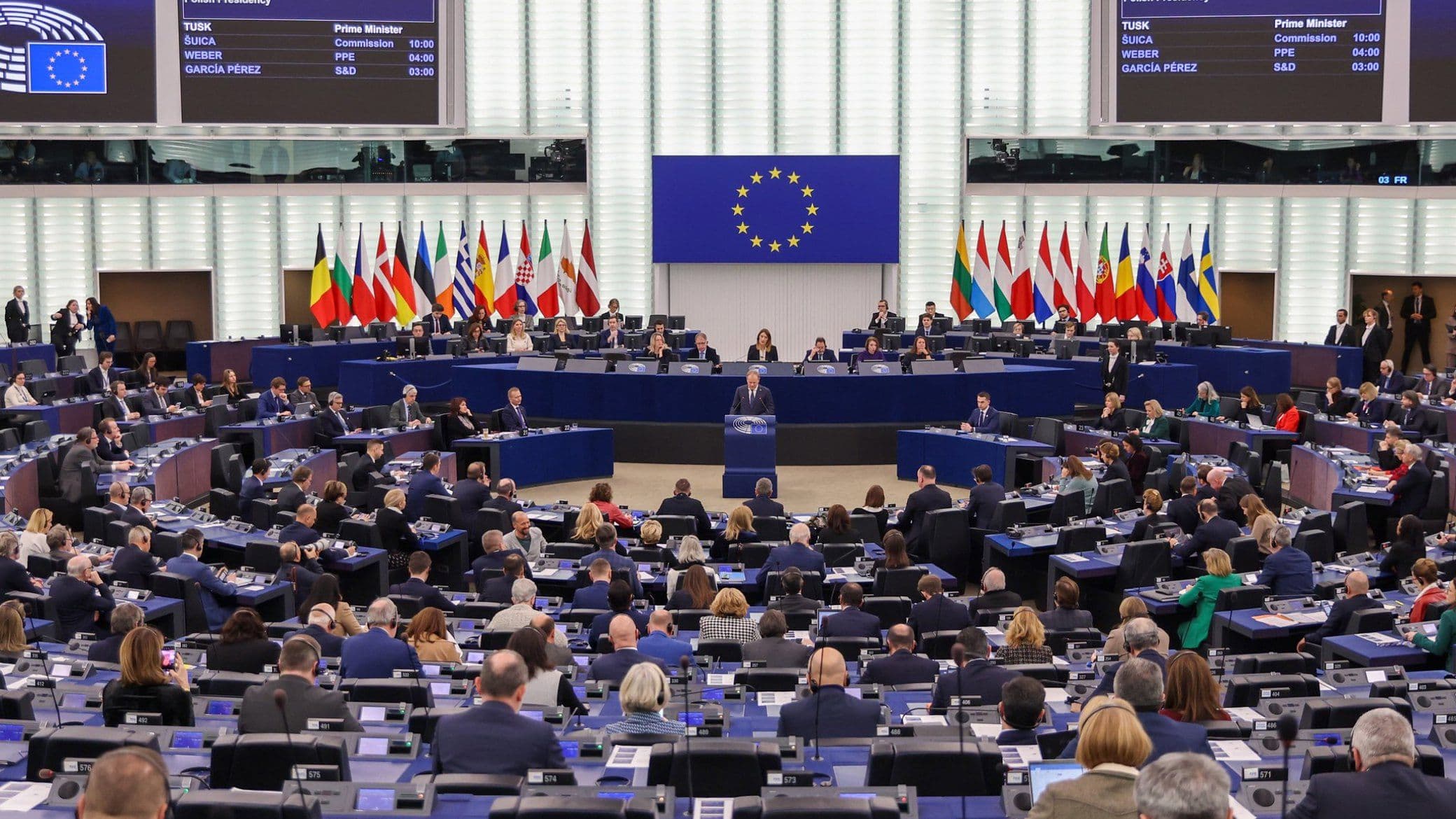
Across Europe and the United States, governments and institutions issued decisions and queries touching housing, industrial policy, security and public health. On 24 April 2026, Members of the European Parliament tabled new written questions on environmental oversight, industry competitiveness and transport decarbonisation, according to the European Parliament. On the same day, the Netherlands outlined funding to accelerate homebuilding, and Germany highlighted cyber and unmanned systems steps, according to Rijksoverheid and the Bundeswehr. The United Kingdom also advanced defence investment and Gulf partnerships in separate announcements, according to HM Government.
European Union
On 24 April 2026, the European Parliament recorded a written question on the circumvention of environmental impact assessments through administrative changes and limits on public participation. On 24 April 2026, the European Parliament registered a written question about protecting the EU steel market from subsidised imports and assessing the role of the carbon border adjustment mechanism. On 24 April 2026, the European Parliament posted a written question urging an EU-wide emergency plan for whale and marine mammal strandings to address rising incidents and coordination gaps. On 24 April 2026, the European Parliament listed a written question seeking flexibility to deploy sustainable bio-aviation fuel alongside synthetic fuels to avoid supply gaps and cost spikes. These queries mattered because they pressed the Commission on enforcement and design choices that could reshape permitting, trade defenses and green transport trajectories.
France
On 24 April 2026, the Government of France announced measures to accelerate construction approvals, revitalise the rental market and renovate neighborhoods to expand housing availability. On 23 April 2026, the European Parliament logged a written question highlighting a EUR 1.9 million agreement in Mayotte to secure drinking water and asking about broader EU support for Mayotte, Guadeloupe and Martinique. On 24 April 2026, the European Parliament also registered a written question on whether France’s media regulation framework and authorities such as Arcom align with the European Media Freedom Act’s application. Taken together, these steps signalled domestic action on housing alongside scrutiny of utilities resilience and media-governance readiness affecting France’s overseas territories and media landscape.
Germany
On 24 April 2026, the Bundeswehr reported that NATO’s Locked Shields cyber exercise brought around 4,000 participants from 41 nations into multinational blue teams to defend critical infrastructure in a complex scenario. On 23 April 2026, the Bundeswehr outlined the acquisition of loitering munitions from three manufacturers to enable precise, long-range strikes, with initial fielding planned from 2027. On 24 April 2026, the European Commission Directorate-General for Environment reported extensive PFAS contamination in the Upper Danube Basin, including up to 98 percent of groundwater samples near firefighting-foam sites exceeding thresholds and high exceedances in river samples. On 21 April 2026, the European Parliament recorded a written question about suspending live animal shipments to conflict zones, citing a Lower Saxony ban to mitigate welfare risks. These developments pointed to intensified cyber readiness, modernization of strike options, and environmental compliance pressures with implications for water management and trade in livestock.
United Kingdom
On 22 April 2026, HM Government set out plans to unlock private capital for defence, including embedding industry secondees in the Ministry of Defence and engaging the Defence Investors’ Advisory Group, while signalling 2.6 percent of GDP in defence spending. On 25 April 2026, HM Government published a UK-UAE joint statement condemning actions threatening regional stability, underlining Strait of Hormuz navigation, and coordinating on Sudan and Ukraine. On 23 April 2026, HM Government addressed the OSCE on media freedom, urging compliance by Russia and Belarus and highlighting journalist repression concerns. On 24 April 2026, HM Government underscored conflict as a leading driver of hunger at the launch of the Global Report on Food Crises, calling for early action and targeted resources. These actions linked domestic defence-industrial policy with regional diplomacy and rights advocacy, shaping the UK’s security and development posture.
Netherlands
On 24 April 2026, Rijksoverheid detailed plans to deliver 100,000 new homes annually and allocated EUR 287 million to support municipalities with capacity and planning. On 24 April 2026, Rijksoverheid outlined a programme for a more resilient democracy, stronger regions and a more decisive central government, including measures against disinformation and burdensome procedures. On 24 April 2026, Rijksoverheid published an education policy letter committing new investments in research infrastructure, supercomputing and core skills to bolster resilience and innovation. On 24 April 2026, Rijksoverheid opened consultation on changes to the Wtta requiring lenders to report prior-year revenue so the market authority can calibrate annual contributions by size. These steps combined near-term housing delivery support with longer-run capacity, skills and regulatory adjustments to underpin growth and governance.
United States
On 23 April 2026, the Department of State announced targeted sanctions against a network spanning India, Guatemala and Mexico that supplied fentanyl precursors to the Sinaloa Cartel. On 24 April 2026, the European Commission reported the launch of an EU-US strategic partnership on critical minerals through a memorandum of understanding and action plan. On 23 April 2026, the Department of War said its Personal Property Activity met industry leaders to improve peak-season permanent change of station moves for military families. On 24 April 2026, the Department of War reported that the Armed Forces Medical Examiner System was supporting NASA’s Artemis II mission with forensic and logistics readiness for contingencies. These actions combined supply-chain enforcement, strategic resource cooperation, service-member support and spaceflight safety preparation, aligning domestic and allied security interests.
Across the six countries, the week’s moves mattered because they tightened enforcement against cross-border threats, pushed forward housing and skills pipelines, and advanced defence readiness. The cumulative effect shaped permitting and trade rules in the EU, accelerated Dutch and French housing delivery, reinforced UK defence-industrial financing, and linked US sanctions and space support to broader allied coordination, which are practical levers for resilience and growth.