Key Developments
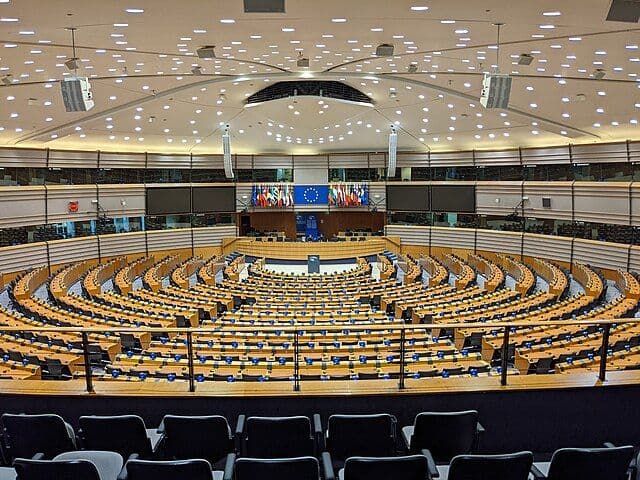
On 26 March 2026, the European Parliament adopted its first report on the EU’s Global Gateway, calling for an inquiry into Chinese company involvement and stronger transparency. The same day, the European Parliament set conditions for the tariff aspects of the EU-US Turnberry deal, including safeguard clauses. The moves followed wider momentum as Ground News reported EU lawmakers advancing the US trade agreement with safeguards.
Key Statistics
- 371 votes in favor on the Global Gateway report
- 146 votes against on the Global Gateway report
- 80 abstentions on the Global Gateway report
- 417 votes in favor on the EU-US tariff proposals
- 154 votes against on the EU-US tariff proposals
- 71 abstentions on the EU-US tariff proposals
- €300 billion in infrastructure investment targeted by Global Gateway
Main Body
On 26 March 2026, the European Parliament adopted two significant positions shaping EU external economic policy. MEPs approved the institution’s first report reviewing the EU’s Global Gateway initiative, urging an investigation into Chinese company participation in projects and calling for stronger transparency and democratic accountability, according to a European Parliament statement. In a separate vote, MEPs endorsed conditions for implementing the tariff components of the EU-US Turnberry trade arrangement, setting out safeguards for EU standards and interests, the European Parliament said. The Global Gateway report passed with 371 votes to 146, with 80 abstentions, while the Turnberry-related proposals were adopted by 417 votes to 154, with 71 abstentions, the European Parliament and European Parliament reported.
Operationally, the Global Gateway text steered the initiative toward a more demand-driven approach aligned with EU values in sectors such as energy and critical raw materials, while pressing for clearer governance and scrutiny of implementing partners, the European Parliament said. The initiative aims to mobilize up to €300 billion in infrastructure investment, which the report placed under stronger transparency expectations, according to the same release. On EU-US trade, the Parliament’s position supported eliminating most tariffs on US industrial goods and granting preferential access for selected US seafood and agricultural products, contingent on protective mechanisms. These included a suspension clause, a sunrise clause dependent on US compliance, and a time-limited sunset clause for expiry in 2028 unless renewed, the European Parliament noted.
The votes built on recent parliamentary and Council debates about the EU’s external posture. On 25 March 2026, MEPs assessed the 19 March European Council outcomes and underlined sustained support for Ukraine, multilateral engagement, and energy independence, according to a European Parliament summary. Ahead of the Turnberry vote, the International Trade committee signaled continued scrutiny of EU-US relations, with its chair announcing a post-vote press conference, the European Parliament said. Together, these steps framed Parliament’s effort to tie market openness to enforceable safeguards and to apply tighter oversight across external financing tools.
Strategically, the decisions mattered for both security and economic governance. Enhanced transparency in Global Gateway targeted risks of opaque contracting and strategic dependencies in critical sectors, while maintaining the initiative’s scale for connectivity and infrastructure, the European Parliament indicated. Conditionality in the EU-US tariff track aimed to balance expanded transatlantic market access with the protection of EU regulatory standards and leverage over compliance, as set out by the European Parliament. The parliamentary actions also aligned with broader efforts to add safeguards to transatlantic arrangements, amid Ground News reporting that EU lawmakers had advanced the US trade agreement with multiple protective measures. In practical terms, this combined package signaled that EU external economic instruments would proceed with tighter political oversight and contingency planning in response to geopolitical pressure and supply chain exposure.