Key Developments
The UK urged closer coordination between the United Nations and the League of Arab States at the UN Security Council, linking this to efforts to secure navigation in the Strait of Hormuz. On 2 April 2026, the UK also led a meeting of over 40 countries on the strait’s closure and possible responses. The push came as AP News reported France and South Korea would cooperate on Hormuz security.
Key Statistics
- Over 40 countries participated in the UK-led meeting on the Strait of Hormuz, according to HM Government
- 37 countries were referenced as engaged in LAS-UN coordination efforts in the UK’s UNSC statement, per HM Government
Main Body
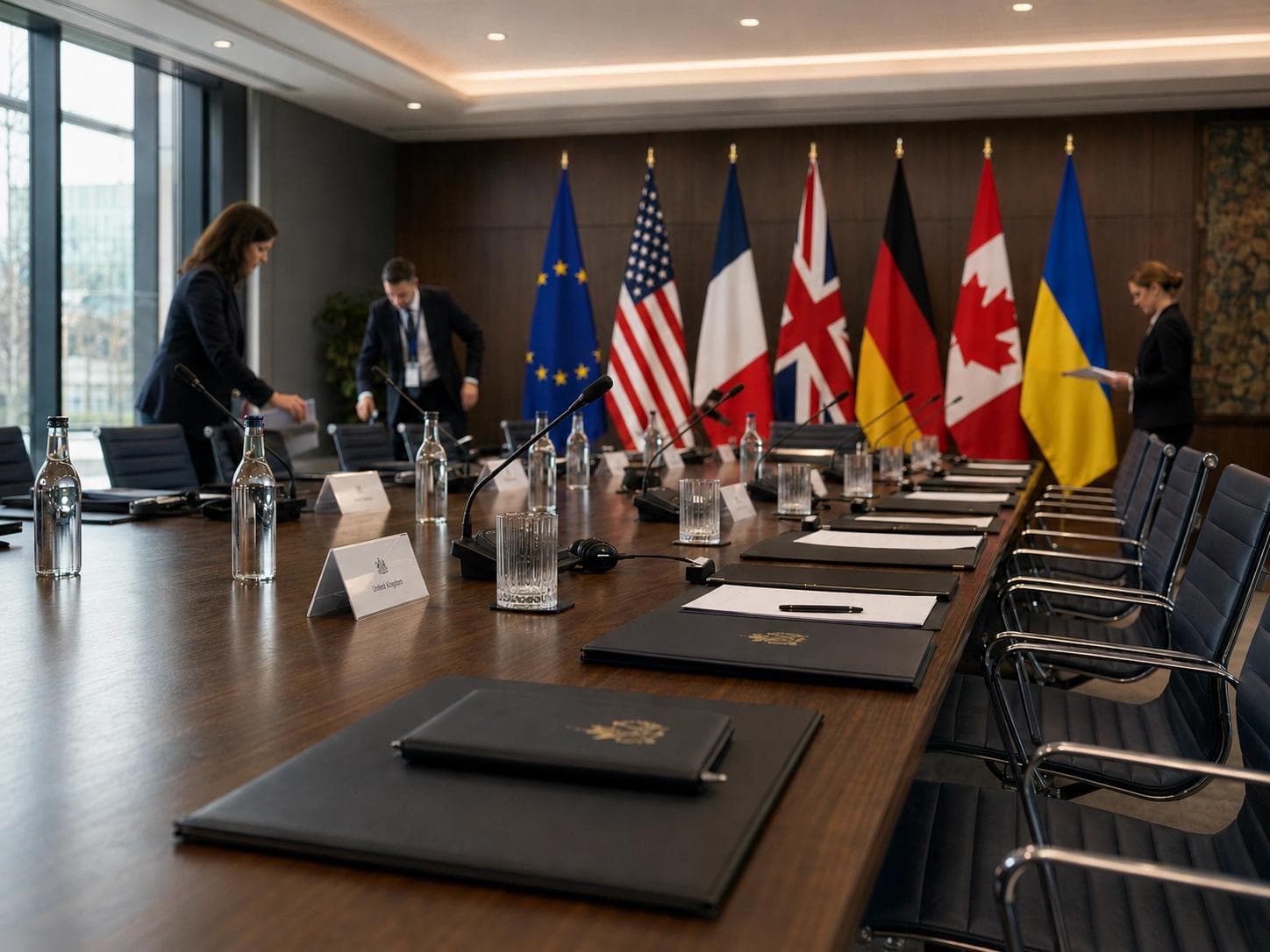
On 2 April 2026, the United Kingdom told the UN Security Council that it would continue to champion coordination between the United Nations and the League of Arab States, framing this cooperation as essential to address regional tensions exacerbated by Iran’s actions affecting the Strait of Hormuz, according to HM Government. The UK linked this diplomatic track to maintaining regional stability through collective international efforts. The same day, the Foreign Secretary issued a chair’s statement noting that the UK had convened a meeting with more than 40 countries to discuss Iran’s closure of the Strait of Hormuz, the threat this posed to global trade and energy supplies, and options to secure freedom of navigation, as outlined by HM Government.
Operationally, the UK’s UN statement emphasized structured cooperation between the UN and the Arab League to manage escalating risks around Hormuz and the wider region, according to HM Government. In parallel, the UK-led meeting considered diplomatic and economic measures to pressure Iran to reopen the strait while affirming a determination among participating countries to safeguard commercial shipping, the HM Government chair’s statement said. These moves aligned with G7 positions issued under France’s presidency. On 27 March 2026, the G7 foreign ministers called for an immediate halt to attacks on civilians and for restoring safe navigation in the Strait of Hormuz, according to the Ministry for Europe and Foreign Affairs. On 21 March 2026, the G7 also pledged support to Middle East partners against attacks by Iran and its proxies and reaffirmed preventing Iran from obtaining nuclear weapons, as stated by the Ministry for Europe and Foreign Affairs.
The UK’s approach formed part of a sustained policy thread. On 25 March 2026, the UK condemned Iran’s recent aggression against several Gulf nations and urged an immediate cessation of attacks and de-escalation at the UN Human Rights Council, according to HM Government. The UK’s latest UN Security Council remarks and its Hormuz-focused diplomacy therefore built on prior calls for regional stability and adherence to international law. In a related human rights development, on 3 April 2026 France expressed deep concern over the arrest of Iranian lawyer and human rights defender Nasrin Sotoudeh and called for her immediate release, while noting worries about the health of activist Narges Mohammadi, the Ministry for Europe and Foreign Affairs said.
The significance of the UK’s push lay in the centrality of the Strait of Hormuz to global commerce. The UK chair’s statement described Iran’s closure of the strait as a significant threat to international trade and energy supplies and recorded a broad determination to secure freedom of navigation among participating countries, according to HM Government. Strengthening UN–Arab League coordination could add regional legitimacy and operational coherence to any diplomatic or economic measures under discussion, as the UK argued at the Security Council, per HM Government. The issue’s salience was also reflected outside formal fora, with AP News reporting on 3 April 2026 that France and South Korea said they would cooperate to ensure security and freedom of navigation in Hormuz. Taken together with the G7 positions and France’s human rights messaging, the latest UK statements indicated a coordinated international focus on both maritime security and wider concerns related to Iran, as set out by the Ministry for Europe and Foreign Affairs and HM Government.