Key Developments
On 1 April 2026, the European Commission set preparatory steps for a €90 billion support loan to Ukraine and approved use of procurement derogations to speed delivery of defense products, with a focus on boosting drone production, according to the European Commission.
Key Statistics
- €90 billion total support loan planned for Ukraine
- €45 billion targeted to be mobilized by end of 2026
- €28.3 billion proposed for defense support, including drones
- €16.7 billion proposed for budget support
- Historical: 2,600 EU sanctions on Russia in place, per France’s Ministry for Europe and Foreign Affairs
Main Body
On 1 April 2026, the European Commission announced preparatory steps for a €90 billion support loan to Ukraine and approved the use of procurement derogations to accelerate the availability of defense products, with emphasis on scaling drone production, according to a Commission notice. The package outlined €28.3 billion for defense support, including drones, and €16.7 billion for budget support, within a plan to mobilize €45 billion by the end of 2026, the Commission said. The steps came amid continued hostilities in Ukraine, as tracked in weekly incident reporting by ACLED on 1 April 2026.
The Commission’s action set out administrative and legal measures to speed procurement by allowing derogations that shorten timelines and simplify procedures for defense products, according to the Commission. The financing framework envisaged a large-scale loan facility of €90 billion, with €45 billion intended to be mobilized by the end of 2026 to ensure near-term support to Ukraine’s public finances and defense-industrial needs. Within that, €28.3 billion was identified for defense-related support, including to increase drone output, while €16.7 billion targeted budget support, the Commission stated. The Commission also indicated that accelerating access to defense equipment would rely on streamlined procurement pathways to meet urgent operational requirements.
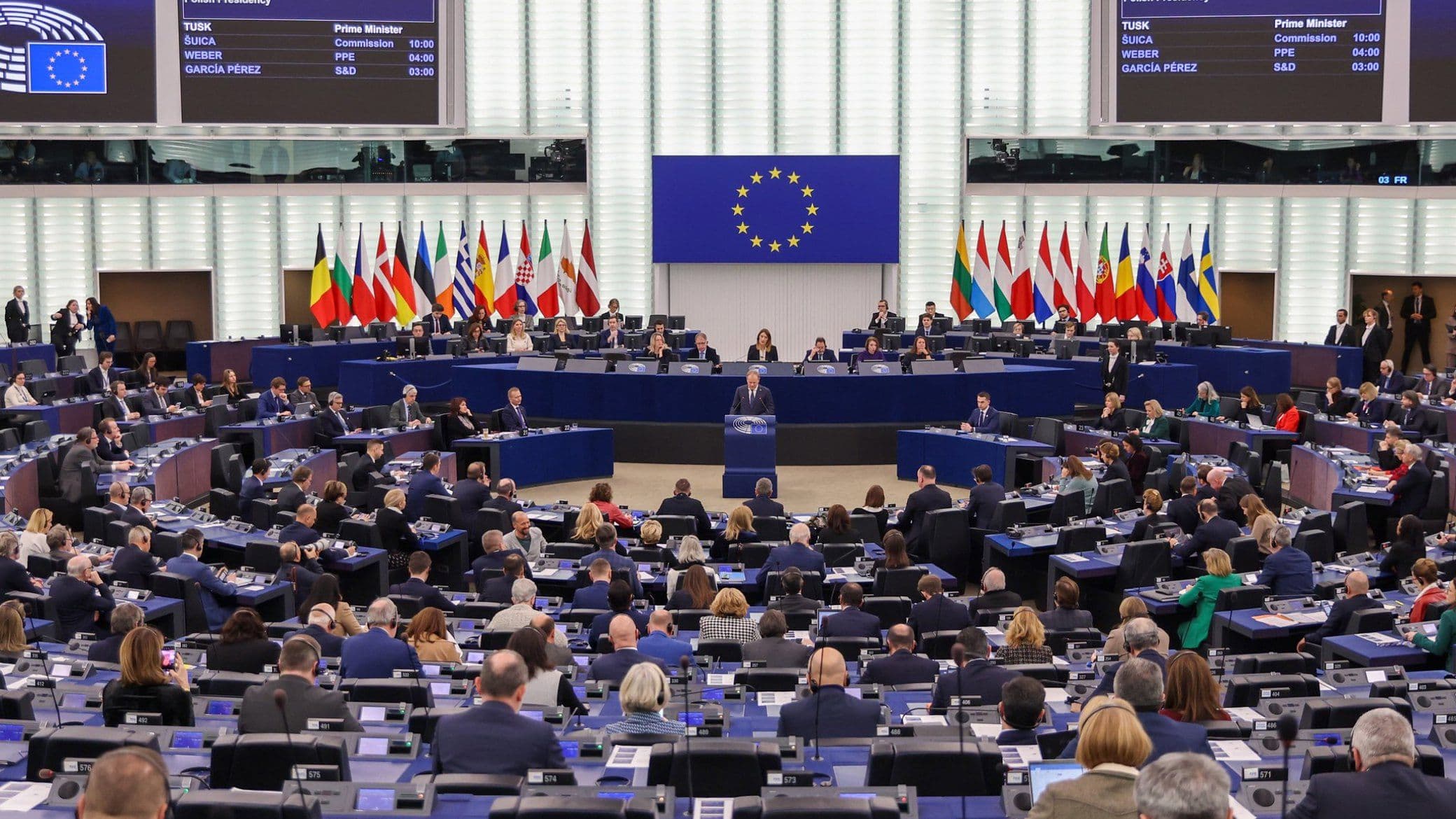
Recent EU decisions placed the move within a broader and continuing policy line. On 18 March 2026, France’s Ministry for Europe and Foreign Affairs reported that EU foreign ministers had reaffirmed long-term support for Ukraine at the 17 March Foreign Affairs Council and adopted additional sanctions, bringing total EU sanctions on Russia to about 2,600 measures, according to the Ministry for Europe and Foreign Affairs. On 25 March 2026, the European Parliament assessed the 19 March European Council, underscoring sustained backing for Ukraine and the need to strengthen the single market to withstand external shocks, as the European Parliament reported.
The Commission’s focus on drone production and faster procurement mattered for immediate battlefield resilience and for Europe’s defense industrial capacity. Faster contracting processes and designated financing were intended to reduce lead times for critical systems, which the Commission said would help meet Ukraine’s near-term needs while contributing to longer-term capability development. More broadly, aligning financial support with industrial output addressed calls for dependable, scalable assistance, consistent with the 17 March Foreign Affairs Council’s long-term support signal, as noted by the Ministry for Europe and Foreign Affairs, and the European Parliament’s emphasis on economic robustness during the 19 March summit review, as the European Parliament reported. The measures also dovetailed with wider EU debates on ensuring that policy instruments and procurement mechanisms support strategic objectives in security and industry, an issue raised in parliamentary scrutiny of trade and industrial tools, according to a related written question cited by the European Parliament.