Key Developments
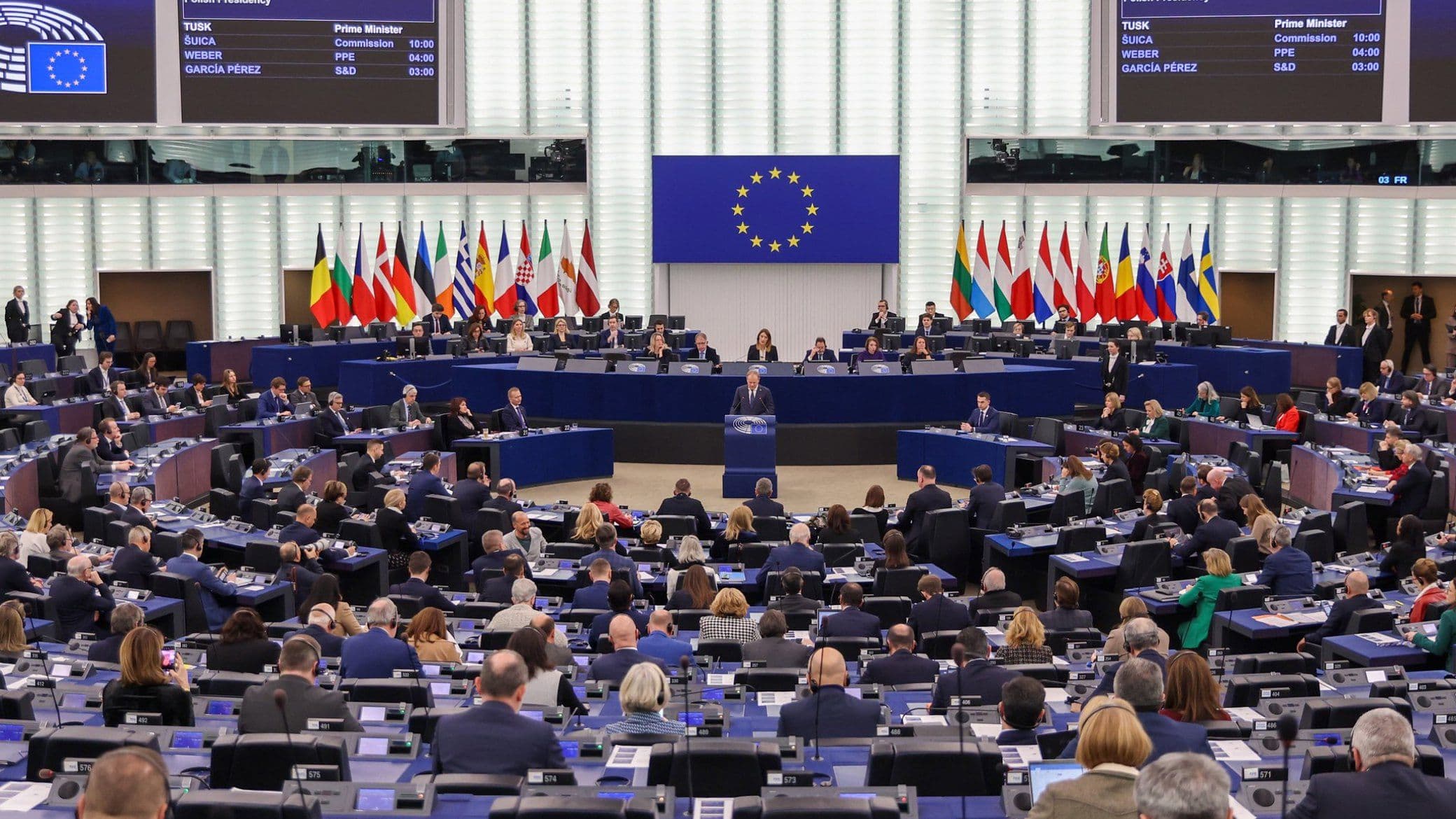
On 26 March 2026, the European Parliament announced a political deal to reform the EU Customs Code, including a new EU Customs Authority in Lille and parcel handling fees. The French Foreign Ministry hosted G7 ministers and advanced Ukraine support. The Bundeswehr ran an information operations drill. The UK Government set defence industry targets. The Dutch government earmarked €150 million for agri nature programs. US leaders prioritized space security, the Department of War said.
Key Statistics
- €150,000,000 allocated by the Netherlands for agricultural entrepreneurs and nature restoration
- €103,000,000 EU investment in seven LIFE strategic projects across member states
- 5,800,000,000 low-value parcels entering the EU annually cited in customs reform deal
- 300 personnel from 15 nations participated in the Bundeswehr Active Vulcano information operations exercise
- £5,000,000,000 added to the UK defence budget for this year
- 50% targeted increase in UK Ministry of Defence spend with SMEs
Main Body
A week of coordinated policy action featured a new EU customs framework, France-hosted G7 diplomacy, German military readiness activities, a UK defence industry push, Dutch legal and funding measures, and a US emphasis on space and undersea security. On 26 March 2026, the European Parliament announced a political agreement on Customs Code reform that introduced a handling fee for parcels entering from non EU countries, strengthened e-commerce controls, and created an EU Customs Authority in Lille to improve data-driven oversight.
European Union
On 26 March 2026, a European Parliament press release said negotiators reached a deal on EU Customs Code reform to address e-commerce risks, product safety, and enforcement efficiency, citing 5.8 billion low-value parcels entering the EU annually. Parliamentary scrutiny also intensified: on 27 March 2026, a written question asked the Commission about the costs and trade-offs of integrating gender budgeting into the 2026 to 2030 Gender Equality Strategy. On 26 March 2026, another question challenged the legal basis and safeguards for a proposed digital company “28th regime.” On 27 March 2026, a question pressed the Commission on monitoring compliance with a Court of Justice ruling on environmental assessments for wind projects in Spain. These items underscored implementation demands and legal clarity needs accompanying the customs overhaul.
France
France used G7 convening power to drive coordinated diplomacy. On 26 and 27 March 2026, the Ministry for Europe and Foreign Affairs reported foreign ministers focused on support to Ukraine, Middle East dynamics, Iran, and cross-cutting threats such as drug trafficking. On 26 March 2026, the ministry said Minister Jean-Noël Barrot and EU High Representative Kaja Kallas discussed maritime security, Ukraine, further Russia sanctions, and countering the Russian shadow fleet. The ministry also noted Franco Japanese talks on resilient supply chains. On 29 March 2026, a joint statement by Germany, France, Italy, and the UK urged Israel not to expand the death penalty.
Germany
German forces emphasized readiness and alliance integration. On 26 March 2026, the Bundeswehr reported its Active Vulcano exercise on information and psychological operations with about 300 participants from 15 nations. On 27 March 2026, the Bundeswehr highlighted Panzerbrigade 45 as a permanently stationed large German unit in Lithuania, reinforcing NATO’s eastern flank. Environmental funding also featured, with a European Parliament item on 27 March 2026 referencing over EUR 103 million for seven LIFE strategic projects and asking how less developed regions and Germany could access benefits.
United Kingdom
The UK paired diplomacy with industrial policy. On 26 March 2026, at the UN Human Rights Council, the UK Government condemned Russian abuses in occupied Ukraine and cited large-scale missile and drone strikes. On 25 March 2026, the Minister for Defence Readiness and Industry announced an additional £5 billion for defence this year and targeted a 50 percent rise in small and medium enterprise spending by 2028, positioning procurement and skills as capability multipliers. On 26 March 2026, the government flagged UK firm participation in a US Defense Innovation Unit programme to counter unmanned underwater vehicles.
Netherlands
The Netherlands advanced governance and green investment. On 27 March 2026, the government said it would apply the General Equal Treatment Act to government action to strengthen recourse for citizens. The same day, it announced €150 million for agricultural entrepreneurs and accelerated nature restoration, detailing program lines. The government also approved proposals to enhance police powers against serious public order disturbances. In parallel, a Netherlands Ukraine conference in Breda focused on rule of law, governance, and sectoral cooperation to support EU accession processes.
United States
US messaging centered on strategic enablers and allied innovation. On 26 March 2026, the Department of War reported Gen. Stephen N. Whiting stressed the space domain’s role in navigation, communications, missile warning, and intelligence. On 26 March 2026, the UK Government highlighted the US Defense Innovation Unit’s REEF programme inviting UK technologies to detect and defeat unmanned underwater vehicles. On 23 March 2026, the NATO Parliamentary Assembly noted a visit to Washington and Nevada by its Defence and Security Committee, underlining the need to scale Allied defence industrial production.
Taken together, these moves pointed to tighter EU market enforcement, sustained G7 coordination on Ukraine and regional crises, NATO forward posture, and renewed defence industrial pathways. For practitioners, the customs reform signalled new compliance for e-commerce operators, the UK measures indicated procurement opportunities for SMEs, Dutch funding opened green and agri project windows, and US led initiatives highlighted priority technologies in space and undersea defense, shaping transatlantic investment and operational planning.