Quick Brief
Recent scientific studies and policy developments highlight a rapidly evolving environmental landscape marked by intensifying climate risks and biodiversity challenges. New data reveal that sea levels are significantly higher than previously estimated, amplifying flood risks for millions in coastal regions. Concurrently, the Earth’s warming rate has nearly doubled compared to past decades, exacerbating extreme weather events such as heat waves and droughts. These climatic shifts threaten ecosystems, agriculture, and infrastructure, demanding accelerated mitigation and adaptation efforts.
In Europe, even a 2°C warming scenario could trigger increased forest losses due to wildfires, storms, and insect outbreaks, emphasizing the limits of mitigation alone. On the biodiversity front, funding for research has declined, prompting the European Commission to propose a new integrated call to address this gap. Additionally, studies on marine biodiversity hotspots and animal behavior deepen understanding of ecosystem dynamics and evolutionary traits.
Coastal Flood Risks Underestimated Amid Rising Sea Levels
New research indicates that sea levels are substantially higher than those used in most coastal hazard assessments, suggesting that current flood risk models and planning assumptions are underestimating exposure for millions of people, particularly in vulnerable regions such as the Netherlands12. This revelation has profound implications for urban planning, infrastructure resilience, insurance underwriting, and disaster management strategies.
The findings call for urgent reassessment of adaptation and mitigation frameworks to incorporate updated sea level projections. Failure to do so risks inadequate protection of coastal communities and critical assets, potentially leading to greater economic and human losses. This development underscores the need for governments and stakeholders to prioritize investments in flood defenses, land-use planning, and climate-resilient infrastructure.
Accelerated Global Warming Amplifies Climate Hazards
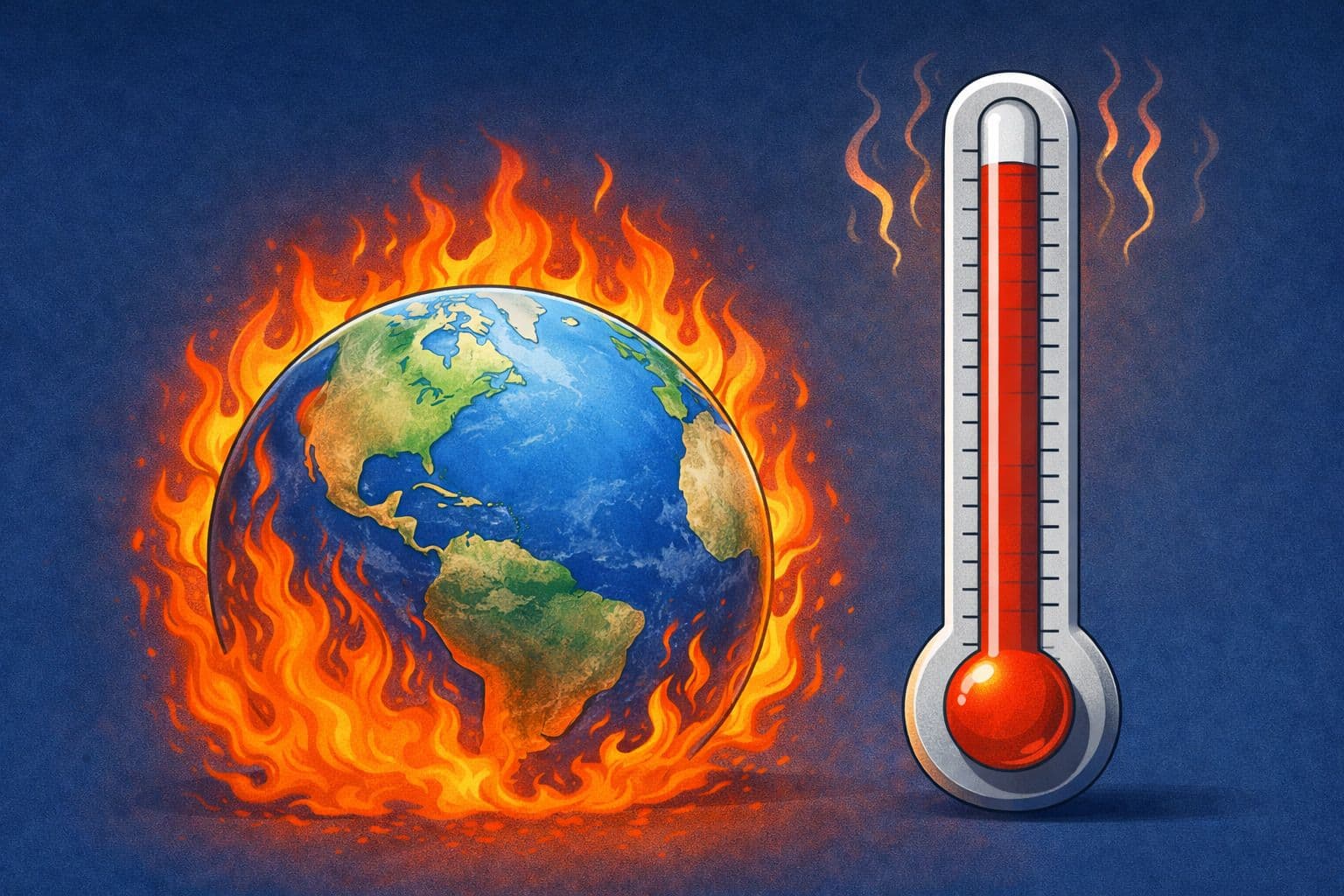
A landmark study reveals that the Earth is warming at approximately twice the rate observed in previous decades, signaling an accelerated trajectory of global temperature rise3. This acceleration heightens the frequency and severity of extreme weather events, including heat waves that increasingly trigger damaging droughts, as documented in regions like South Korea4.
These compound climate extremes threaten water security, agricultural productivity, energy systems, and ecosystem health. The intensification of such events demands enhanced climate adaptation measures, improved water resource management, and robust disaster preparedness. Moreover, the findings reinforce the urgency of rapid greenhouse gas emissions reductions to limit further warming and associated risks.
Forest Vulnerability Persists Despite Mitigation Efforts
Research focused on European forests warns that even if global warming is limited to 2°C, increased disturbances from wildfires, severe storms, and bark beetle outbreaks could substantially elevate forest loss across the continent5. This suggests that climate mitigation alone may be insufficient to prevent heightened tree mortality driven by disturbance regimes.
The implications are significant for forestry management, biodiversity conservation, and carbon sequestration strategies. Adaptation approaches, including proactive forest management, pest control, and restoration efforts, will be essential to reduce vulnerability and maintain forest ecosystem services. The study highlights the complex interplay between climate change and ecological disturbances, necessitating integrated policy responses.
Biodiversity Research Faces Funding Challenges Amid New Initiatives
Biodiversity-related research funding under the European Union’s Horizon Europe Cluster 6 has experienced a decline over recent years, raising concerns about the capacity to address pressing conservation needs6. In response, the European Commission plans to launch a horizontal biodiversity call aimed at integrating research across disciplines to bridge the funding gap.
While the budget for this initiative remains undisclosed, the move signals recognition of biodiversity’s critical role in sustaining ecosystems and human well-being. Sustained and increased investment in biodiversity science is vital to inform effective conservation policies, monitor ecosystem health, and develop innovative solutions to biodiversity loss.
Historical and Contemporary Insights into Biodiversity and Conservation
A historical ecology study reveals that plant diversity declined for centuries following the mid-14th-century Black Death pandemic, linking demographic shifts and altered land use to long-term ecological changes7. This underscores how human societal disruptions can have enduring environmental consequences.
In marine biodiversity, Indonesia’s Raja Ampat islands in Southwest Papua are highlighted as one of the world’s richest hotspots, attracting scuba divers and emphasizing the need to balance tourism with conservation to protect reef health and species diversity8. Additionally, a study on tomato clownfish demonstrates their ability to change stripe patterns in response to social and environmental cues, illustrating adaptive behavior that may aid survival in dynamic habitats9.
Air Pollution from Maritime Transport Exceeds Urban Vehicle Emissions
A study cited by Reuters finds that European ferries emit more sulphur pollutants than all city cars combined, highlighting the significant environmental and public health impacts of maritime transport10. This finding strengthens calls for stricter fuel standards, cleaner ship technologies, and regulatory measures to reduce sulphur emissions from ferries and shipping fleets.
Addressing maritime pollution is critical to improving air quality, protecting coastal communities, and advancing sustainable transport policies within the broader environmental agenda.
Emerging Conservation Finance and Evolutionary Science
In Switzerland, voters are preparing to decide on a proposal to establish a large state-backed climate fund designed to finance climate-related projects and initiatives11. The fund aims to enhance climate action and solidarity, though debates continue over cost, governance, and long-term commitments. The outcome could influence climate finance models and public engagement in environmental policy.
On the scientific front, studies of chimpanzees in Uganda reveal a preference for shiny crystals over ordinary rocks, suggesting an evolutionary predisposition toward visually striking objects1213. These findings offer intriguing insights into the origins of aesthetic appreciation and material culture in human ancestors, enriching understanding of behavioral evolution and conservation of primate species.
Conclusion
This week’s environmental developments collectively emphasize the accelerating pace of climate change and its multifaceted impacts on natural and human systems. The underestimation of sea level rise and faster warming rates amplify risks to coastal communities, agriculture, forests, and water resources, necessitating urgent adaptation and mitigation strategies. Concurrently, biodiversity research funding challenges and novel ecological insights highlight the need for integrated conservation efforts supported by robust science and finance.
Addressing these intertwined challenges requires coordinated policy responses, increased investment in sustainable infrastructure and research, and enhanced public awareness. As environmental risks intensify, the global community faces a critical window to implement effective solutions that safeguard ecosystems, human health, and economic stability for future generations.