Central Development
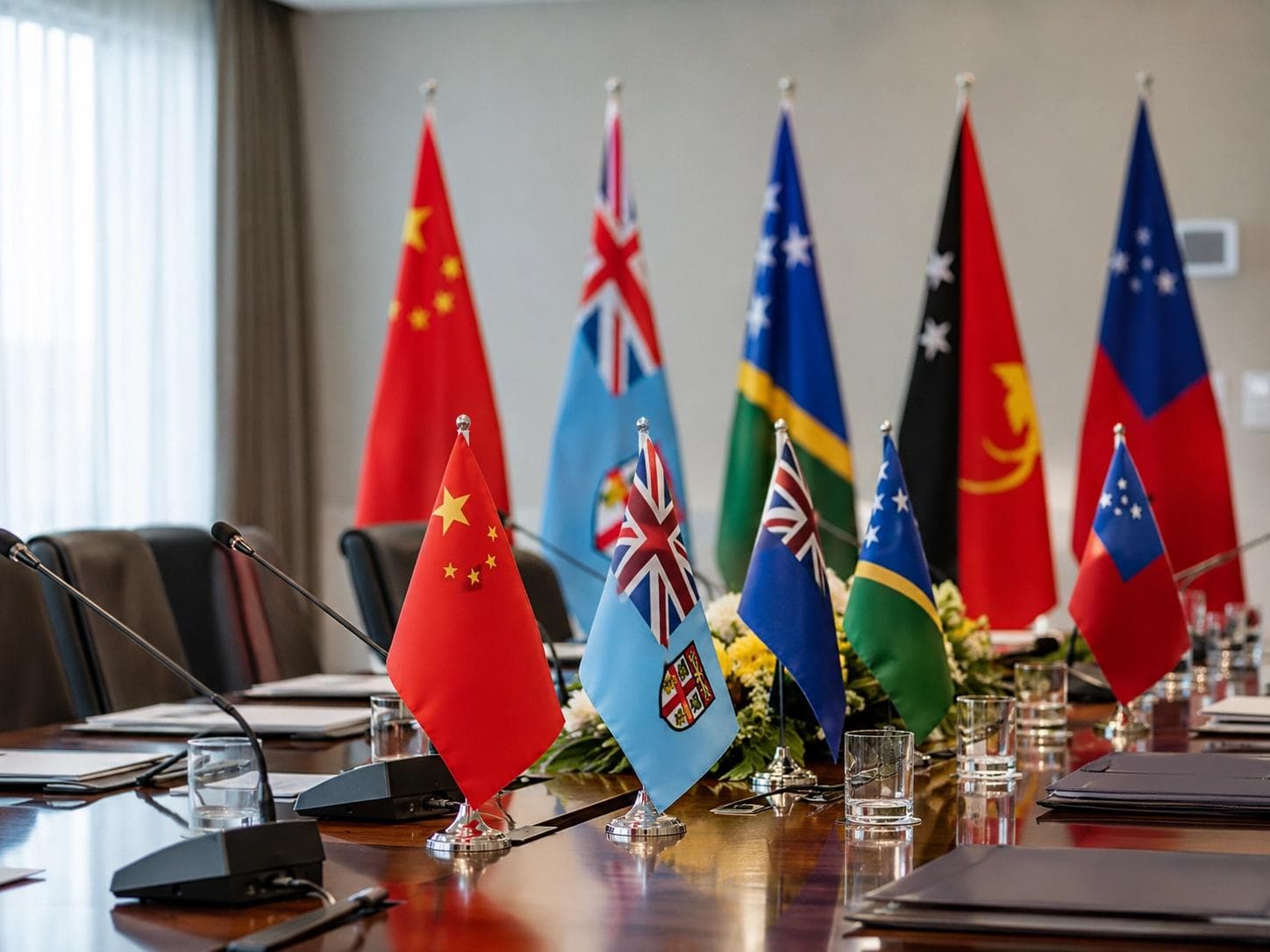
The foreign ministers of Australia, India, Japan and the United States met in Manila on 22 July and reaffirmed support for a free and open Indo-Pacific, ASEAN unity and ASEAN centrality, according to Australian Foreign Minister Penny Wong's office. The same statement said the ministers discussed maritime security, economic prosperity and humanitarian assistance, framing those issues around peace and stability in the region. In parallel ASEAN diplomacy, the UK Foreign Secretary used the ASEAN-UK Post-Ministerial Conference in Manila to stress Britain's long-term commitment to ASEAN and multilateral cooperation, according to the UK government.
Why It Matters
The Manila meetings place ASEAN at the center of separate but converging diplomatic messages from the Quad and the UK. Wong said in a Manila doorstop that her meetings emphasized cooperation on shared challenges including energy security and South China Sea tensions, according to Australia's foreign ministry transcript. The UK remarks added a broader institutional frame, citing support for ASEAN centrality and the principles of the UN Charter, according to the UK government. The emphasis is notable because the statements avoid presenting ASEAN as a passive venue; they treat it as a political platform for security, economic and crisis-management coordination.
Perspective
The evidence is strongest for official positioning rather than new operational commitments. Australia's joint Quad statement foregrounded maritime security, prosperity and humanitarian assistance, while Wong's separate comments added energy security and South China Sea tensions. The UK statement focused more on ASEAN-UK ties, citing gains over the past five years in health security and education and linking ASEAN cooperation to conflicts affecting member states, according to the UK government. Those differences suggest coordinated regional language, not a single unified initiative.
What to Watch
Whether the Quad converts the Manila agenda into specific maritime, humanitarian or economic programs with ASEAN partners.
- Any ASEAN statements that endorse, qualify or distance the bloc from Quad and UK framing.
- Follow-up diplomacy on South China Sea tensions and energy security after Wong's Manila meetings.