Lead Summary
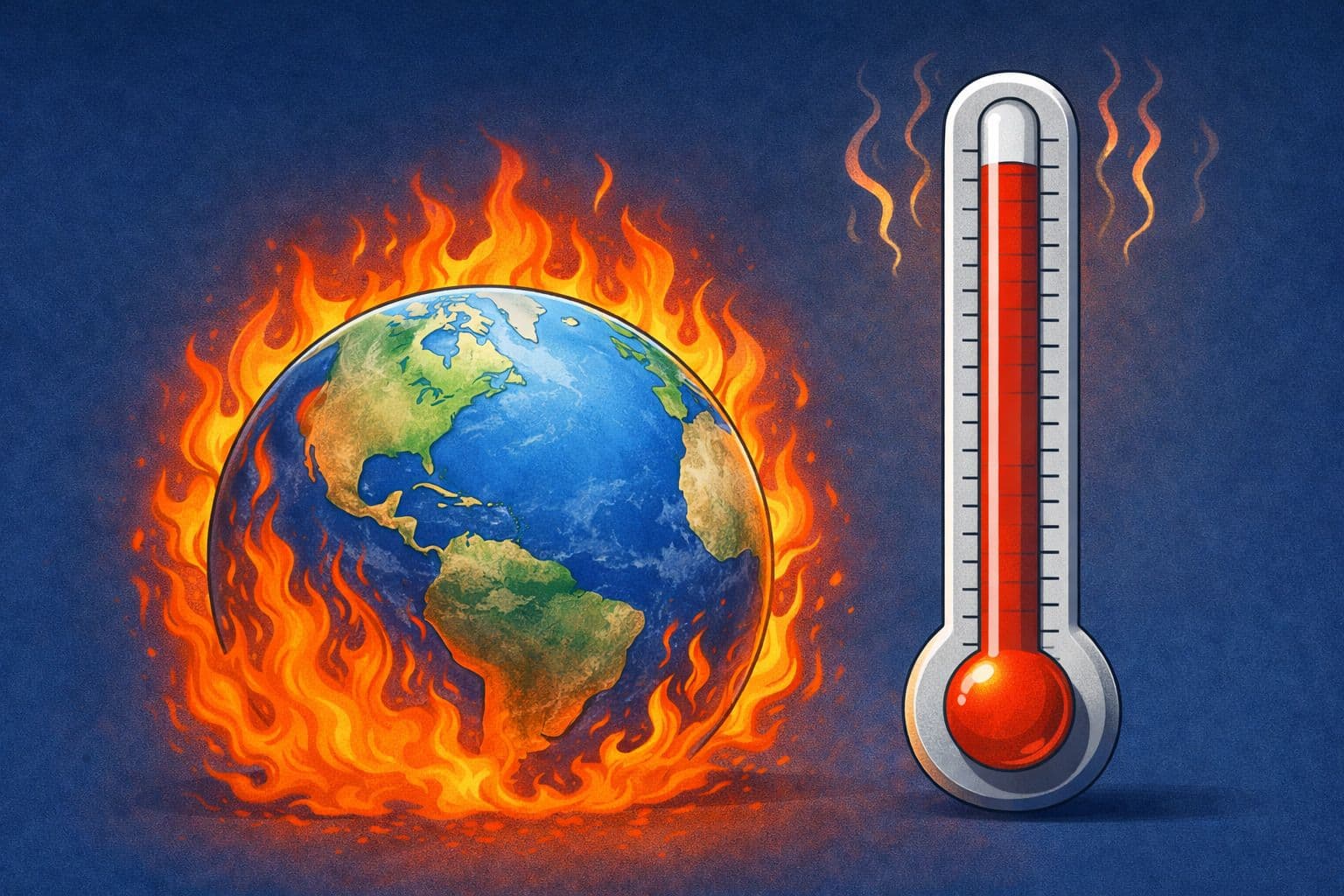
Scientists report that global temperatures have recently edged very close to the critical 1.5°C warming threshold above pre-industrial levels. This development signals heightened short-term climate risks and challenges the international community's efforts to meet emissions reduction targets.
Key Developments
-
The planet's near approach to the 1.5°C limit is driven by record-breaking temperatures observed in recent months, underscoring the urgency of climate action to prevent surpassing this benchmarkgroundnews.
-
Studies have documented an increase in the frequency of heat waves that trigger damaging droughts, compounding environmental stress and impacting water resources globallygroundnews.
-
Additionally, new research reveals that millions more people are now at risk from rising sea levels than previously estimated, highlighting the expanding human vulnerability to climate-induced coastal floodingNPR.
What to Watch Next
-
Monitoring of global temperature trends will be critical to assess whether the 1.5°C threshold is temporarily or permanently exceeded.
-
The effectiveness of international climate policies and emissions reduction commitments will be under scrutiny as nations aim to limit warming and mitigate associated environmental impacts.
-
Further research on climate adaptation strategies, particularly for drought-prone and coastal regions, will be essential to address the increasing risks to ecosystems and human populations.